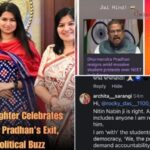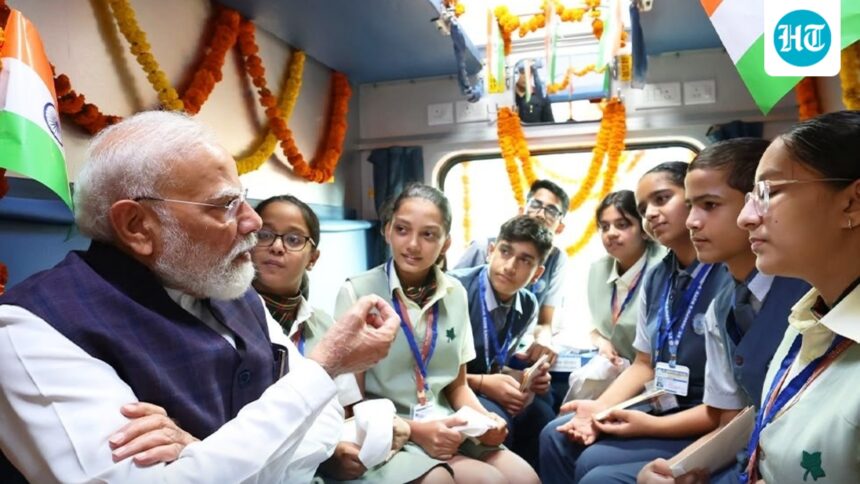
Prime Minister Narendra Modi did not issue any statement on Pradhan’s resignation amid the BJP’s protest, though other ministers praised the senior BJP leader for his decision to quit.

Prime Minister Narendra Modi posted on Cricket, a UNESCO heritage list, Kargil Vijay Diwas and clips from his monthly ‘Mann Ki Baat’ radio address in the 24 hours since Dharmendra Pradhan resigned as education minister – but did not mention anything about Pradhan or the resignation that ended the youth protests led by the Sarwar Janta Party.
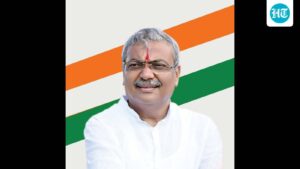
Pradhan announced his exit on He also attacked the opposition led by Rahul Gandhi, although he did not mention names.
In the 24 hours that followed, PM Modi made at least nine posts on his account X (@narendramodi). None of them mentioned Pradhan, the resignation or the RJD’s protest. The 10th post since the resignation came just before this report was published, at 3:02 pm, where he congratulated Anahat Singh on becoming the first ever Indian squash player to win a World Junior Championship title. “This achievement will increase the popularity of squash among the youth,” Narendra Modi wrote.
He shared the same post about Anahat Singh on Facebook, along with the promo of ‘Mann ki Baat’ there as well.
The Prime Minister also did not issue any official statement regarding the resignation or the students’ protest. Other ministers praised Pradhan for his decision to ultimately resign.
The first post on Narendra Modi’s personal The Prime Minister described it as a “proud moment for every Indian” and said the recognition celebrates India’s cultural and spiritual heritage. He associated Sarnath with the message of wisdom and compassion sent by Lord Buddha.
The rest of the posts were dominated by episode 136 of the “Mann Ki Baat” program, which was broadcast on the morning of July 26, where Modi reposted several clips and excerpts from it.
One of them promoted the Indian women’s cricket team’s Test win at Lord’s. “The hard-won victory is special,” the Prime Minister wrote just after noon.
Another post tagged Kargil Vijay Diwas, which falls on July 26, where Modi paid tribute to soldiers who fought in the 1999 conflict against Pakistan.
Pradhan reposted two of the promotional posts for ‘Mann ki Baat’ on his X-index.
On the official handle of the Prime Minister’s Office, there have been 15 posts since Pradhan’s resignation, all relating to ‘Mann ki Baat’, which itself did not include any mention of the resignation, perhaps because it may have been registered when it had not yet happened even though the CJP protests had been going on for weeks.
Before resigning
Notably, Modi directly addressed the core issues of the protest in the days before Pradhan’s resignation. On July 24, activist Sonam Wangchuk, who was on hunger strike during the CJP protest, urged him to respond to doctors and “recover his old weight as soon as possible” after breakfast. Late on July 23, he posted a selfie-style video — an informal format seen as targeting the protest’s Gen Z base — and promised tougher laws to curb paper leaks.
On Instagram, one of these videos is his last post (less).
Hours later, on July 25, Pradhan finally resigned from his post. Minister Pralhad Joshi has taken charge of the education portfolio for the time being.
The Prime Minister’s silence on the issue, other than personal videos, belies a wave of praise from within his own party. Senior BJP leaders, including Home Minister Amit Shah, praised Pradhan for implementing the National Education Policy (NEP) 2020 and reshaping India’s education framework. Assam Chief Minister Himanta Biswa Sarma said Pradhan worked to “restore the civilizational spirit of Bharat.” Several Union ministers and other leaders posted similar messages.
Pradhan’s resignation was the key “non-negotiable” demand of the CPI(M) and Rahul Gandhi’s Congress Party. The government also agreed to withdraw the cases filed against the demonstrators who were injured by police actions during their march on July 20 towards Parliament, and to compensate the families of the students who died by suicide after the paper was leaked. With the demands accepted, the CJP called off its protest on Saturday itself.
What’s next in Parliament?
Rahul Gandhi, who has been raising almost the same demands but did not personally visit the “non-political” protest site, termed the forced resignation a “warning” from students and opposition to the government.
Meanwhile, Congress has begun directing its fire at Home Minister Amit Shah. In a press conference on Saturday, Rahul Gandhi held Shah directly responsible for the police actions on July 20 against the CJP rally, noting that the Delhi Police reports to the Centre, and said accountability must be determined “from the organizers of this attack to its perpetrators”.
As Parliament reconvenes on Monday to discuss an amendment bill imposing tougher penalties for leaking papers, Congress is pressing to shift the debate toward a crackdown.
Union Minister Nitin Gadkari also faced some ire from Gen Z at the CJP’s protest site in Jantar Mantar, with memes and slogans demanding that he step down afterwards over the ongoing row over the negative effects of E20 petrol blended with ethanol on vehicles.
The origins of the cockroach movement go back to the Supreme Court hearing on May 15, during which Chief Justice of India Surya Kant noted that some unemployed youth were “like cockroaches” and had no place in the legal profession. Launched as a satirical social media account by Abhijit Debaki the next day, the CJP adopted the term and grew into a force on the street. Kant later said the statement only referred to holders of fake law degrees and that sections of the media had misquoted him, but the clarification did little to slow the movement.
Speaking from the stage at Jantar Mantar minutes after Pradhan resigned, Debke thanked the IJC. He said that if the International Commission of Justice had not called them cockroaches, the movement would not have started.

Arish Chhabra is an associate editor on the Hindustan Times online team, where he writes news reports and explanatory features, as well as overseeing the site’s coverage. His career spans nearly two decades across India’s most respected newsrooms in print, digital and broadcast. He has reported, written, and edited across formats—from breaking news and live election coverage, to analytical long-reads and cultural commentary—building a body of work that reflects editorial rigor and a deep curiosity about the community for which he writes. Areesh studied English Literature, Sociology and History along with Journalism at Punjab University in Chandigarh, and began his career in that city, eventually moving to Delhi. He is also the author of Little Big City: What Life is Like from Chandigarh, a collection of critical essays originally published as a weekly column in the Hindustan Times, which examines the culture and politics of a city that is much more than just its famous architecture – and in doing so, holds up a mirror to modern India. During his stints at BBC, The Indian Express, NDTV and Jagran New Media, he has worked across formats and languages; Mainly English, as well as Hindi and Punjabi. He was part of the crack team for the BBC Explainer project which was replicated throughout the series To the world by the broadcaster. At Jagran, he developed editorial guides and trained journalists on integrity and quality content. He has also worked at the intersection of journalism and education. At the Indian School of Business (ISB) in Hyderabad, he developed a website to streamline academic research in management. At Bennett University’s Times School of Media in Noida, he taught students the craft of digital journalism: from newsgathering and writing to social media strategy and video storytelling. Having moved from small town to larger city to megalopolis for education and work, his intellectual passions lie at the intersection of society, politics, and popular culture—a perspective that guides his writing and worldview. When he’s not working, he’s constantly reading long-form journalism or watching cerebral content, sometimes both at the same time.Read more

Get the latest India news, headlines and real-time updates from across the country. Stay up to date on politics, government policies, crime, weather and major national developments.