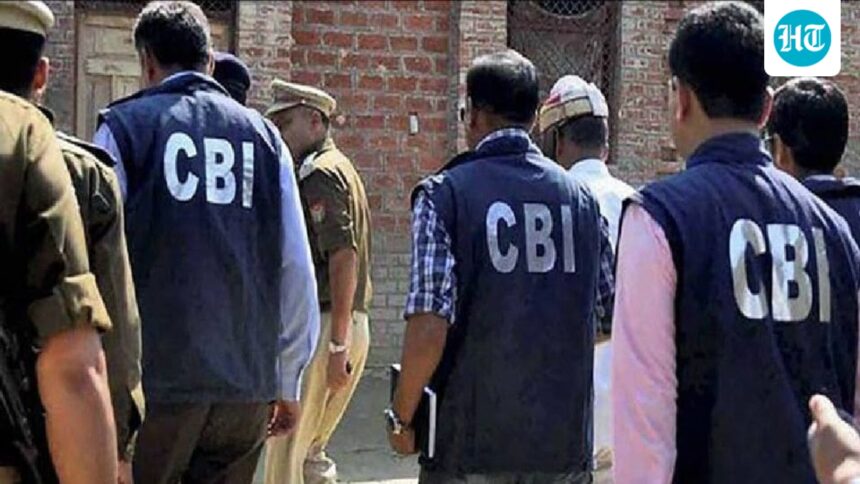
The Bharatiya Janata Party (BJP)-led West Bengal government on Monday restored “general approval” for the Central Bureau of Investigation (CBI) to probe corruption cases, nearly eight years after the erstwhile Mamata Banerjee-led Trinamool Congress (TMC) withdrew the permission, people familiar with the development said.

“…The Government of West Bengal, under Section 6 of the Delhi Special Police Establishment (DSPE) Act, 1946, grants its consent to extend the powers and jurisdiction of the members of the DSPE in the entire State of West Bengal to investigate offenses of the categories of offenses notified under Section 3 of the Act, as amended from time to time, alleged to have been committed by Central Government employees, Central Public Sector Units and private persons…” the state government said in the notification.
The notification stated that the general approval is subject to the condition that the CBI shall not conduct any investigation against public servants controlled by the West Bengal government without obtaining its prior permission.
Under the DSPE Act, the federal agency requires state government approval to conduct an investigation within its jurisdiction. In the absence of such “general approval”, the CBI has to send case-specific requests to the state government for investigations.
The previous TMC government in the state blocked the CBI on November 16, 2018, and even fought a pitched battle in the Supreme Court over the issue. In July 2024, a bench led by Justices BR Gavai and Sandeep Mehta ruled that the original suit filed by the West Bengal government challenging the RBI’s jurisdiction within the state was defensible.
Other than West Bengal, there were 11 other states, mostly opposition-ruled, that had withdrawn general approval for citizenship by investment from 2017 claiming that the Center was using the agency to target opponents as part of “political vendetta”. While Mizoram was the first state to withdraw the approval on July 17, 2015, West Bengal (in November 2018), Chhattisgarh (January 2019), Rajasthan (July 2020), Maharashtra (October 2020), Kerala, Jharkhand and Punjab (November 2020), Meghalaya (February 2022), and likewise, Telangana (October 2022), imposed Tamil Nadu (January 2023) and Karnataka (September 2024) have restrictions on the scope of the CBI.
Since then, Mizoram, Maharashtra, Chhattisgarh, Rajasthan and now West Bengal have regained the powers of the RBI.
“It has been a huge challenge for us. Hundreds of our requests for case-by-case permissions were pending with all these states. In West Bengal in particular, we have not been able to take action under the Prevention of Corruption Act. This development comes as a relief,” said a CBI officer, requesting anonymity.
In 2025, a parliamentary standing committee on personnel matters recommended a separate or new law that would give the CBI the power to investigate cases without needing the approval of state governments.
The committee said that withdrawing public approval for the CBI’s investigations severely limits its ability to investigate corruption and organized crime.