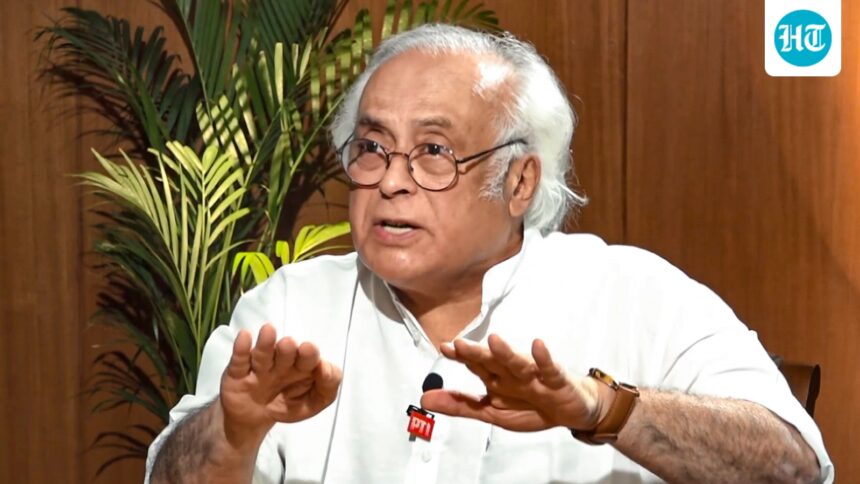
Noting that several states had raised concerns over the alternative MGNREGA VB G RAM G law, the Congress on Sunday said the new law would only ensure centralization and increase financial pressure on the states.

Congress general secretary Jairam Ramesh said the Modi government, “vindictive and petty” as ever, bulldozed the MGNREGA repeal through Parliament without any thorough consultation with the Parliamentary Standing Committee on Rural Development, state governments, or other relevant stakeholders.
And now it seems that several states have raised concerns over its replacement VB G RAM G which is scheduled to be launched from July 1, Ramesh said on X.
He said that BJP-ruled states like Madhya Pradesh, Bihar and Uttarakhand had opposed the huge additional spending burden that was set to be imposed on the states.
Four other state governments had opposed the cut-off period during the peak agricultural season, Ramesh said, adding that at least five states had sought an increase in wages for rural workers.
Also Read After months of opposition, Punjab government notifies VB-G RAM G scheme
Ramesh said that Madhya Pradesh, the home state of Rural Development Minister Shivraj Singh Chouhan, is expressing concerns about the Modi government’s new pet project.
“MGNREGA guarantees the right to work derived from the Constitution. VB G RAM G will only ensure centralization and more financial pressure on the states,” Ramesh said.
Congress claimed that the only guarantee provided by the law was to ensure “excessive centralization” and “weakening the bargaining power of rural workers.”
Also read: Himachal government forms committee to study VB-G RAM G scheme
The Center announced that the Vixit Bharat – Rozgar and Ajievika Mission Guarantee (Grameen) Act will come into force across the country from July 1, replacing the two-decade-old Mahatma Gandhi National Rural Employment Guarantee Act.
Also read: What is the deal with BJP? AAP Warring Questions over VB-G RAMG rollout in Punjab The new law will have a new framework that promises 125 days of statutory wage employment for rural families.