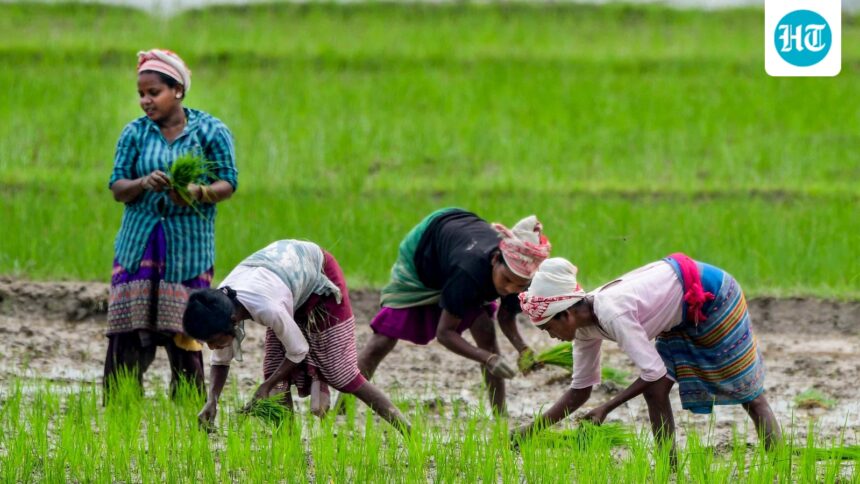
The Viksit Bharat – Rozgar and Ajeevika (Gramin) Mission Guarantee (VB-G Ram G) is set to come into effect from July 1, with the Central government set to roll out a separate daily wage system for women, persons with disabilities, elderly workers and those suffering from debilitating diseases under the Act.

The VB-G Ram G Act will introduce a special schedule of rates for vulnerable groups. “A separate rate schedule shall be established for women, the elderly, persons with disabilities and persons suffering from debilitating diseases to facilitate their productive participation in appropriate categories of work,” the provision in the law states.
A differentiated SoR system will allow workers to receive their full reported pay without being disadvantaged.
Read also: “The sky will not fall”: The Supreme Committee rejects an urgent hearing for the Ram Temple donation case, and the questions are accelerating
According to the law, the performance report must be drafted so that an adult who works eight hours, including one hour off, can earn the same amount as the notified rate of pay. The law adds: “The working hours of an adult worker may be flexible but shall not exceed 12 hours per day, including rest periods.”
However, the guidelines for people with disabilities extend further. Workers with disabilities will not be required to work specific hours to receive their full daily wages, the Mint said, citing two senior officials.
Officials reportedly said they would be assigned to work based on individual abilities and physical conditions, adding that workers with disabilities would also be diverted toward supervisory and support roles that are more livelihood-oriented than labor-intensive work.
Also Read: H-1B Trap: How Some Indian Workers Are Exploited By ‘Desi Consulting Firms’
Under the new structure, families with persons with disabilities will also be given priority to receive assets directed to beneficiaries, with work set to be located close to their homes.
“Through dedicated provisions for Divyanggan, including Divyanggan-friendly employment opportunities, priority livelihood assets and a separate rate scale aligned with individual capabilities, the law seeks to ensure dignity, economic security and meaningful participation,” Mint quoted Rural Development Minister Rohit Kansal as saying.
The workers will also be issued a Gramin Rozgar guarantee card. For persons with disabilities, single women, senior citizens, and transgender persons, a special Gramin Rozgar Guarantee Card will be obtained, in accordance with the VB-G Ram G Act.
The specific timeline for PWD rates has not yet been finalized.
Read also: Sitting on ‘The Signal’, Sia Goyal’s ‘Safety’: What Police Found in Ketan Agarwal’s Murder Scene Re-enactment
“It is a very good idea to have a different sector for people with disabilities, with work and employment appropriate to their abilities,” Nikhil Dey, co-founder of Mazdoor Kisan Shakti Sangathan (MKSS), was quoted as saying.
According to Day, the main challenge will be in the finance and design departments. He said that adequate money, training and proper work planning must be ensured so that tasks are assigned to workers with disabilities according to their abilities, and not according to the productivity standards of able-bodied people.
“This has not been done under MGNREA. If it is done under VB-G Ram G, it means this year’s allocation will roughly translate to $He added: 5000 crores.
However, a disability rights expert from Bangalore pointed out that the Center must first identify the disabled population in rural areas and find out who they are. “There must also be a clear definition and identification process for beneficiaries. Otherwise, the initiative may face the same fate as many other social welfare schemes run by the state and central government,” activist Shamir Rashad said, according to Mint.
Earlier this year, the Central government had notified the VB-G Ram G Act, 2025, in all rural areas of the country.
According to the government, the law has been enacted to create a future-ready rural development framework that integrates livelihood security with productivity, convergence, resilience and sustainable asset creation, in line with the Vixit Bharat 2047 vision.