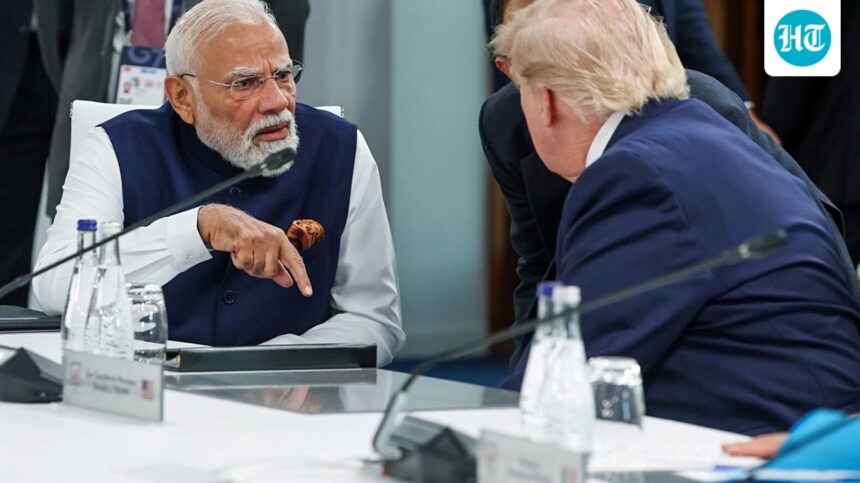
Members of the US Senate called for imposing customs duties of up to 100 percent on exports from countries that buy Russian oil. The bill, a watered-down version of the Russia Sanctions Act, will target countries such as China, Slovakia, Hungary, Azerbaijan and India.
The sanctions bill was championed by the late Senator Lindsey Graham of South Carolina and introduced in April 2025. Earlier this year, amid trade tensions between the US and India, Graham announced that President Donald Trump had gotten the green light for the bill.
In January 2026, the bill called for tariffs of up to 500 percent. However, the latest version of it calls for fees of up to 100 percent.
What is the subject of the new draft law?
Speaking at a press conference in Washington, Senator Richard Blumenthal said that the new bill would impose tariffs on five major buyers of Russian oil.
“The five main buyers of oil right now are China, India, Slovakia, Hungary and Azerbaijan,” Blumenthal said, adding that the bill would exempt countries that buy Russian gas if their purchases are less than 15 percent of total Russian gas imports.
The final tariff rate will be determined after deliberations by the US Trade Representative.
“The decision on the exact rate will be determined by the US Trade Representative. We have had extensive discussions with him. I believe it will be set at an appropriate level to discourage China, India and other major buyers of Russian oil and gas. Remember that there are reporting and certification requirements from the US Trade Representative to Congress if the rate is reduced,” Blumenthal said, as HT reported earlier.
How will this affect India?
Washington first sanctioned India over its purchase of Russian oil in August 2025. President Trump announced an additional 25 percent tariff against India for “stoking Putin’s war.”
This brings the total tariff against India to 50 percent, the highest between China and Brazil.
The new tariffs have also sparked tensions between the two allies, with trade negotiations stalling.
But with the outbreak of war between the US and Iran in February, the world, including India, saw itself in an energy crisis due to the blockade of the Strait of Hormuz.
Amid this major turmoil, the United States announced a waiver on Russian oil, allowing India to resume purchases.
According to the United States, these purchases will not bring any profits to Russia.
Amid the exemption, India’s imports of Russian crude oil rose by 34% in June 2026 to record levels. According to the Center for Research on Energy and Clean Air, the value of these imports amounted to 4.5 billion euros, which represents about 36% of Russia’s crude oil export revenues.
India is the second largest buyer of Russian crude oil after China.
If the bill is passed and implemented, it will bring more trouble to Indo-US relations.
India and the United States are currently in talks to finalize a bilateral trade agreement, which would reduce the total tariffs against New Delhi to 18 percent.
Indian goods currently enter the United States with a 15% tariff, after the US Supreme Court annulled the tariff increase approved by Trump. However, this is a temporary duty and is scheduled to end on July 24.