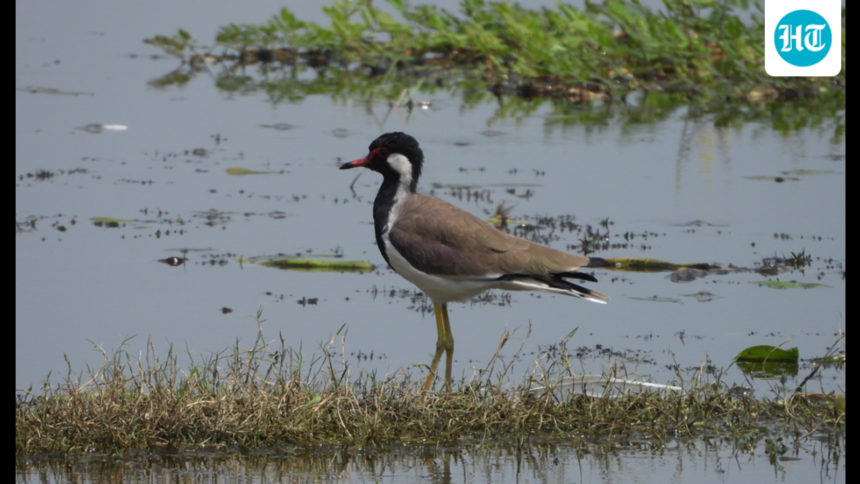
The Jai Prakash Narayan Bird Sanctuary (Soorha Tal) in Uttar Pradesh’s Ballia, known for its rich bird biodiversity, was on Friday designated as a Ramsar site, or wetland of international importance, making it the 100th such site in India.

Prime Minister Narendra Modi said the achievement, which coincides with World Environment Day, reflects India’s steadfast commitment to protecting the surrounding natural areas and wetlands. “Happy that the Jai Prakash Narayan Bird Sanctuary (Surah Tal) in Ballia, Uttar Pradesh, has been designated as the 100th Ramsar site in India. These wetlands are rich in fauna biodiversity, attracting many migratory and resident birds,” he said in a post on X.
Efforts to conserve and regenerate wetlands have been strengthened through increased community engagement, science, innovation and awareness initiatives, Modi said. “These endeavors help preserve biodiversity, secure ecological balance, and create a greener future for future generations,” he wrote.
India is a party to the 1971 Ramsar Convention, which was drafted into the Iranian Ramsar Convention. Parties are expected to identify suitable wetlands and include them on the List of Wetlands of International Importance, also known as the Ramsar List, under the Wetlands Convention, an intergovernmental treaty for wetland conservation.
The agreement includes mechanisms to guide the process of designating important wetlands as Ramsar sites and steps to manage them effectively by preserving their ecological character.
Separately, Environment Minister Bhupinder Yadav and Prime Minister Rekha Gupta inaugurated 18 ‘Namu Oxygen Parks’ across Delhi as part of an initiative to combat air pollution and expand the city’s green cover.
Yadav and Gupta launched a series of environmental initiatives under the nationwide tree plantation campaign ‘Ek Ped Maa Ke Naam’ on the occasion of World Environment Day. The Ministry of Environment said this was done as part of efforts to promote urban greening, improve air quality and promote community-led environmental management in the National Capital Territory (NCT).
Yadav and Gupta released an action plan document for the NCT (2026–27 to 2036–37), a 10-year framework that sets out strategies and objectives for environmental management, conservation and sustainable development in Delhi. They unveiled the Asola Bhatti Wildlife Sanctuary Management Plan (2024-25 to 2034-35), a management plan for one of Delhi’s most important biodiversity reserves, and a roadmap for its protection, restoration and sustainable management over the next decade.
The two released the Delhi Bird Atlas, a collection of data about birds in Delhi, produced through a citizen science effort involving bird watchers, naturalists, and volunteers across the city.