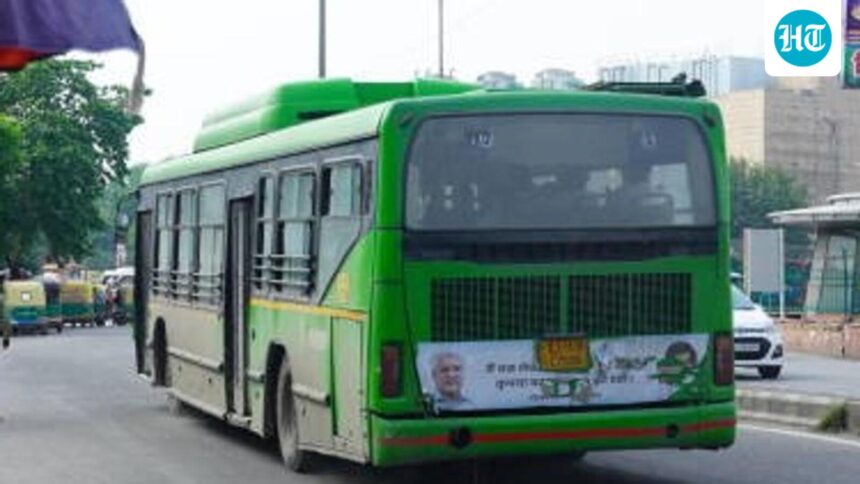
A coalition of industry think tanks on Friday urged the Ministry of Housing and Urban Affairs (MoHUA) to launch a dedicated program under the PM e-Bus Sewa Scheme to train and employ women as electric bus drivers, saying it could help bridge the growing workforce shortage in the sector while creating tens of thousands of job opportunities for women.

The report identifies licensing requirements as a major barrier, noting that depending on state regulations, it can take between 16 and 44 months for newcomers to qualify as public bus drivers. It also recommends reviewing eligibility criteria, incorporating women’s employment targets into public procurement for urban bus services, and improving gender-sensitive infrastructure and workplace policies at bus stations.
The main theme of the report was “She Drives Bharat: Expanding Employment of Women as E-Bus Drivers in Urban Operations” issued by the Bus and Automobile Operators Association of India Nari (the women’s wing of BOCI), think tanks – Center for Sustainable and Equitable Cities and Urban Catalysts at the Prawaas 5.0 Mobility Conference in Gandhinagar.
The report recommended that the Ministry of Municipal and Rural Affairs launch a dedicated program for women e-bus drivers in line with the PM e-Bus Sewa scheme, creating a structured pathway for women with light commercial vehicle licenses to upgrade to heavy passenger vehicle licenses and enter the urban bus workforce.
In response to the demand, a senior MHA official said the ministry will encourage the registration of female bus drivers through the soon-to-be-launched Green Urban Mobility Initiative under Prime Minister e-Bus Sewa, but recruitment decisions will remain in the hands of the operators.
Read also:Indian woman shares video of Singapore bus driver getting off bus to help wheelchair user: ‘Warming’
“Under the green urban mobility initiative launched by PM e-Bus Sewa, the ministry will encourage the enrollment of women bus drivers through capacity building programmes. Ultimately, employment is the calling of the industry,” the official said. The Ministry of Humanitarian Affairs will not specifically provide financial incentives for inclusion, but will support capacity building and skills acquisition efforts.”
According to the report, India is expected to deploy at least 50 lakh e-buses in urban operations by 2030, creating demand for an estimated 1.15 to 1.25 lakh drivers. Achieving 30-50% representation of women in this workforce could create job opportunities for 37,500 to 62,500 women, she said.
The report estimates that between 4.57 and 4.86 thousand women already hold licenses for light commercial vehicles. Enabling just 10% of them to upgrade to heavy passenger vehicle licenses could create a pipeline of more than 45,000 women e-bus drivers. It estimates that training this workforce will require public investment $99 Crores $166 crore, along with recruitment and on-the-job training by private sector operators.