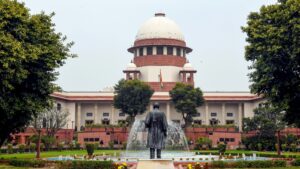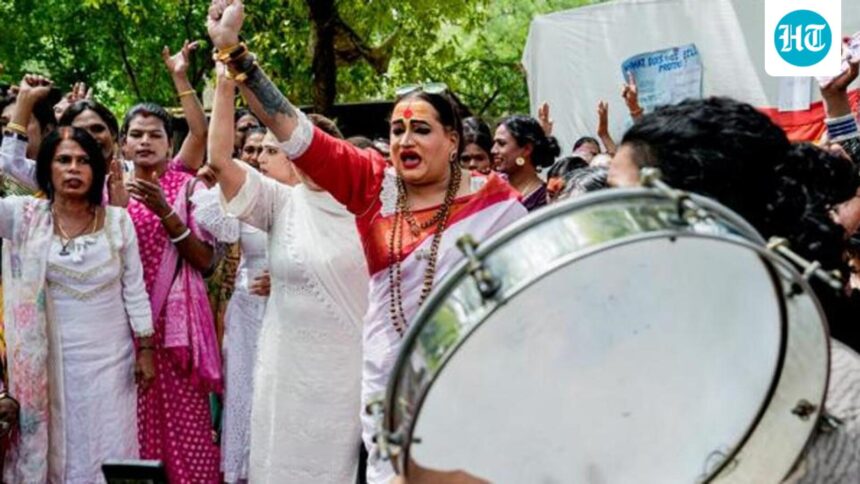
The Supreme Court on Monday stayed further proceedings before four high courts hearing challenges related to the constitutional validity of the Transgender Persons (Protection of Rights) Amendment Act, 2026, while issuing notice on the Union government’s plea seeking to transfer all such issues to the Supreme Court to avoid conflicting rulings on the legislation.

A bench comprising Chief Justice of India (CJI) Surya Kant and Justice Mohana passed the order on the transfer petitions filed by the Centre, which argued that identical constitutional questions arising out of the 2026 amendment are actually pending before the Supreme Court and should be decided through a single forum.
“Further proceedings before the high courts should be stayed,” the bench ordered after issuing notice to the petitioners who had challenged the law before the high courts of Rajasthan, Delhi, Karnataka and Kerala.
Indicating its tendency to centralize the case, the court noted: “It is better for all issues to be dealt with either by one supreme court or for us to decide on them.”
The matter has now been put forward for hearing in July.
The order represents a significant development in the growing constitutional challenge to the amendment legislation, which has sparked lawsuits across the country over allegations that it dismantles the principle of sex self-determination recognized by the Supreme Court in its landmark ruling in National Legal Services Authority v. Union of India (2014).
While appearing before the Union government, Solicitor General Tushar Mehta told the court that the constitutional validity of the same legislation was simultaneously examined by several high courts even though the apex court had already heard a similar challenge.
Read also: The Gap Mind: Identity Under the Microscope
“This case is already pending before this court. The petitions filed in the high courts challenge the constitutional validity of the 2026 Act,” Mehta said.
The Centre’s transfer request raised concerns it first flagged before the ICC-led court on May 27, when it argued that parallel proceedings before different constitutional courts could lead to disparate rulings on the same law.
At least four higher courts are currently hearing challenges to this amendment. The high courts of Karnataka, Delhi and Kerala have two petitions pending before them each, while the Rajasthan High Court is hearing the appeal filed by Nai Pur Sanstha, an organization working for the welfare of transgender people.
During Monday’s hearing, one of the petitioners before the Delhi High Court, Chandresh Jain, appeared before the apex court and stated that his case raises a comprehensive challenge to the legislation and explains why the amendments are constitutionally unsustainable.
The Supreme Court is already hearing a range of petitions from activists, organizations and transgender community leaders challenging the law. On May 4, a bench headed by CJI Kant issued notice to the Center as well as all states and union territories on those petitions and noted that the matter may eventually require consideration by a larger bench.
The constitutional challenge centers around allegations that Parliament has diluted the fundamental principle enshrined in the NALSA judgment, whereby the Supreme Court recognized the right to determine one’s sex as an aspect of the dignity, independence and personal liberty protected under Articles 14, 19 and 21 of the Constitution.
The petitioners assert that the 2026 Amendment replaces the previous self-identification framework with a more restrictive system based on medical conditions, state certification, and specific social and cultural identities.
One major challenge relates to the alternative definition of “transgender person” under Section 2(k) of the Act. Under the original law, a transgender person was broadly defined as “a person whose gender does not match the sex assigned to that person at birth.”
However, the revised provision replaces that formulation with a closed set of categories associated either with membership in specific social and cultural groups such as hijras, qareen, aravani, jogtas, and eunuchs, or with medically diagnosable congenital differences in sex characteristics.
According to the petitioners, the revised definition excludes a large section of transgender persons who identify as transgender but do not fall within the aforementioned categories and do not suffer from a medically diagnosable condition.
The challenge also targets provisions requiring certification processes involving government authorities and medical audits, which the petitioners say reintroduces the form of “medical gatekeeping” that the Supreme Court expressly rejected in NALSA.
The petitions also attack amendments to the penal provisions of the law. While existing crimes such as forced labour, denial of access to public places, and physical or sexual assault still attract relatively lighter penalties, the amended legislation introduces new crimes carrying penalties ranging from 10 years to life imprisonment for forcing people through surgery or coercion to pass as transgender.
According to the petitioners, the legislative scheme impermissibly links transgender presentation with criminal behavior and creates unconstitutional discrimination within the legal framework.
The amendment received presidential approval on March 30. But last month the Supreme Court refused to keep its work in the interim phase, stating that the constitutional issues at hand would require detailed examination.
During previous hearings, the ICC Kant noted that the court must carefully balance the principle of self-identification with concerns about the misuse of benefits reserved for transgender people, while Justice Joymalia Bagchi noted that Parliament remains competent to change the legal basis of a judicial ruling, subject to constitutional limitations.
The Center, for its part, stressed that the amendment does not prohibit voluntary gender-affirming treatment and only seeks to regulate coercive or coercive procedures.