Since 2018, the former Trinamool Congress (TMC) government in West Bengal has refused to accept requests from the Central Bureau of Investigation (CBI) to impose sanctions on the prosecution of public officials and restrict approvals for investigations by the agency on a case-by-case basis.

Now, within a month of assuming power, the new BJP government has approved all pending sanctions requests, paving the way for long-awaited trials in high-profile cases such as those related to the alleged botched recruitment of teachers and municipal workers, people familiar with the matter said.
The government also last week restored public consent for the prosecution, which the then-Transitional Military Council regime had revoked in 2018.
In all, the agency has received 42 applications for sanctions under Section 19 of the Prevention of Corruption Act — which is mandatory for filing an indictment and for a court to hear charges — in the past few weeks, these people said.
“Some of these cases relate to former senior government officials of the West Bengal government. Since there were no sanctions, the courts could not look into the matter. We have now received these sanctions, which will help ensure that the trials begin,” said an officer, who requested anonymity.
The most notable of these cases include those related to alleged irregularities and bribery in the appointment of teachers and state government staff in 2016, which led to the arrest and imprisonment of then Education Minister Partha Chatterjee in 2022, and the cancellation of the appointments of nearly 26,000 teachers.
The municipal jobs scandal, in which appointment letters were allegedly sold through a recruitment racket by senior politicians, has prompted the Calcutta High Court to order a probe in 2023. Earlier this month, former TMC minister Sujit Bose was arrested in connection with the allegations.
In addition to the gap in prosecution sanctions, the CBI was also hampered in West Bengal due to the then Mamata Banerjee government withdrawing its “general consent” to conduct investigations under Section 6 of the Delhi Police Establishment (DSPE) Act. Withdrawal means that the agency cannot register new cases or conduct investigations within the jurisdiction of the state without obtaining prior approval, except in cases ordered by the courts.
The Central Bank of Iraq had to send specific requests on a case-by-case basis to investigate urgent corruption cases. A second officer said: “We did not receive any response to these requests either.”
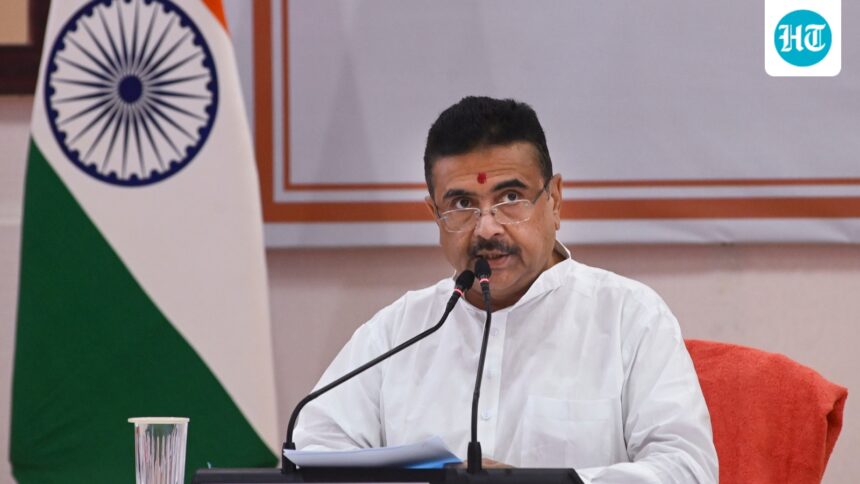
General approval was restored by the Suvendu Adhikari-led government on June 8.
Between November 2018 and April of this year, the Central Bank of Iraq sent requests to investigate 58 cases of bank fraud related to it. $2100 crores, but the previous state government responded to these demands. Following the change in government, the CBI has so far filed three separate bank fraud cases involving a total $191 Crores.
It is certain that the CBI is still investigating the cases in West Bengal in this period. The 250 cases filed by the CBI between November 2018 and April 2026 in the state were those directed by various courts including the high courts and the Supreme Court. These include 25 cases in 2018, seven cases in 2019, 53 cases in 2020, 77 cases in 2021, 25 cases in 2022, 18 cases in 2023, 16 cases in 2024, 20 cases in 2025, and nine as of April this year. Some of these cases relate to incidents such as the post-election violence in 2021, which included several FIRs and employment scams.
“Not a single case was filed during this period on the recommendation of the West Bengal government,” the second officer mentioned above said.
West Bengal was among 12 states, most of them ruled by parties opposed to the Centre’s National Democratic Alliance, that withdrew public approval for citizenship by investment starting in 2017, alleging that the Center was using the agency to target opponents as part of a “political vendetta”.
While Mizoram was the first state to withdraw the approval on July 17, 2015, West Bengal (in November 2018), Chhattisgarh (January 2019), Rajasthan (July 2020), Maharashtra (October 2020), Kerala, Jharkhand and Punjab (November 2020), Meghalaya (February 2022), and likewise, Telangana (October 2022), imposed Tamil Nadu (January 2023) and Karnataka (September 2024) restrict the scope of the RBI.
Since then, Mizoram, Maharashtra, Chhattisgarh, Rajasthan and now West Bengal have regained the powers of the RBI.
In 2025, a parliamentary standing committee on personnel matters recommended a separate or new law that would give the CBI the power to investigate cases without needing the approval of state governments.