In what is expected to be a tight contest between the Trinamool Congress (TMC) and the Bharatiya Janata Party (BJP) for the West Bengal Assembly elections, a wildcard has emerged for the Bhangar seat in South 24 Parganas district.

This seat, bagged by Nausad Siddique of the Indian Secular Front, remains a crucial seat for the TMC as it eyes its return to south Bengal. In 2021, Trinamool suffered a major blow when the ISF, formed that year, triumphed in the Bhangar seat. With this win, Siddique also became the only non-BJP opposition MLA.
Although Bhangar seat is the party’s only win in the 2021 elections, the ISF hopes to return to the seat and improve its performance as it fields candidates for 33 seats.
Back and forth between CPI(M) and TMC, then the wildcard
Bhangar Assembly constituency, established in 1951, was a stronghold of the Communist Party of India (Marxist). Despite some competition from the Indian National Congress, the CPI(Maoist) emerged as the dominant force until 2006.
In 2006, the Trinamool Congress ended the CPI(M) line. While the Communist Party regained its seat in 2011, the TMC later regained the seat in 2016.
In 2021, things changed for the TMC after the formation of the Indian Secular Front. With no other choice for voters, the ISF emerged victorious in the previous Lok Sabha elections, defeating Trinamul’s Razaul Karim by a margin of 26,151 votes.
The main aspect behind the formation of the ISF was to increase minority representation in Bengal, especially amid the political marginalization of Muslims in the state.
Read also | Maach, maangsho and BJP: Will TMC’s non-vegetarian demand scare away Bengal? Ground report
Siddiqui launched the ISF as a secular, center-left alternative to existing parties with a mission centered around social justice and inclusion, according to the party’s website. The party’s stated aims include “uplifting the backward masses – Muslims, tribals and Dalits” and fighting for the “deceived, deprived and oppressed” of Bengal.
Bhangar’s demographics are determined by its Muslim majority, which represents approximately 66 percent of registered voters.
What does the 2026 competition look like?
For the 2026 Assembly elections, the Trinamool Congress has nominated Saukat Molla for the Bhangar seat. From the Bharatiya Janata Party, Jayanta Jain is contesting from the seat. Meanwhile, Mehboob Islam and Mirja Hassan are also vying for Congress and CPI(ML) seats, respectively.
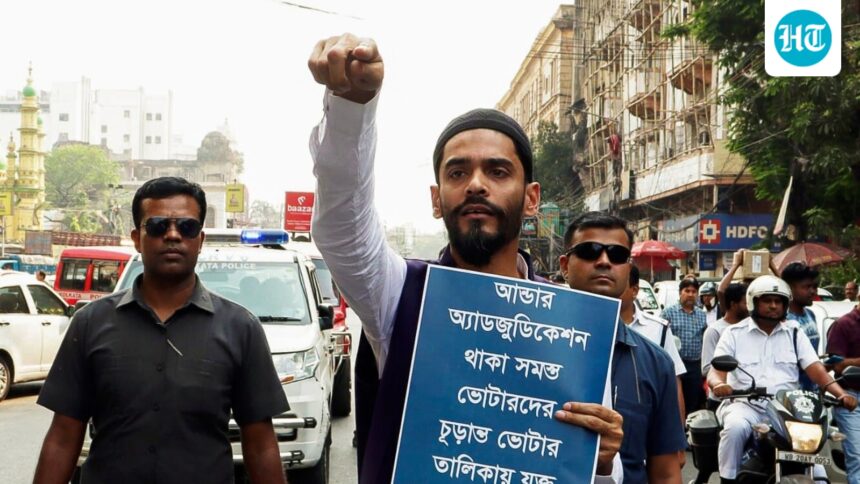
The recent Special Intensive Review (SIR) process is also expected to play a major role in the upcoming elections.
In South 24 Paraganas district, about 2.3 lakh deletions were made.
West Bengal will go to the polls in two phases. Voting, according to the Election Commission of India, will be held on April 23-29. The counting of votes will take place on May 4, with the results announced by the polling body on the same day.