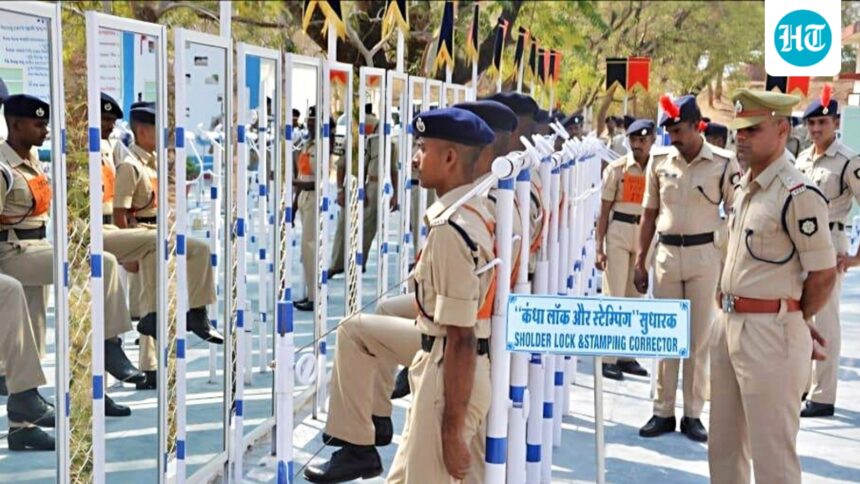
The Indian Army has revamped its dress regulations to do away with colonial-era traditions, allowing the wearing of closed-necked bandhi jackets on formal occasions, removing ceremonial bag straps, and making the carrying of swords on parade optional for review officers.

The changes are outlined in a newly released 174-page guide titled “Army Uniforms 2026,” which was reviewed by the Hindustan Times. Officials familiar with the matter said on Saturday that this evidence was last issued eight years ago.
“In keeping with the evolving sentiments of nationhood and sovereign identity, a number of deliberate improvements have been incorporated. Collectively, these improvements represent a progressive revision of the remaining vestiges of the colonial era while preserving the dignity, function and enduring traditions of the Indian Army,” the document said in a section titled ‘Indigenization and Harmonization with the National Spirit’.
As part of the reform process, the Army introduced a new winter dress called the 3B for all ranks. It consists of an Angolan shirt with a combat jacket and a hat.
Aside from uniforms, regulations cover a wide range of appearance and grooming standards for employees, from tattoos and body piercings to hairstyles, mustaches and the use of cosmetics.
For the first time, regulations allow officers to wear bandhi jackets as part of the formal dress code. This is in addition to the bandhgala, lounge suit, combination dress, or full-sleeved shirt with tie and formal trousers.
“A closed neck coat (bandy jacket) may be worn over a full-sleeved shirt. The bandhi jacket may be with or without a neck hook fastening (both styles are permitted) and will be of a solid, sober color only. Matching sober styled dress pants and closed dress shoes will be worn,” the guide stated.
The regulations allow women officers to wear colorful sarees, salwar kurtas and ankle-length straight trousers with a dupatta. They explicitly ban sleeveless kurtas, casual pants like shorts and cigarettes.
The pouch strap has been removed from Mess Dress No. 5 and No. 6. Each uniform is assigned unique dress numbers for convenience and easy reference. These belts continue to be permitted to officers up to the rank of Colonel in the Armored Corps, Mechanized Infantry, Artillery Regiment, Rifle Regiment, Maratha Light Infantry, Jammu and Kashmir Light Infantry and Signal Corps.
“The pouch belt will not be worn with Nos. 5 and 6. However, it may be worn with ceremonial dresses during regimental/corps functions,” the manual said.
Occasions to wear dress No. 5 and No. 6 include state functions at Rashtrapati Bhavan or Raj Bhavan, and when dining or attending official receptions at the residences of the Prime Minister, the three service chiefs and Army commanders. They are also worn on official occasions in honor of visiting foreign heads of state.
The regulations also drop archaic terms such as “royal”.
Commander-in-Chief Lt. Gen. VBS Kaushik stated in the introduction to the manual that the edition “reflects a deliberate step towards aligning the Army dress regulations with the contemporary Indian ethos by gradually removing residual colonial-era practices, accoutrements and terminology.”
The drive to indigenize the military accelerated five years ago when Prime Minister Narendra Modi addressed the Joint Commanders’ Conference in Kevadiya, Gujarat. He directed the armed forces to erase colonial customs and adopt Indian ways in doctrines, procedures and customs.
Army Outfits Manual-2026 reminds soldiers that tattoos and body piercing are prohibited. Employees may not wear any kind of bracelets in their uniform, except one sacred thread on the wrist on the puja day. No religious signs or symbols are allowed, except for Sikh soldiers.
The length of the mustache should not exceed 12 cm. All employees are prohibited from using deodorants and perfumes while in uniform, although aftershave is permitted.
Female employees face strict cosmetic regulations. The use of lipstick, colored nail polish, and nose pins is prohibited. Sindoor (vermilion) can be applied so that it is not visible when wearing a cap or hat.