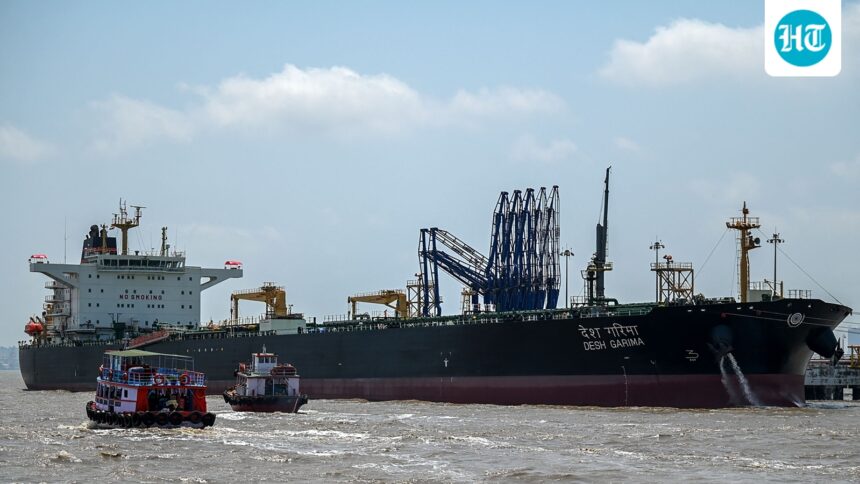
The center said on Sunday that 15 ships carrying fertilizers and key raw materials had safely crossed the Strait of Hormuz after it was reopened on June 17, easing concerns about supplies after maritime traffic was disrupted during the recent conflict in West Asia.

The Fertilizers Department said in a statement that the shipments, carrying urea, diammonium phosphate and sulfur, are arriving at Indian ports. These ships have been stuck since the war began on February 28.
According to the statement, the Center has secured 19.76 million tons of fertilizer against the estimated kharif requirement of 38.39 metric tons, equivalent to more than 51% of the expected demand for this season, which it said will help ensure uninterrupted supplies during the ongoing sowing season. Last year, the ministry’s inventory at this time amounted to 33% of the total demand.
Read also | How did the Indian oil sector maintain its stability during the Hormuz crisis?
The government cites planning
In the statement, Union Chemicals and Fertilizers Minister JP Nadda said the government has ensured uninterrupted fertilizer supplies through advance planning, diversification of imports and close coordination with Indian missions abroad, despite disruptions in global supply chains.
According to the ministry, India sourced urea from countries like Oman, Malaysia, Vietnam, Nigeria, Russia, Egypt and Algeria, while DAP and NPK fertilizers were procured from suppliers like Russia, Morocco, Jordan, Saudi Arabia and the United States through alternative shipping methods.
Shipping through the Strait of Hormuz was disrupted after conflict escalated in West Asia in February, raising concerns about supplies of crude oil, liquefied natural gas and fertilizers passing through one of the world’s busiest maritime trade routes. Traffic has gradually resumed since mid-June after the United States and Iran signed a memorandum of understanding.
Local production exceeds targets
The ministry also said that natural gas supplies to fertilizer plants, which were temporarily reduced to about 65% during the crisis, have now been fully restored, enabling all domestic urea plants to operate at full capacity.
Read also | The Strait of Hormuz crisis underscored India’s energy resilience
India produced 7.2 million tons of urea during April and June, exceeding the target of 6.8 million tons, while DAP production reached 984,000 tons, exceeding the target of 861,000 tons, it said.
The government said the availability of fertilizers remains comfortable, with stocks of essential nutrients, including urea, DAP, muriate of potash, NPK and single superphosphate, standing at 16.3 metric tons as of July 2.
Shipping costs are still high
According to the statement, five other ships on their way from the Strait of Hormuz, heading to India, contain urea, diphosphate and sulfur.
Even as traffic resumes, industry executives say it could take more than three months for shipping, insurance and supply chain costs to fully return to normal. Sanjeev Kanwar, managing director of Yara South Asia, noted that shipping-related costs remain high even as supply routes reopen, with war risk insurance premiums on ships transiting the Strait of Hormuz still close to 4%, compared to normal levels of around 0.15%.