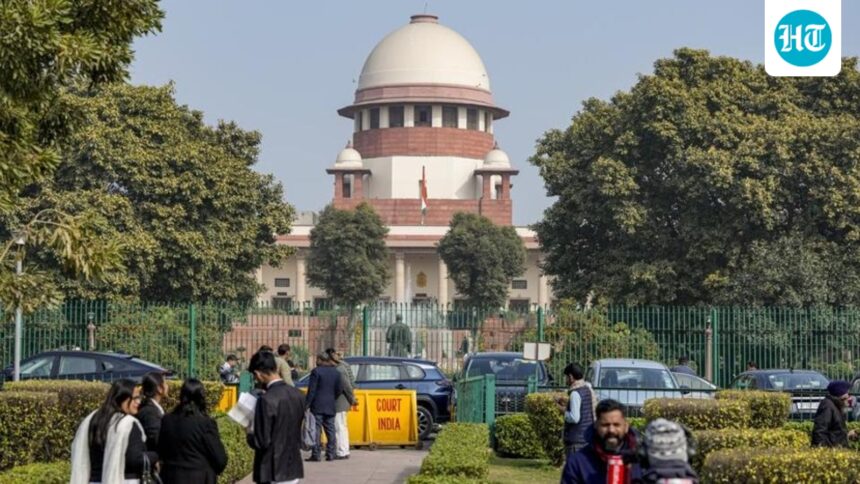
The Federal Cabinet on Tuesday approved a proposal to introduce the Supreme Court (Number of Judges) Amendment Bill, 2026, in Parliament. The bill seeks to amend the Supreme Court (Number of Judges) Act, 1956 to increase the strength of the Supreme Court of India by four judges – from the current 33 judges to 37, excluding the Chief Justice of India.

According to the government, this move aims to improve the efficiency and performance of the Supreme Court. With a larger number of judges, the Supreme Court is expected to handle cases more effectively and help reduce waiting, ensuring faster delivery of justice, a PIB statement said.
The additional expenditure on salaries of judges, support staff and related infrastructure will be met from the Consolidated Fund of India, the statement said.
Briefing reporters after the Cabinet meeting, Information and Broadcasting Minister Ashwini Vaishnau said that the proposed increase in the number of judges will help the Supreme Court work more efficiently and ensure faster delivery of justice.
The power of Supreme Court justices has risen in stages since 1956
The strength of the Supreme Court was expanded several times through amendments to the Supreme Court (Number of Judges) Act, 1956. Initially, the Act limited the number of judges (excluding the Chief Justice of India) to 10. This number was raised to 13 in 1960 and then to 17 in 1977. However, the workforce remained limited to 15 judges until 1979, when the limit was raised on the request of the Supreme Court. Chief Justice of India.
Subsequent amendments increased the scheduled strength to 25 in 1986 and to 30 in 2008. The last amendment came in 2019, when the number of judges was increased from 30 to 33.
The latest proposal seeks to increase the strength to 37, with the aim of addressing the increasing caseloads and improving judicial efficiency.