Parliament is scheduled to meet in the monsoon session next week. It will meet in very different circumstances compared to its last session in April. Parliament’s budget session ended with the government failing to muster a two-thirds majority to pass a bill that combined the introduction of reservation for women with the delimitation of electoral districts. This was the first time that the Narendra Modi government had actually lost the vote since it came to power in 2014. The loss was certainly preordained, because it did not have the numbers needed, but the fact that it pushed for the vote suggested a political motive, which this column then described as political trapping. What was also striking during that vote was that the opposition prevented any attrition in its ranks.
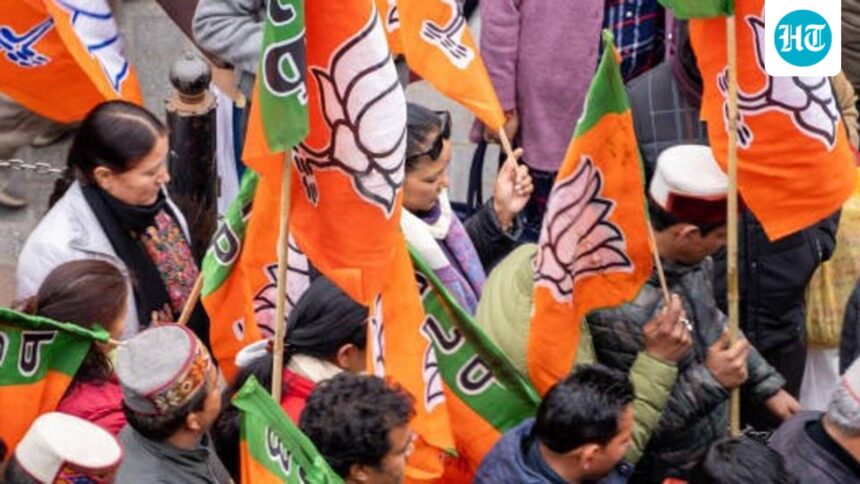
Three months later, the opposition has become a largely emaciated beast. The TMC, the third largest opposition party after the Congress and the Samajwadi Party, has witnessed parliamentary atrophy after its loss in the West Bengal elections. One by one, its MPs and MLAs continue to abandon ship to join the BJP directly or indirectly. The DMK, the fourth-largest opposition party, broke away from the Congress and the All India Bloc after the Congress and smaller DMK allies broke a pre-poll alliance to support the new TVK government in Tamil Nadu. Two other opposition parties, the Shiv Sena (UBT) and AAP, saw their MPs deserted to the BJP or its allies. Another party, the National Congress Party (Socialist Party), is sending mixed signals about its legislative position in the council.
These developments have revived the question of whether the BJP will actually be able to engineer the majority required to push through the bills it wants in the budget session. The Indian opposition, which had been complaining about the BJP stealing the elections, has become so vulnerable to the BJP stealing or wooing its own MPs that even this question cannot be rejected out of hand even though the current numbers demand it.
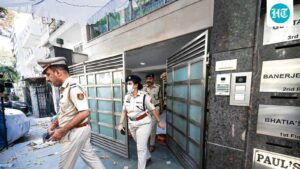
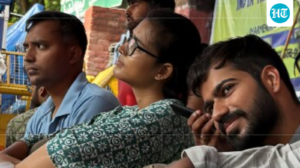
While the parliamentary opposition seems to be on the verge of atrophy, it appears that the opposition from outside parliament is beginning to rise again. Unless things change in the next few days, this will be the first time under the Modi government that Parliament has convened with a prolonged protest – and I’m talking about the ongoing hunger strike by the Janata Party – held in Parliament’s backyard Jantar Mantar, the historic seat of the protest next to the seat of Indian state power.
While this remark may anger many extremists, the protest would never have happened if the government had not wanted it to. Unlike most protests under the current government, including the 2020 farmer protests, no one was allowed to set up camp in the former protest capital of Lutyens’ Delhi. The BJP and its larger ecosystem are certainly still attacking protesters and their supporters with controversy, but allowing a protest near Parliament is certainly a departure from the current government’s approach to protests.
Another political issue that has dominated the news cycle is the alleged theft of donations from the Ram temple in Ayodhya. Here too, the BJP has been on the defensive, as the temple bureaucracy draws from its core ideological set. The opposition, both in Uttar Pradesh (where elections are scheduled for early next year) and across the country, have spent a great deal of time and energy dealing with the issue.
Does the CJP protest and donation theft issue put the BJP in a politically backward position? Will this be evident in the upcoming elections, especially in Uttar Pradesh? Only fools try to predict elections in India. But here’s a counterpoint.
What if neither of the adverse political developments that sparked the two controversies – the leak of medical entrance exam questions that led to the CJP hunger strike and the mismanagement of donations in Ayodhya – had happened not because the BJP wanted them to, but because it could not have prevented them?
Saying this does not offer an excuse or apology for these developments, nor does it deny that the perpetrators may be part of the larger or closer BJP ecosystem. It’s just an important distinction. The political history of the BJP and its rapid rise is full of controversies and polarizations – from the Ram temple movement to demonetisation to the farm laws – that occurred by design rather than by accident. Both current developments are more procedural than political in nature. And if this is indeed the case, is the BJP high command prepared to allow some democratic venting on these issues, perhaps (there is still a great deal) sacrificing some expendable soldiers or even lieutenants?
My biggest motivation to discuss this comes from two facts to consider. First, the aggrieved parties in these controversies are either loyal supporters of the BJP (devoted to Ayodhya) or certainly not hostile to the party (young middle-class students). So, it doesn’t really need to go after these Muslims, like it does for example with Muslims protesting against the BJP. Second, if the BJP really wants to correct course on these issues, it may not be averse to the idea of being seen to do so after some kind of democratic resistance, lest the regime be seen as a tone-deaf oppressive monster that has entirely co-opted the opposition.
To say this is not to belittle the protesters, whose struggle in the CJP hunger strike has no reason to be described as insincere, nor to dismiss political criticism of the misappropriation of donations. Perhaps what this means is that the BJP now realizes that it is past the honeymoon period in government, and must distinguish between unintended anti-incumbency battles and ideological battles. While the first war may be waged by a truly oppressed mob, the second war is led by an ideological enemy.
For the opposition, this presents a new kind of dilemma. These struggles must be supported. If they do succeed, their claims of political victory will undermine their criticism of the country’s beleaguered democracy. At the same time, on the policies that actually flow into the larger political game – which is what the state of Parliament is – it continues to come under attack from the BJP. This is exactly what makes politics such a difficult game. Participants must fight short-term battles and do their best to win them, but winning the battle does not necessarily mean winning the war. In fact, momentary victories or even the semblance of combat can distract from larger weaknesses that matter more to the outcome of an all-out war.
In conclusion, the children (protesters) are fine and the gods who stole from the temple should be punished, but it is also plausible that none of these things matter in relation to the larger politics. There, the writing on the wall remains as it was on May 4 when the results of the last Lok Sabha elections were announced: the BJP has more than made up for the political ground it lost after the 2024 Lok Sabha elections. The roots of this success are, more than anything else, ideological, even if the factional clouds within the BJP and the structural weaknesses of the economy may be clustering in the distance, as I argued in a recent edition of this column.