There are no strong electoral winds blowing across Tamil Nadu to indicate trends and trends emerging for the likely outcome of the Assembly elections scheduled on April 23, 2026. Nor is there any indication that there is something brewing beneath the political surface. Alliances have been formalized, seat-sharing arrangements have been finalized, a list of candidates has been prepared and circulated outside party headquarters, and finally the nomination submission process has begun. Everything is ready to go, but the usual electoral hype and excitement are largely missing, reflecting the mood of the country.

The calm behavior of the average voter is surprising. There is an overwhelming sense of sobriety without any preference or bias for anti- or pro-incumbency sentiment. This is the defining image of the incumbent voter with the potential choice between the role of the politically mature voter and the trappings of the populist impasse of Tamil Nadu cinema and politics. There is a common assumption that first-time voters, both young men and women, are likely to vote for actor Vijay and his political party Tamizhaga Vetri Kazhagam (TVK) not because of a desire for change but because of their lack of awareness and understanding of history, political culture and priorities in state politics. Generation Z is unable to explain or defend their choices, leaving room for counter-narratives from other age groups, older men and women, and loyalists to traditional parties like the Dravida Munnetra Kazhagam (DMK) and the All India Anna Dravida Munnetra Kazhagam (AIADMK). Hence, there is more scope for Gen Z to change their minds in narrowing down their choices to either DMK or AIADMK. Neither Vijay nor his party have done anything significant to control the mood of Generation Z. Thus, for all practical purposes, the emerging ground realities and the controversial interest over the candidate’s announcement in the constituencies point to the derivation of a bipolar rivalry between major alliances like the DMK-led Secular Progressive Alliance and the AIADMK-led National Democratic Alliance.
There are interesting developments with the announcement of candidates for all 234 constituencies by Vijay-led TVK with the message that the party wants to showcase its vote share in the current Assembly elections as a sign of its popularity besides grabbing the attention of voters across the state. This is also likely to have a direct impact on the vote share of Seeman-led Naam Thamizhar Katchi (NTK) party which polled 6.7% in the 2021 Assembly elections and emerged as a notable third force in vote share despite not having any seat. In all likelihood, Vijay’s TVK is expected to perform better than NTK and is also expected to reduce NTK’s vote share. There are 12.5 lakh (1.25 million) registered first-time voters, accounting for 2.2% of the total electorate, and are considered a potential swing group for Vijay TVK. There are 1.18 lakh (11.8 million) young voters across broad categories, roughly estimated at between 25% and 30% of the total electorate. Although it appears to be the most decisive bloc in the Tamil Nadu elections, this faction is unlikely to go in only one direction with any single party including TVK. Mobilizing and attracting this youth group remains a major challenge for all parties and an uphill task for the DMK and AIADMK due to issues like corruption and striving for change.
Women voters in Tamil Nadu constitute 51% of the electorate – 2.89 lakh crore (28.9 million) out of 5.67 lakh crore (56.7 million) with a high probability of election outcome. This has been the main arena of mobilization and focus of the DMK and the government towards this constituency through grassroots programs and welfare schemes. Women voters are generally drawn to consistently practical options, focusing on accrued benefits rather than being swayed by popular appeals. Women voters largely preferred Jayalalithaa in 2016 and moved towards the DMK in 2021 due to leadership and governance concerns. The absence of a charismatic women leader like Jayalalithaa and the weakening of the AIADMK into factional groups has shifted women voters towards a stable government showered with welfare schemes and beneficial women-centric programmes. This is the primary stabilizing force for the DMK with it expected to gain a significant vote share while the male electorate generally remains unchanged and divided between the two dominant Dravidian parties (DMK and AIADMK). Although the AIADMK faces significant erosion in vote share due to its perceived weakness and factional politics. DMK and AIADMK loyalists among men are less likely to vote for another political entity outside their party and its allies. This is a hallmark of DMK and AIADMK loyalists in state politics. This is also the same reason why the AIADMK under the leadership of Edappadi Palaniswami has been able to retain its core status and heir to the institutional legacy and cadre base of the party despite multiple divisions and divisions within the party. There is a small percentage of voters who prefer to vote for the DMK rather than the Bharatiya Janata Party (BJP) due to Dravidian identity politics.
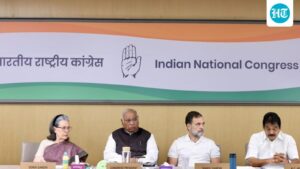
Minorities (Muslims 6% and Christians 6%) represent a combined share of 11-13% of the total registered voters in Tamil Nadu. Minorities form a crucial voting bloc in nearly 30 to 40 constituencies with a high concentration of Christians in Kanyakumari, Tirunelveli and Thoothukudi while Muslims remain influential voting groups in Ramanathapuram, Vellore and Chennai belt. There is a built-in view that Vijay’s TVK is more likely to attract Christian voters due to community affiliation and that the composition of the TVK leadership also serves to promote this awareness as a hidden strategy. It is necessary to address that the minority leadership (church and Muslim community) is fully aware that any division or polarization of votes away from the DMK will only help the BJP in Tamil Nadu politics. This is the same rationale behind the BJP’s keenness for TVK to join the NDA alliance. There is dissatisfaction and resentment over the seat-sharing adjustments within the DMK-led SPA as revealed by the Congress, Thirumavavalavan-led Viduthalai Chiruthaikal Katchi (CK) and the communists but the BJP factor connects them all. Given the permutation and combination of vote share, the DMK still maintains a slight edge over the opposition parties unless the voters’ mood swings in the coming days before the elections on April 23. The sobriety of the process cannot be mistaken, and in the end it will reveal the maturity of voters.
(Professor Ramu Manivannan is a political scientist – researcher and activist in the fields of education, human rights and sustainable development. He is currently the Interdisciplinary Director – Center for Indigenous Knowledge Systems, Kurumppalayam Village, Vellore District, Tamil Nadu)