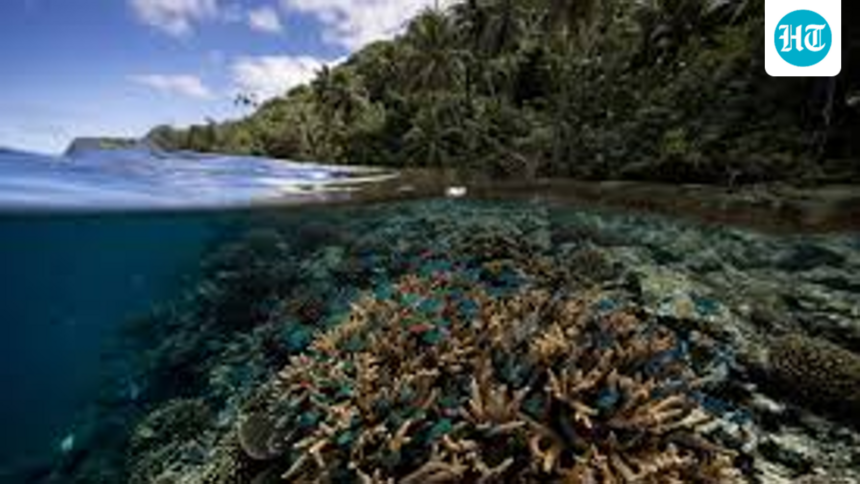
Nearly 165,922 square kilometers of coral reefs in 71 countries and 100 regions have the strongest potential to survive the climate crisis, according to a study by the Wildlife Conservation Society (WCS) and Macquarie University launched in Kenya on Tuesday.

The study, supported by the Bloomberg Ocean Initiative and presented at the Our Ocean Conference, builds on the original assessment of 50 coral reefs published in 2018, the first global effort to identify coral reef systems most likely to withstand climate change and serve as priorities for conservation action.
Expanding on its foundation, the new study identifies a tripling of climate-resilient coral reef areas in 30 additional countries and 54 territories and jurisdictions, revealing a much greater chance of coral reef persistence than previously known. The study found that only 28% of identified climate-resilient coral reefs are located within protected or protected areas.
“This is a major breakthrough in our understanding of the resilience of coral reefs. Coral reefs are often labeled as ecosystems that cannot be saved, but this research shows that there is a global population of coral reefs that have the potential to survive and recover from the climate crisis,” said Emily Darling, director of coral conservation at WCS and co-author of the study, and called for these reefs to be protected.
The study found that more than half (61%) of these climate-resilient coral reefs identified are concentrated in Australia, the Bahamas, Cuba, Indonesia and the Philippines. In June 2025, Australia, the Bahamas and Indonesia signed the high-level commitment on climate-resilient coral reefs to protect them.
New research identifies new areas of climate-resilient coral reefs in the Caribbean, Pacific and Indian Oceans, including in Belize, Panama and the Turks and Caicos Islands, which were not recognized by previous 50 global coral reef assessments.
An interactive map, depicting such coral reefs, shows the presence of such climate-resistant coral reefs between India and Sri Lanka in the Gulf of Mannar and the Palk Strait, across Lakshadweep, in the Gulf of Kutch along the state of Gujarat, and some along the Andaman and Nicobar Islands.
Researchers have identified three distinct pathways by which coral reefs could persist in a warming world. Some coral reefs act as “avoidance refugia” and are located in rare “cold spots” in the ocean where local conditions protect coral reefs from extreme heat and provide refuge from warming trends.
Others have been classified as “resistant refuges,” where corals have developed adaptations that enable them to withstand heat stress, bleaching, and other climate impacts that would otherwise damage less resilient coral reef systems.
The third group is classified as “recovery refugia,” which are reefs that can quickly recover after disturbances such as bleaching events, hurricanes or storms, rebuilding coral cover and ecological function faster than surrounding reef systems.
Nearly one billion people depend on coral reefs for food security, livelihoods and coastal protection. Water pollution from sewage, agricultural drainage, sediment loss, unsustainable fishing practices, poor tourism management and coastal development continue to accelerate the decline of coral reefs around the world.
Only about 28% of identified priority coral reefs are currently located within protected or protected areas, leaving more than 119,000 square kilometers outside current conservation frameworks, the study said. “Many existing marine protected areas also still face significant challenges in terms of financing, enforcement and long-term management capacity,” the study said.
The world’s coral reefs are facing an unprecedented crisis, with the risk of irreversible changes to coral ecosystems, said Kyle JA Zawada, lead author of the study from Macquarie University. “But there is still hope. Our work identifies pockets of resilience where coral reefs can survive and recover from disturbances. By protecting these resilient coral reefs, we can help resist declines caused by local human pressures and climate change.”
These corals could serve as living seed banks for broader ecosystem restoration, Zawada said, helping to ensure that future generations inherit living, functioning corals, not just degraded versions of what they once were.