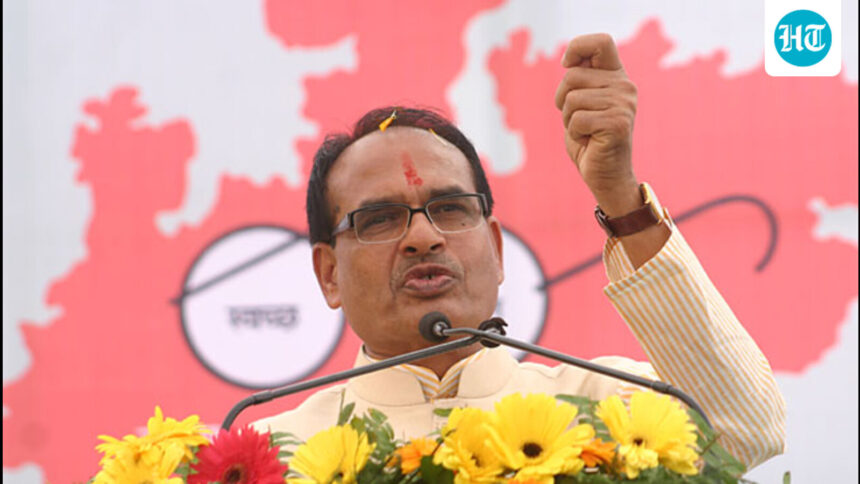
Union Agriculture Minister Shivraj Singh Chouhan on Wednesday strongly called for devolution of the country $1.71 lakh fertilizer subsidy directly to farmers’ bank accounts, rather than channeling it through crop nutrients manufacturers, an indication that discussions were underway to reach a consensus on how to initiate the reform.

Addressing farmers at the Krishi Vigyan Mela, the government’s annual agricultural science fair, in the national capital, the minister said the government has linked nearly 80.5 million farmers with biometric-based digital IDs Aadhaar as part of the ministry’s Agristack platform, which would help facilitate targeted delivery of all types of direct benefit transfers.
“We have to take many decisions through consensus. One such issue is the fertilizer subsidy. It is a huge subsidy. We now have to reconsider this… because we often receive complaints. Farmers are not getting the full benefits and there is diversion (of fertilisers),” Chauhan said.
Food security in the world’s most populous country is closely linked to the timely availability of fertilisers, the bulk of which India imports to meet domestic needs. The government subsidizes a range of crop nutrients to farmers through manufacturers and importers, who sell them at a discount to farmers through point-of-sale devices. The government then compensates these companies through the fertilizer subsidy bill.
“The subsidized fertilizers are meant for farmers but are diverted to other users…to factories and elsewhere. The nation should now consider whether the fertilizer subsidy should be transferred directly to the bank accounts of farmers,” the minister said.
According to a 2020 report by the National Academy of Agricultural Sciences (NAAS), direct benefit transfer in the case of fertilizer opens “the possibility of linking Soil Health Card (SHC) data with DBT for optimal nutrient use, thus providing support.”
The digital identities of farmers have made direct transfers very effective, the minister said. This includes benefits related to PM-Kisan, under which land-owning farmers are paid wages $He said 6,000 a year.
Separately, the agriculture ministry is studying data generated through the Agristack platform and digital identities of 80.5 million farmers to develop a policy proposal to move towards cash payment of crop nutrient subsidies directly to farmers, an official said separately.
The AgriStack platform consists of three databases, namely the National Register of Farmers, geo-referenced village maps, and the record of crops grown, which are maintained by the Center and state governments as a single source of farmer details. “Such detailed information will help estimate local fertilizer use patterns,” the official said.
However, the NAAS report points to several implementation challenges. “Fertilizer consumption varies widely across states and may not have a specific trend consistent with the total cultivated area,” she said.