The National Zoo in Delhi is looking for partners for at least 16 species of animals and birds that are currently represented by either a solitary individual or same-sex groups to enhance reproduction, animal welfare and genetic diversity, an official said on Saturday.

Zoo director Sanjit Kumar said multiple exchange programs are currently in various stages of discussion, with the immediate focus on pairing single-sex animals.
“Exchanges are at various stages of discussion. Depending on our requirements, we can then give away surplus species. Our primary focus is on mating same-sex animals, while also inculcating a new breed,” Kumar said.
He said discussions were ongoing with Mahendra Chaudhary Zoo in Chatbir, Punjab; Bhagwan Birsa Biological Park, Ranchi; Rohtak Zoo, Haryana; Kanan Bandari Zoo, Bilaspur, Chhattisgarh.
Among the 16 species for which Delhi Zoo is looking for partners include ostrich, rhea, Egyptian vulture, Indian gray hornbill, gray langur, little Indian civet, rhinoceros, black bear, barn owl, gray francolin, black francolin, black swan, bar-headed goose, spoonbill, porcupine and blue-winged parakeet.
Some species have been without mates for years and are being given priority, officials said. These include the zoo’s two male ostriches, both of which are about seven to eight years old; A nine-year-old female, Rhea, has been at the zoo since 2018; Male Egyptian vulture over 20 years old; Male Indian Gray Hornbill, about 10 years old; 15-year-old male gray langur; The only small male Indian civet; One male black swan; And an 18-year-old female rhinoceros.
The rhino enclosure briefly housed a breeding pair after the male was brought to Delhi in 2024, but the animal died last year. Likewise, the zoo’s black bear population now includes four females after the male bear died in 2024.
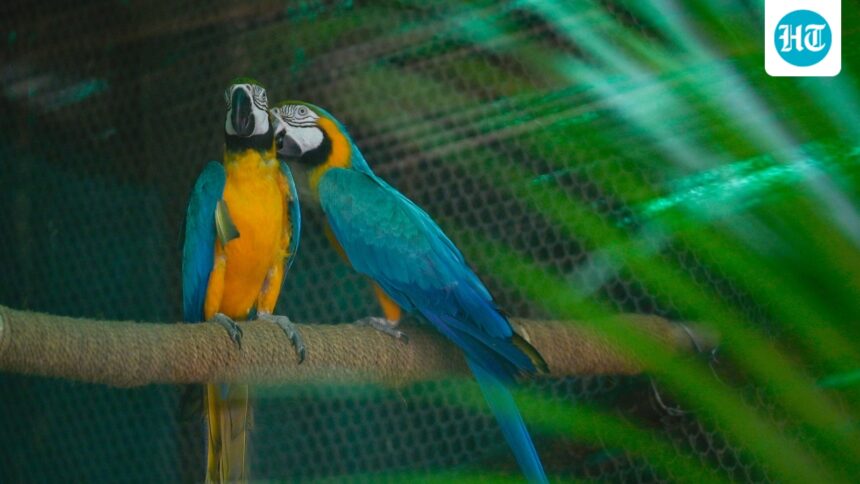
The zoo is also looking for mates for a male barn owl that has been alone since 2022, a male gray francolin, a male black francolin, a male spoonbill, and a male Indian civet. Male partners are being sought for the lone female porcupine, the female Blue-winged Parakeet and the remaining female Bar-headed Geese.
However, another official, who did not wish to be named, said that some efforts to bring in partners had not materialized previously.
“The two male ostriches came from Chatbir Zoo in 2021 and have remained without partners since then. The previous exchange never took place. We also have four black bears, all females. A male died three years ago. Even among the females, two are rather old, and one of them cannot see properly. The male rhinoceros was brought to the zoo in 2024 as a partner for the female, but he died last year, so another male is now needed,” the official said, adding that A more proactive approach can help these species find mates sooner.