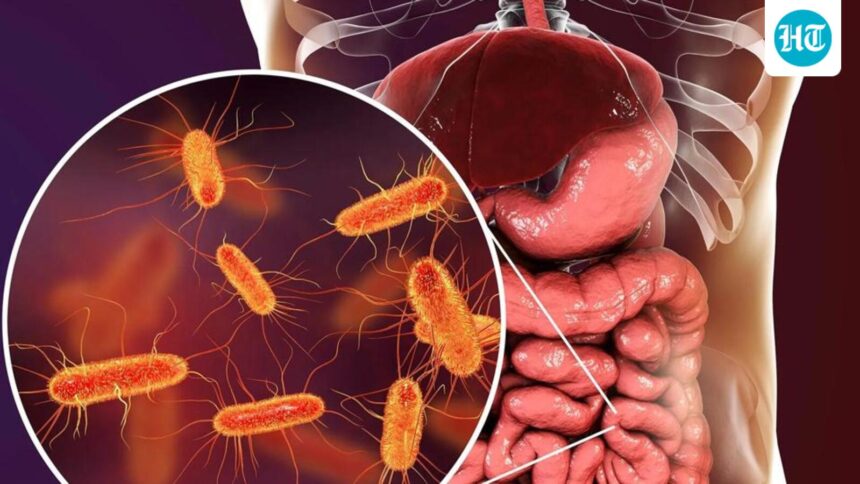
Imagine picking up a discarded plastic water bottle, feeding it to a vat of bacteria, and harvesting a drug on the front lines of Parkinson’s disease. A paper published in March in the journal Nature Sustainability goes something like this: Engineered E. coli bacteria convert polyethylene terephthalate (PET) plastic waste into levodopa, or L-DOPA, the standard drug for managing Parkinson’s disease.

This work, led by Stephen Wallace from the University of Edinburgh, represents the next stage in a research program that has ratcheted up the ambition and value of what engineered microbes can extract from plastic waste. In 2021, the same laboratory converted PET into vanillin, the compound responsible for the distinctive vanilla flavour, achieving a 79% conversion. In 2023, they advanced to adipic acid, a major precursor to nylon, pharmaceuticals and perfumes. Last year, paracetamol, which is produced via a new-to-nature chemical reaction that takes place inside living bacterial cells, came with about 90% production under ambient conditions. Each advance solved a specific biochemical problem while climbing the ladder from flavorings to synthetic chemicals to over-the-counter pain relievers.
Read also: From a scientific standpoint: Can a gut microbe change a person’s memory?
The L-DOPA paper is the most ambitious step yet. PET is first broken down into its base material, terephthalic acid. This is fed to engineered bacteria carrying genes borrowed from three different microbes which act sequentially and achieve the final conversion to L-DOPA. The main challenge was that the intermediate compound inhibited the production of L-DOPA. The team elegantly solved this problem by dividing the work between two cooperative bacterial strains, each handling half of the conversion process.
The optimized system achieved conversion of up to 84% of PET-derived feedstock, including industrial waste streams. From a depolymerized PET bottle, the team isolated 193 milligrams of L-DOPA, roughly within the range of multiple oral doses, depending on the formulation and patient regimen. The team also coupled the process with carbon dioxide capture from algae in a proof-of-principle step aimed at reducing net emissions.
The Edinburgh Pipeline is not an isolated effort. Other laboratories have engineered microbes to convert PET-derived chemicals into drugs, industrial compounds, and nylon precursors. A study published in late 2025 in the journal Nature Communications showed that microbes can now deal with mixed post-consumer plastic waste, not just pure PET. The field is accelerating, and the results are really exciting.
But this alone will not solve our plastic problem. All of the plastic-to-medicine processes I mentioned rely on PET, which represents only a minority share of the world’s plastic. Mainstream plastics, such as polyethylene and polypropylene, dominate by size, and their chemistry is much harder on microbial enzymes.
Size is another worrying fact. The annual global demand for L-DOPA is often estimated at around 250 tons, and is produced via existing methods. A microbial alternative needs to demonstrate compelling advantages in emissions, cost, or supply chain flexibility before any pharmaceutical company will consider switching. There is no mature, widely tested regulatory pathway specifically designed for medicines made from heterogeneous plastic waste feedstocks. Purity requirements for pharmaceutical manufacturing and the variety of real-world plastic waste, contaminated with dyes, adhesives and plasticizers, may also be an issue.
Read also: Scientifically: The gene found in rice can reduce the use of fertilizers
But the processes will get better and faster. For India, these developments carry a special charge. The country produces more than four million tons of plastic waste annually according to official estimates; Independent evaluations suggest that the real number may be several times higher.
India is both a generic pharmaceutical powerhouse in the world and a country facing an increasing burden of neurological diseases as its population ages. The prevalence of Parkinson’s disease is rising, with estimates at nearly 1 million cases. It is bewildering to imagine a future where the plastics choking Indian rivers are transformed into raw materials for the medicines needed by Indian patients.
After all, plastic is more than just an environmental pollutant. It is a source of carbon, and with engineered microbes, it can be converted into valuable chemicals. Whether the path from the laboratory to the industrial reality takes five years or fifty years, the direction of travel is clear. We are in an age in which microbes not only decompose our waste, but reconstruct it as something else entirely.
Anirban Mahapatra is a scientist and author. His latest book is When Medications Don’t Work. The opinions expressed are personal.