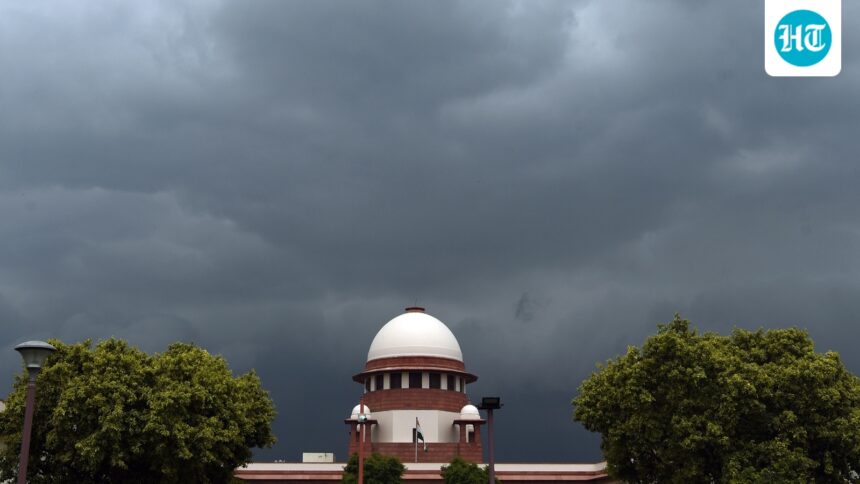
The Supreme Court recently directed the Central Bureau of Investigation to decide within a month whether “sensitive” documents should be provided to a retired army officer facing prosecution under the Official Secrets Act for exposing alleged irregularities within the Research and Analysis Wing (RAW) in a book published in 2007.

At a hearing Friday, the Supreme Court said confidentiality cannot be a reason to deprive a veteran of these documents if they are the basis for his prosecution under the OSA. “If you (the CBI) are using the documents against him, you cannot say they are confidential. You can find a way out without seeking an order from this court,” a bench of Justices JK Maheshwari and Atul S Chandorkar said.
The court was hearing a petition filed by Major General (retd) V K Singh, who had exposed irregularities within the RAW in his book ‘Indian External Intelligence – Secrets of the Research and Analysis Wing (RAW)’ published soon after his retirement in 2007.
Singh’s lawyer Suroor Mander indicated that the documents are necessary for his defence. “My client is seeking 12 documents and statements from four witnesses.” She indicated that the court ruled in their favor and ordered that a copy of each document be provided under certain conditions. But Mander said the Delhi High Court overturned that ruling, stating that secrecy only allowed documents to be examined.
“Why don’t you let him have the documents?” The bench asked the CBI, which is represented in court by Additional Solicitor General (ASG) Davinder Pal Singh.
“There is sensitivity attached to these documents. They are only interested in knowing what the documents are. The Supreme Court has allowed the inspection, which serves their purpose,” the ASG said.
The CBI alleged that Singh worked as Joint Secretary in the Cabinet Secretariat (R&AW) from November 2002 to June 2004 and, in the course of his official duties, had access to confidential information relating to RAW. According to the CBI, the writers published various “secret confidential information” including names, designations, functions of various officials, station codes and other technical details in violation of the OSA.
The matter will be taken up next April 10.
“Our aim is to ensure that a person involved in certain documents is not deprived of the same,” the court told the CBI.
The Central Bank of Iraq requested a follow-up on the matter after four weeks to obtain instructions. Mander requested a stay of the trial, which the bench did not consider necessary since the CBI was represented in these proceedings.
The CBI registered the case against Singh in September 2007, accusing him of disclosing confidential information harmful to the security of the country. In April 2008, the Center gave permission to file an indictment under the OSA. In 2009, the trial court took cognizance of the chargesheet under Sections 3 and 5 of the OSA dealing with “espionage” and “unlawful communications” along with other offenses relating to criminal breach of trust by a public servant and criminal conspiracy under the Indian Penal Code (IPC).