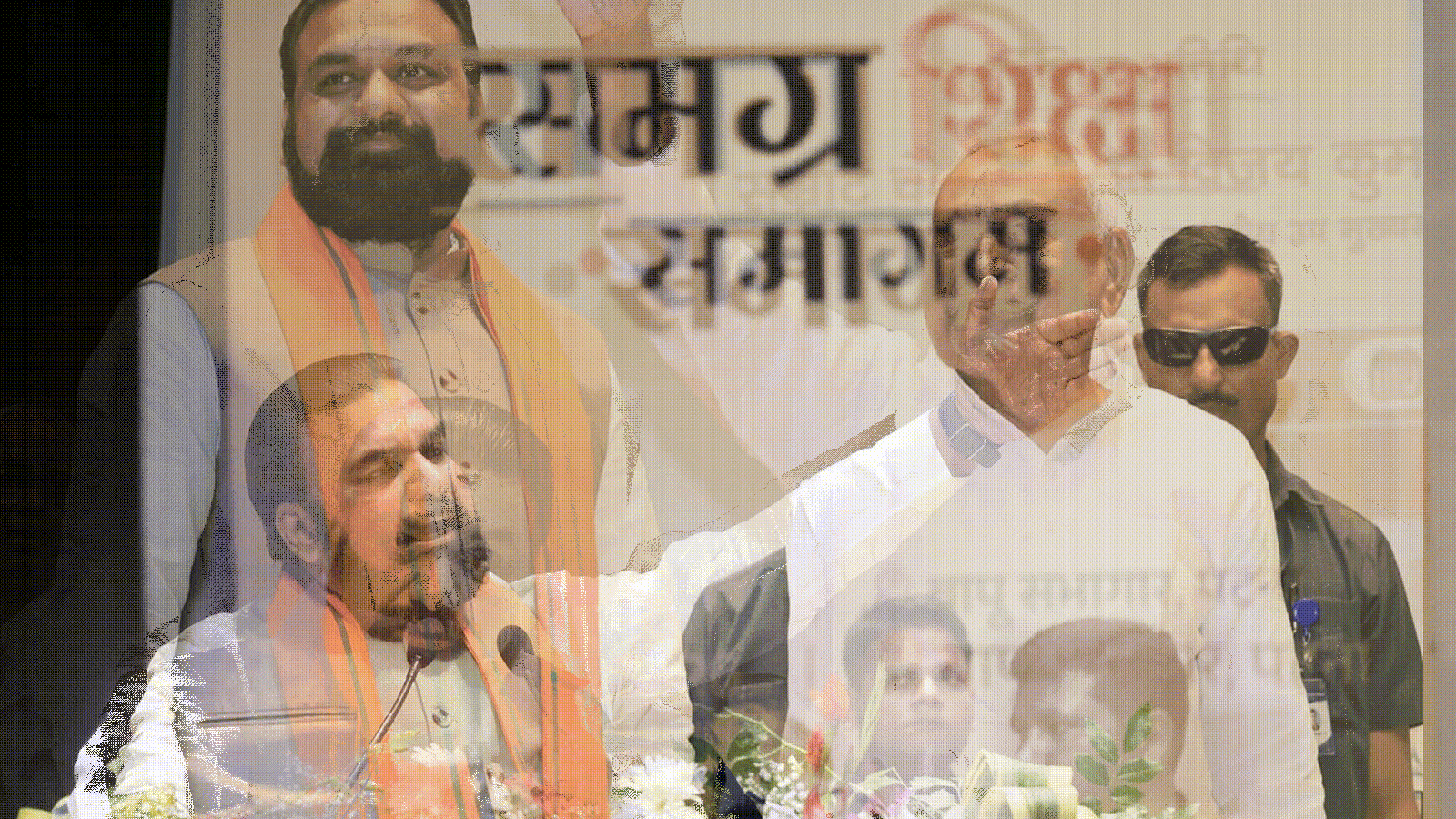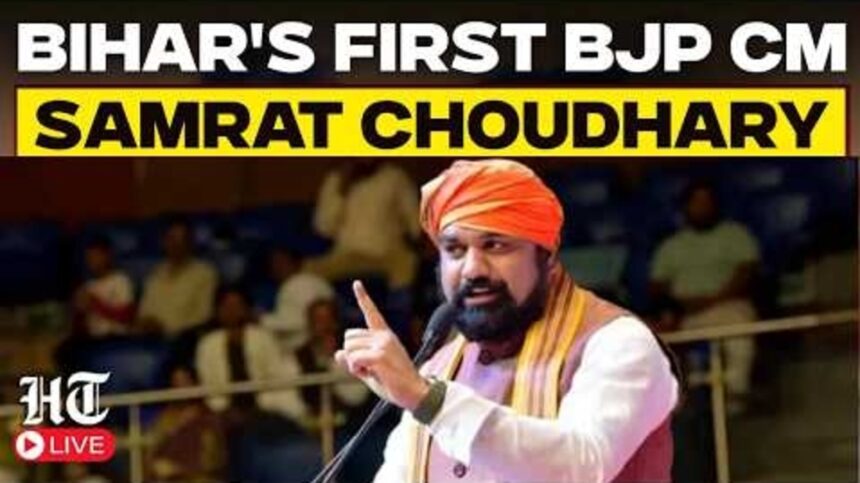
Samrat Chaudhary is set to become the next chief minister of Bihar after he was elected leader of the BJP legislative party on Tuesday, marking a historic shift as the BJP takes direct charge of the state government for the first time.
The decision was finalized in a meeting held in the presence of Central Controller Shivraj Singh Chouhan and was later approved by the NDA legislators in the state. The motion to name Chaudhary was moved by Vijay Kumar Sinha and seconded by Renu Devi, Mangal Pandey and Dilip Jaiswal.
path Live updates on Bihar government formation here
The new Prime Minister is expected to meet the Governor to demand formation of the government on Tuesday, and the swearing-in ceremony is likely to be held on April 15 at Lok Bhawan.
Soon after being selected as the BJP’s legislative party leader, Samrat Chaudhary expressed his gratitude for the party’s leadership in a post on X, calling the role a “sacred opportunity” to serve the people of Bihar.
“I express my sincere gratitude to the BJP central leadership for restoring their faith in me… This is not just a position for me, but a sacred opportunity to serve the people of Bihar,” he said.
He added that he would work with “dedication, commitment and integrity” and remain committed to taking Bihar to “new heights of development, good governance and prosperity” under the leadership of Prime Minister Narendra Modi and party president Nitin Nabin.
The end of the Nitish Kumar era
The announcement comes just hours after Nitish Kumar resigned from the post of Prime Minister, bringing an end to a political career that spanned nearly two decades. His exit comes after his recent move to Rajya Sabha.
Nitish Kumar chaired his final Cabinet meeting on Tuesday, a reflection of his 20-year tenure and the pace of development achieved under his leadership. He congratulated the incoming government and assured full cooperation and guidance in the future.
The meeting turned into a farewell as ministers and officials expressed their gratitude for his leadership. “It was an emotional moment for all of us,” senior leaders said, while others described him as a guiding force whose contribution will be remembered by the people of Bihar.
After the meeting, Kumar posed for a group photo with the Cabinet and officials before returning to his official residence. He is scheduled to meet with the governor to formally submit his resignation.
Even as he exits state politics, Nitish Kumar is expected to remain active in public life as a member of Rajya Sabha, and continue to contribute to the development of Bihar from the national stage.
A specific political legacy
Nitish Kumar’s exit marks the end of an era in Bihar politics. A product of the JP movement, he rose from student activism to become one of the state’s most enduring leaders. Over the years, he has been sworn in as Prime Minister several times and has remained central to Bihar’s political landscape through shifting alliances.
He is often credited with transforming the governance discourse in Bihar since 2005 – with a focus on roads, electricity, law and order, education, and women-led development. Initiatives such as improving infrastructure and expanding social welfare programs have helped reposition Bihar as an ambitious state after years of stagnation.
Despite political realignments over the years, Kumar retained his position as a pivotal leader, often emerging as a kingmaker in various alliances.
The new phase of the National Democratic Rally Party
With Samrat Chaudhary taking charge, the NDA is entering a new phase in Bihar politics, with the BJP assuming the leadership role within the coalition. Allies, including the Janata Dal (United), remain part of the government as discussions continue on government formation and power-sharing arrangements.
The National Democratic Rally enjoys a comfortable majority in the 243-member parliament, ensuring the stability of the next government.