After months of watching the economy take a hit due to the disruption of energy supplies through the Strait of Hormuz and maintaining balance between the various parties involved in the West Asian conflict, the Iran-US peace agreement will provide relief to India although concerns remain about the long-term viability of this arrangement.

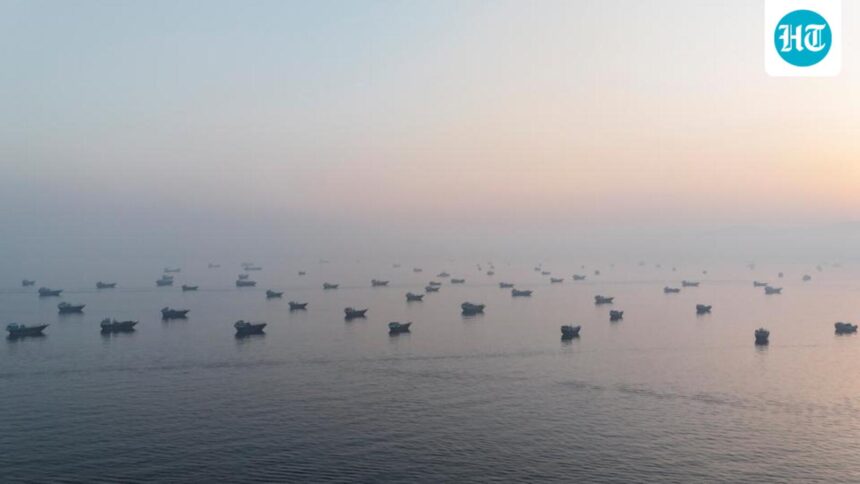
After more than three months of hostilities, Iran and the United States agreed on Sunday to a memorandum of understanding during talks brokered by Pakistan and Qatar. The agreement, scheduled to be signed in Geneva on Friday, ends the US blockade of Iranian ports and reopens the Strait of Hormuz, which was used to transport nearly half of India’s oil imports until the conflict began in February.
Prime Minister Narendra Modi joined other world leaders on Monday in welcoming the peace deal but stressed the need to restore peace and stability in West Asia and ensure unhindered trade. Within hours of the deal being announced, the tanker Disha, operated by a consortium led by Shipping Corporation of India, crossed the Strait of Hormuz and headed to Gujarat carrying a cargo of 62,370 metric tons of LNG from Qatar.
Read also | In the midst of a war between the United States and Iran, clean energy allows India to take risks
Despite the breach, shipping companies are watching developments warily, and experts said restoring normal traffic through the vital waterway could take weeks, or even months, given ongoing concerns about the peace deal’s durability due to sharp disagreements between Iran and the United States.
For India, which relies heavily on West Asia for energy supplies, the deal promises to mitigate rising oil and gas prices, pressure on the rupee and inflation risks that have intensified during the conflict, said Ajay Srivastava, founder of economic think tank Global Trade Research Initiative (GTRI).
Srivastava said the conflict also exposed India’s over-reliance on West Asia, where it gets about 50% of its crude oil, about 70% of its LPG supplies and about 90% of its LNG imports, and forced refiners to look for alternative supplies from markets as far away as Venezuela.
Read also | Netanyahu praises the US-Iranian agreement and says that the forces will remain in Gaza, Lebanon and Syria
While ASSOCHAM President Nirmal K Minda hailed the Iran-US arrangement as a “major breakthrough” for the benefit of the entire world, Commerce Minister Rajesh Agarwal echoed lingering concerns when he said that many trade-related challenges “could be significantly reduced if the peace agreement persists and remains sustainable.”
India has been forced to strike a delicate balance since the beginning of the conflict on February 28, given its close relations with the United States and Israel – Modi visited Israel days before hostilities began – and its long-standing historical ties with Iran and Arab countries. Iran was also among the country’s top three energy suppliers until India was forced to halt purchases of Iranian crude oil in 2019 due to US sanctions imposed by President Donald Trump in his first term.
While India emphasized a return to dialogue and diplomacy to end the conflict, India also denounced Iranian drone and missile attacks on West Asian countries such as Kuwait, Qatar and the United Arab Emirates, which are home to millions of Indian citizens. The government has made coordinated outreach to major energy suppliers – with Modi himself visiting the UAE last month – to ensure that oil and gas supplies are not interrupted, although reports from the region suggest it could take months for some energy facilities targeted by Iran to return to operation.
Read also | Why Iran ceasefire and Modi-Trump talks could redefine India’s strategic outlook: HT decodes
Reaching a long-term agreement between Iran and the United States, including an end to US sanctions on Iranian oil sales, will be crucial for New Delhi to resume energy purchases from Tehran and further develop Iran’s Chabahar port, which is central to India’s plans for the North-South International Transport Corridor. The US exemption from sanctions related to Indian operations at the Chabahar port expired in April, creating uncertainty about New Delhi’s long-term plans for the strategic facility.
Srivastava believes that the biggest lesson for India is the strategic one. He added: “The United States did not embrace peace out of good faith. Rather, it did so because the costs of war had become very high. Tehran’s ability to disrupt energy supplies, raise global oil prices and impose economic and military costs forced Washington to negotiate.”
“India must draw a clear lesson from this outcome – engage the United States as an equal partner, not a subordinate one. Whether in trade, technology, energy or foreign policy, India must reject arrangements that undermine its interests,” he said.