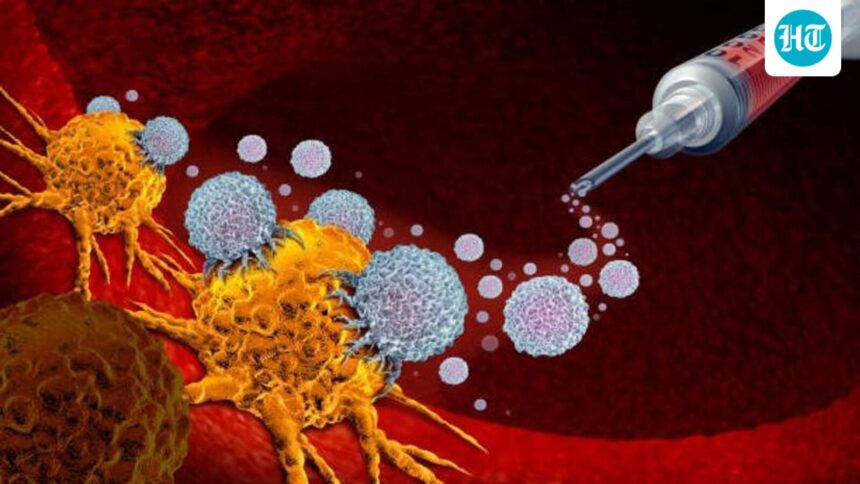
Pharma major Roche on Thursday announced the launch of its immunotherapy drug Tecentriq which, for the first time, can be administered subcutaneously, cutting the drug delivery time to seven minutes compared to a traditional intravenous infusion, which takes at least two hours.

“By reducing treatment administration time to approximately seven minutes, Tecentriq SC is a breakthrough innovation that has the potential to significantly improve patients’ cancer treatment experience – reducing treatment time by 80%,” Roche India said in a statement.
Lung cancer is one of the most common types of cancer in India, with about 80,000 cases diagnosed annually.
Doctors say immunotherapy has been a game-changer in cancer treatment, and the drug, which can be injected under the skin, makes treatment more comfortable for cancer patients.
Dr Sajan Rajpurohit, Director and Head of Medical Oncology at Medanta Noida and Defense Colony, said: “We have been using the drug in our hospital for quite some time. It has proven to provide great mental relief to patients. Also, cancer patients can be so weak sometimes that finding a vein can be a task. Subcutaneous delivery reduces pain, which is important in cancer patients.”
As a result, compliance is also better, doctors said.
“We have noticed that due to the easy delivery mechanism, patient compliance also improves. You do not need a complicated setup; a trained nurse at a facility closer to home can deliver the medicine. This innovation is very useful,” said Dr Amit Ruthan, head of medical oncology at Manipal Hospital in Bangalore.
In Western markets, the subcutaneous version has already been available for the past few months.
However, the convenience comes at a higher price, as the Maximum Retail Price (MRP) for a single vial is in place $3.7 lakh and a patient, on average, may need about six cycles.
“It may also be less as the duration of treatment depends on a range of factors that include stage of diagnosis, patient response etc., which may reduce the drug requirement and thus reduce the overall cost,” said Dr Rajpurohit.
However, the company said it has patient support programs that can significantly reduce the cost.
“We have the Blue Tree program which subsidizes the cost of treatment, and we hear that in CGHS (Central Government Health Scheme) the subcutaneous version is also being added, so the overall cost will come down significantly. EMI subsidy is also being provided to patients,” said Rajan S, Chief Communications Officer, Roche.
According to doctors, approximately 15% of their patients can afford treatment without support, and with support, the volume of patients rises to about 40%.
In addition, not all lung cancer patients qualify for treatment; About 50% of diagnosed patients can be fit for treatment.
“Those with a PD-L1 marker have shown good results and are ideal candidates for the treatment. The price will eventually come down in the long term, as we have seen with other drugs when demand increases,” Dr. Rothan added.