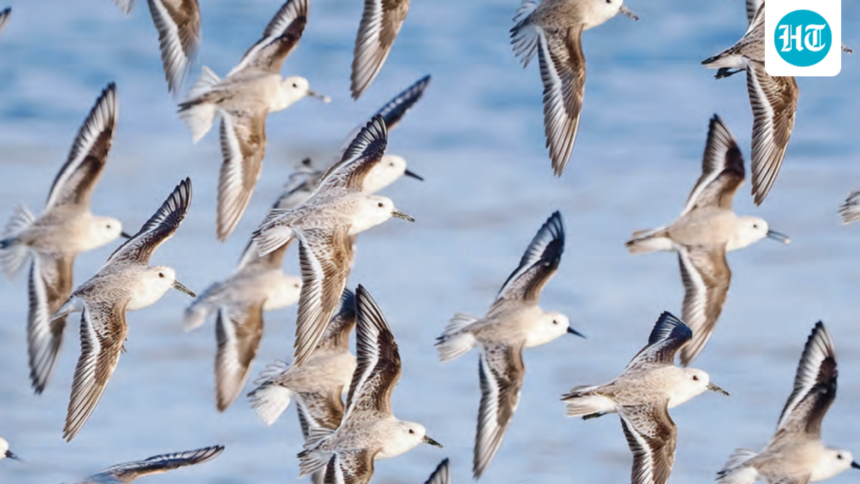
About 24% of migratory species face the risk of extinction, according to an interim report released on Thursday, updating the Convention on the Conservation of Migratory Wildlife Species and the Status of the World’s Migratory Species (2024). The report’s findings are scheduled to be presented at the 15th meeting of the Conference of the Parties to the Convention on the Conservation of Migratory Species of Wild Animals (CMS COP15), a legally binding UN treaty, in Campo Grande, Brazil, from March 23-29.

The report said 26 CMS-listed species, including 18 migratory shorebirds, have moved to higher risk of extinction categories. About 7 CMS species have improved, including the saiga antelope, the chameleon-horned oryx, and the Mediterranean monk seal. The report said that 9,372 key biodiversity areas important for migratory species have been identified. But 47% of the area covered by biodiversity areas is not covered by protected and conserved areas.
“The first global report was a wake-up call,” said Amy Frankel, Executive Secretary of the Convention on Migratory Species. “This interim update shows that the alarm is still ringing,” she said. “Some species are responding to concerted conservation action, but many are still facing increasing pressures across their migratory routes. We must respond to this evidence with coordinated and effective international action.” Frankel added that overexploitation, habitat loss, and fragmentation are the biggest threats facing migratory species around the world.
The report stressed that the conservation status of migratory species is generally deteriorating. Since the previous analysis, which used version 2022-2 of the IUCN Red List, 386 of the 1,200 CMS-listed species have been reassessed. Of these, 34 CMS-listed species have been reclassified by the IUCN Red List, which includes seven positive changes and 26 negative changes. The Balkan long-eared bat is now in the vulnerable category as it has recorded a long-term population decline.
White-winged mallards, pelican geese, blue swallows, broad-billed sandpipers, curlew sandpipers and Siberian sandpipers all faced declines. The report said that African penguin numbers are declining very rapidly, and the effects of fisheries and climate change on prey are among the likely main factors.
The report noted ongoing avian influenza, which could have widespread repercussions for migratory species. “Since 2021, the H5N1 highly pathogenic avian influenza (HPAI) virus has been detected in an unusually wide host range of birds and mammals and has caused significant mortality in numerous populations across multiple continents,” the report said.
She added that the reported mass mortality events affected a range of CMS-listed bird species, including endangered African penguins, endangered Humboldt penguins, near-threatened Peruvian pelicans in South America, near-threatened Dalmatian pelicans in Europe, and hooded cranes and red-crowned cranes in Asia.
The global extinction of the Appendix I-listed slender-billed curlew is now considered certain, the report said. There have been pronounced long-term declines in the numbers of many migratory shorebirds in East Asia, the Australian Flyway, in the East Atlantic Flyway (particularly subarctic and boreal-breeding species), and at coastal sites in India.