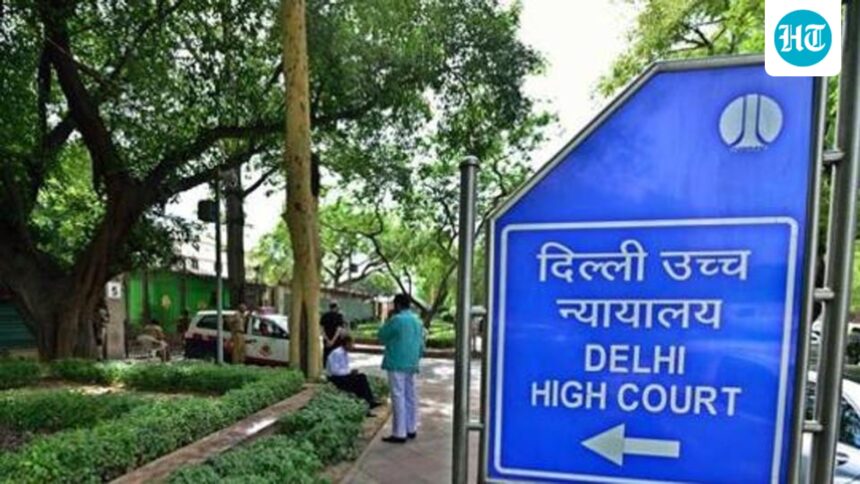
The Delhi High Court on Thursday asked how the rights of 150 million Telegram users could be curtailed because one group of people showed up for the test. The court made the remarks while hearing Telegram’s plea against the government’s decision to restrict the platform ahead of NEET re-examination scheduled for June 21.

“How can we stop the rights of 150 million people just because one group of citizens appear in exams?” asked a bench led by Justice Tejas Karia as lawyers for Telegram and the Indian government presented their arguments.
While appearing before the Government of India, Solicitor General Tushar Mehta said that a large number of groups and channels were operating on Telegram and that the court may have never heard of channels operating in this way on other platforms.
Citing the Anuradha Bhasin case, the court discussed how the government can block the rights of another person to protect the rights of another person.
Also Read: Banning Telegram is not the answer to paper leaks problem, says AAP chief Arvind Kejriwal
Chief Secretary Mehta responded by saying that when there is an internet ban in any state or part of the state, only 10% of the people may be miscreants…but this applies to the entire region.
The court then said that such a ruling is permissible when there is a law and order situation.
“Here comes the proportionality test,” the bench said.
“Retreat is the real threat”
Chief Secretary Mehta then urged the bench to consider the ban in the interest of the public and students. He stressed that Telegram’s “edit” feature cannot be ignored, according to Bar and Bench.
“they [Telegram] You have a feature called Edit Date and Time feature. Let’s say that on June 21, everyone has the paper, and anyone can post it to Telegram on June 22 and edit the date and time to say it was uploaded on June 18. “This happened in 2024.”
Drawing a comparison with other apps, SG Mehta said that if a message is edited, it means so. However, this is not the case with Telegram. He said it was a “tailored restriction” and no user whose rights were said to be affected by the ban had appeared in court.
“When an edited post comes to us through any other medium, it indicates that it has been edited. They [Telegram] They say they are going to do it.”
“Students are angry and this is understandable. The credibility of the examination has been completely lost at the national level. Although this is not my concern at this moment. The consideration at this moment is a matter of public order,” General Secretary Mehta said.
“The potential damage is enormous, which is why I say that gentlemen should not interfere at this stage.”
Back and forth between advisors
Appearing on Telegram, senior advocate Dhruv Mehta said the timestamps do not change if the message is edited. “The timestamp will not change. If you post on June 21, you can’t say it was published on June 15.”
SG Mehta then argued that the content of PDF files can be changed even if the timestamp remains the same. “People can see that on June 18, people had a question paper dated June 21.”
What’s the problem?
The matter of Telegram’s plea against the decision to restrict access to it before re-examination was heard by a leave bench headed by Justice Tejas Karia.
SG Mehta said there were “shocking” activities that were not removed despite being reported to the app. The app disputed the argument and said it acted proactively to remove the content, according to the Bar and Bench.
“They are saying that the ban on the platform is necessary as it is not possible to monitor the information on the platform in real time,” Mehta said, citing the government order.
The panel then raised a hypothetical question: It said that if a paper was leaked and by the time the request reached the application, the damage would have been done. “What is your suggestion? How can we handle it?”
Mehta then said that the problem here is the spread of false information regarding paper leakage and fundraising. “The alleged paper on the stand is not the real paper.”
The court then discussed how a person could know that the paper being circulated on the app is not the real paper even at the time of conducting the tests.
seat: How can one know that until exam time?
SG Mehta brings up his points
He said that Telegram’s functionality is different from other applications. “Unlike other brokers, their architecture is different. What is accomplished on this platform cannot be accomplished on other platforms.”
SG Mehta gave an example to support his arguments, where he said that on Telegram, a single account user can create 40 bots. While in the case of WhatsApp there is one bot per user. “They have a multiple stimulatory structure so the robots can reproduce more.”
He also said that Telegram operates through a cloud-based system, making it difficult for law enforcement agencies to identify the actual users behind illegal activities. Even if a platform bans an account, investigators often face challenges tracking down the individual responsible, according to Barr & Bench.
“The scale at which it can multiply is only available on Telegram. Also, suppose if they remove one bot, other bots can be created under different names and IDs, so measures taken against bots have only temporary relief. We do not have this problem with other intermediaries like Facebook or WhatsApp. This platform works through the cloud, so even if we block something and someone causes harm, the law enforcement agency will not be able to reach that person,” said Secretary General Mehta.
He added that Telegram’s privacy policy also states that deleting an account results in deleting all stored data, messages and media.
“Most preferred application for terrorist activities,” says SG Mehta.
Citing a report, SG Mehta added that Telegram is the preferred platform for terrorist activities. He told the court that Telegram faced regulatory and law enforcement challenges in several other jurisdictions as well because of the design of its platform, according to the Bar and Bench.
He added: “We do not deny that they did not implement our orders, but rather we say that they are ineffective,” stressing that the ban is only temporary.