The Rajya Sabha announcement of by-elections for three seats in West Bengal on Monday may have set a deadline of sorts for the Election Commission of India (ECI) to decide on rival claims for the name and symbol of the Trinamool Congress party after both factions – one led by Ritabrata Banerjee and the other led by Mamata Banerjee – claimed to be the real party.

The July 24 by-election was sparked by Sukhendu Sekhar Rai, Sushmita Dev and Prakash Shek Barak resigned last month after the TMC lost the assembly elections in West Bengal.
Nominations for the three seats must be submitted by July 14. If both factions nominate separate candidates, the EEC would have to decide who the TMC candidate is by that date, or allocate provisional identities to both groups while keeping the name of the TMC pending.
Why might ECI have to make a call on the “real” TMC?
Separately, the little-known Form 22A – which the party uses to appoint its authorized agent to verify votes of legislators in Rajya Sabha polls – may hasten matters. If both factions submit separate forms, the IEC will have to make a call before the election.
“From what I can see, this is heading towards a freeze,” said former chief election commissioner S Y Qureshi, predicting that the ECI would lock down TMC’s actual name and double flower symbol until it makes a final ruling, and allocate temporary identities to both factions in the meantime — “for example, TMC-A and TMC-B.”
He noted that such an arrangement would allow both camps to contest the three Rajya Sabha seats under distinct names allocated by the Election Commission of India, while the larger question of which faction constitutes the “real” TMC remains up in the air.
The BJP, which holds 207 of the 294 seats in the West Bengal Parliament, is expected to win all three seats.
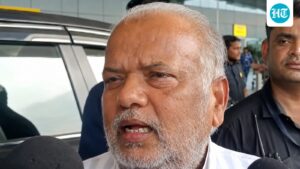
These developments came on the day Mamata Banerjee’s faction told ECI that it is the real TMC. Senior TMC MP Kalyan Banerjee, who represented the party before election officials in Delhi, said, “The party’s report confirmed that the tenure of the National Working Committee extends until 2027,” which contradicts the rebel camp’s claim that its term has already expired. He described the splinter group as “completely dishonest”, alleging that they had illegally taken over the party office with the support of the state chief minister and the police.
Read also: TMC claims Mamata Banerjee was denied access to family of 12-year-old girl who was raped and murdered in Kolkata’s Baruipur
The submission was in response to the IEC’s July 2 directive, asking both Mamata Banerjee and Bangladesh opposition leader Ritabrata Banerjee to submit supporting documents on their rival claims on the party’s organizational structure, approved signatories and symbol, by 5.30pm on July 6.
Ritabrata Banerjee rejected the charge, saying, “We are the real TMC,” and accused Mamata Banerjee’s camp of promoting the “cult of individual and family politics.” He claimed the support of more than two-thirds of the party’s 80 members in Bengal, along with many former ministers, councillors, and zilla parishad members. Arup Roy, who heads the newly formed National Water Committee in the rebel camp, said his team “submitted all the papers from the June 22 session.”
“The CEC Gyanesh Kumar and the commission heard both delegations and assured them that the matter will be looked into, with the possibility of holding a personal hearing if requested before taking a decision on whether the dispute amounts to a formal split,” a senior CEC official said.
How is party ownership determined?
The Electoral Symbols Decree of 1968 establishes three criteria for determining party ownership: aims and objectives, party constitution, and majority. The aforementioned official added that “the majority test, which is a measure of regulatory and legislative strength, is likely to be decisive, although legislative majorities alone are not considered decisive in and of themselves.”
If the Election Commission of India does not issue its ruling by July 14, both factions could field rival candidates under the TMC ticket for the same three Rajya Sabha seats, forcing the returning officers to reject one or both sets of papers and likely taking the dispute to court. To be nominated, a candidate needs at least 10 legislators or 10% of the Electoral College (state assembly) as proposers – meaning both factions have the power to field candidates.
In the event of the Shiv Sena’s vertical split in 2022, the IEC froze the party’s undivided symbol, allotted provisional identities for a provisional bypoll held on 3 November 2022 in Andheri East (Mumbai) Assembly constituency, necessitated by the death of MLA Ramesh Latke, and eventually gave the name and symbol to the Eknath Shinde-led faction about four months later on 17 February. 2023.