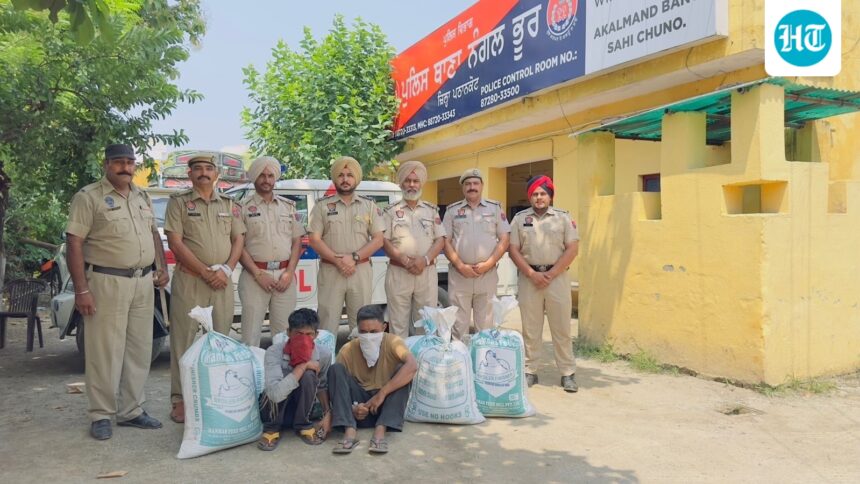
Punjab saw the highest number of cases and arrests made under the Narcotic Drugs and Psychotropic Substances (NDPS) Act among six northern states and union territories (UTs) between 2020 and 2024, while Delhi emerged as a major hub for synthetic drugs and precursors, according to a comparative report based on Narcotics Control Bureau (NCB) data.

The report was based on data from six states and UTs, including Jammu and Kashmir, Punjab, Himachal Pradesh, Haryana, Delhi and Uttarakhand.
Punjab recorded 45,967 NDPS cases and arrested 62,245 people during the five-year period — the highest among all jurisdictions studied, according to the report. The state also topped heroin seizures, with 5,942.29 kg recovered and 56.7 million tablets seized.
Also Read: Assam tops ISP arrests in East, North-East; Manipur leads heroin seizures
The data highlighted distinct trafficking and consumption patterns across the region, with border states such as Punjab and Jammu and Kashmir showing a rise in heroin and cannabis seizures, while Delhi reflected a strong synthetic drug profile.
Delhi records large quantities of cocaine and mephedrone seizures
Delhi was characterized by its urban markets and drug network linked to logistics. Between 2020 and 2024, authorities seized 1,525.86 kg of cocaine, 272.51 kg of mephedrone, and 989.45 kg of ephedrine/pseudoephedrine in the national capital.
The report described Delhi as having the “clearest urban market and synthetic/precursor profile” among the six regions, while urging law enforcement agencies to keep an eye on nightlife circuits, courier channels, logistics hubs and darknet-related trafficking.
Delhi also reported seizure of more than 20.6 million tablets during this period.
Haryana is emerging as a major transit corridor
Haryana has been identified as a major land trafficking corridor connecting Delhi, National Capital Region, Punjab, Rajasthan, Uttar Pradesh and hill states. The authorities confiscated 51,074 kg of panja, 74,828 kg of poppy husk/straw, and 1,465.99 kg of opium in the state over a period of five years.
Read also: Amit Shah declares war on drugs after eliminating Maoists
The state’s extensive highways and railways require continuous highway blockades and logistics monitoring operations, the report said.
J&K shows a continuing threat from heroin and cannabis
Jammu and Kashmir recorded 897.20 kg of heroin seizures and 3,195.30 kg of cannabis recovered from 2020 to 2024, indicating what the report called a “border-bound risk profile”.
The report linked the seizures to exposure to smuggling linked to Pakistan and weaknesses in mountainous crossing routes.
Dole Hill is under the scanner
Himachal Pradesh and Uttarakhand recorded a lower total number of cases compared to Punjab, Haryana and Delhi, but the report noted increased risks associated with cannabis, heroin and pharmaceutical drugs.
Himachal Pradesh recorded over 2,022 kg of cannabis seizures during the five-year period, while Uttarakhand reported 1,389.90 kg.
The report recommended closer intelligence sharing between agencies including NCB, BSF, SSB, state police units and railway authorities to tackle inter-state trafficking networks and diversion of precursors.