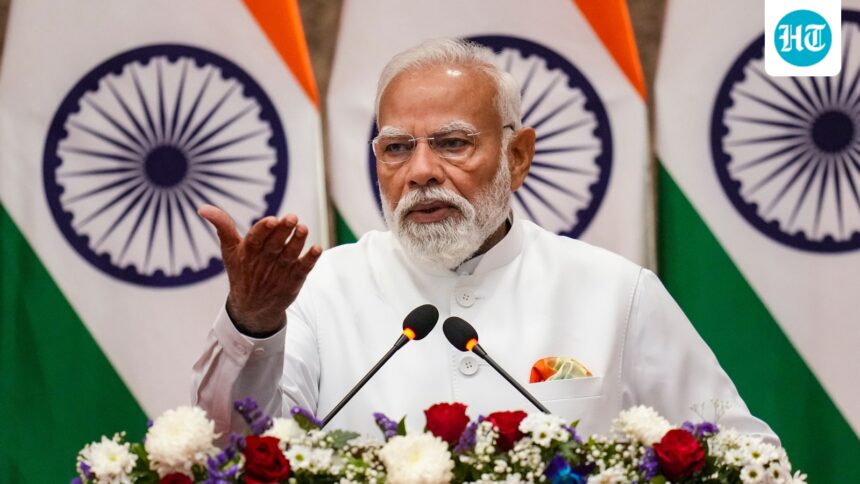
Prime Minister Narendra Modi is scheduled to hold a virtual meeting with chief ministers on Friday to discuss the ongoing conflict in West Asia. However, leaders of countries heading to elections are unlikely to participate in the interaction.

The discussion is expected to focus on coordinated action and promoting a unified approach in the spirit of ‘Team India’.
Read also | “Consequences are inevitable if…”: Top quotes from PM Modi’s message to India amid the war
India’s position on the West Asian crisis
Prime Minister Modi has taken a cautious but firm tone on the conflict in West Asia, warning of long-term global and domestic repercussions while emphasizing preparedness and resilience. In his speech before Parliament, Modi described the war as a cause of a severe global energy crisis, noting that its effects could last for a long time and have inevitable consequences if the situation continues as it is.
He urged citizens to prepare for possible unrest, even as he stressed that the government was actively working to minimize the impact on India.
Read also | Prime Minister: Powerful groups have been formed to deal with the repercussions of the Iranian war
At the heart of India’s response is a combination of strategic preparedness and diplomatic outreach. The government has created seven empowered groups – modeled after the Covid-era response – to manage critical areas such as fuels, supply chains, fertilizers, and inflation. At the same time, India is also working to diversify its energy sources, exploit new markets for crude oil and gas, and ensure the continuous flow of essential supplies.
Read also | Highlights from the All-Party Meeting: Government says more Indian ships will transit Hormuz, security of expatriates remains priority
India also encouraged diplomacy and de-escalation to resolve the conflict. Domestically, Modi called for a coordinated “Team India” approach, seeking cooperation from countries to manage supply chains and protect vulnerable populations from the repercussions of the crisis. He added that there is a strong need to protect farmers and ensure that basics reach the poor and migrant workers.
(With inputs from Hizb ut Tahrir correspondent)