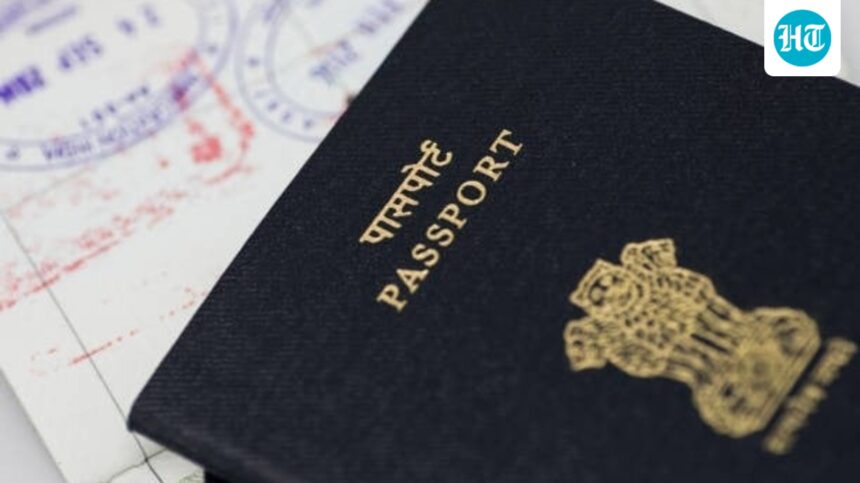
A passport is a travel document, not a citizenship document, Foreign Affairs Ministry officials said on Wednesday, while highlighting measures built into new chip-based electronic passports, such as biometric data, to enhance global acceptance and reduce the risk of fraud.

The Ministry of External Affairs will organize a two-day Human Resource Mobility Forum next week to highlight legal pathways to immigration and facilitate communication between foreign employers and Indian nationals seeking jobs abroad, officials said on the occasion of the Passport Seva Divas, celebrated on June 24 to commemorate the promulgation of the Passports Act in 1967.
Officials said the passport remains a travel document, not a citizenship document, as it certifies the citizenship of Indians when they are abroad.
“The passport is issued after a lot of due diligence and relies on documents from several government agencies,” an official said.
A total of 14.7 million e-passports have been issued since the chip-based documents were introduced last year as part of the revamp of the Passport Seva programme, officials said.
E-passports, which contain a built-in antenna and a radio-frequency identification (RFID) chip that contains personal details and biometric data, represent about 10% of the total passports. All new passports are currently chip-based passports.
Officials said that electronic passports provide high security measures and significantly reduce the scope of unauthorized access or tampering of data, as well as the possibility of obtaining the document through fraudulent means. “It is difficult to issue fake passports, and e-passports provide greater reassurance to immigration authorities abroad and make clearance faster,” an official said.
The chips used in the e-passports are sourced from India Security Press in Nashik, which in turn sources them from abroad, officials said. Best practices from other countries have been studied to make Indian e-passports as robust as possible, and efforts are underway to enhance document security, they said.
While Tata Consultancy Services (TCS) is acting as the technology and services provider for the Passport Seva project, all data related to passports is stored on the servers of the Ministry of External Affairs, officials said.
Denmark, Germany, Italy, Japan and Russia will be the focal countries for the Human Resources Mobility Forum scheduled for June 30 and July 1. The Ministry of Foreign Affairs is working with the Ministries of Labor and Education to organize the event that seeks to bring together workers, recruitment agencies and foreign employers.
Officials acknowledged the importance of proper education and training for workers going abroad and the use of organized platforms for foreign recruitment in the context of problems such as Indian workers being duped into joining the Russian armed forces. “Ethical employers should be matched with aspirants, who should be told what to watch out for,” said an official.
At the same time, efforts are being made to expand the number of countries offering visa-free travel or visa-on-arrival services to Indian citizens and to further improve the performance of the Passport Seva Kendras and the Passport Seva Kendras Post Office, including reducing the time taken to process applications.
A total of 27 countries currently offer visa-free travel to Indians, up from 16 countries in 2019, while 47 countries offer visa-on-arrival services, up from 38 countries in 2019. Sixty-six countries offer e-visas to Indians. India also has migration and mobility agreements with 25 countries, mostly in Europe, which has strengthened legal pathways for migration and also helped facilitate the return of illegal migrants, the officials said.
The time required to process passport applications has been reduced to an average of five to six days, and steps have been taken to ensure that applicants spend less than 45 minutes at the Passport Seva Kendra, officials said. There are 544 such kendras across the country, compared to 77 a decade ago.
Efforts are also being made to reduce the time it takes police to verify passport applicants, officials said, with an eye toward replicating the success of some states in reducing this time to two or three days in other parts of the country.