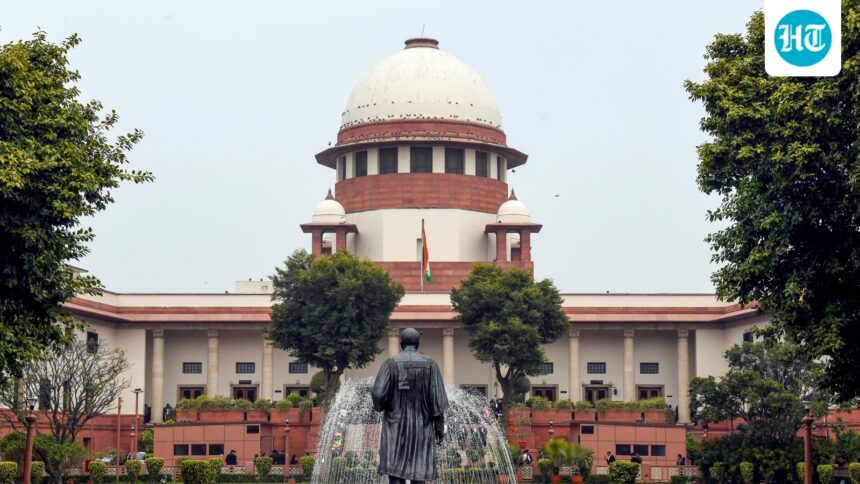
When the Supreme Court recently ruled that anyone professing a religion outside Hinduism, Sikhism or Buddhism cannot simultaneously claim the benefits of Scheduled Castes, it did something important: it shifted the focus back to the reservation for people that was always intended. But behind the legal clarity lies a quieter and more painful story – that of a Dalit student who lost a university place, a landless laborer denied a government job, and a survivor of caste violence who could not get protection under the Scheduled Castes and Scheduled Tribes Atrocities Act. Not because they were found unqualified, but because someone else was filling their shoes with a degree that no longer reflected reality.

The numbers make the scale hard to ignore. Maharashtra caste audit committees canceled more than 14,000 fake caste certificates between 2008 and 2017. In Andhra Pradesh, an RTI investigation revealed that 70-80% of Christian pastors receiving Covid relief funds hold SC or OBC Hindu certificates, despite having undergone baptism. These are not just administrative anomalies. Every misused certificate represents a benefit that does not accrue to the person the Constitution is intended to elevate – an occupied seat, a deprivation of life.
The court’s ruling in the Chinthada Anand case has sharpened the argument. A man who has performed Sunday prayers for more than a decade, including on the day of the alleged crime, cannot invoke the Supreme Court’s protection — regardless of what was stated in his testimony. The principle is sound: the legal situation must reflect the lived reality. But the referee reacted. He makes things right after they happen, through litigation and testimony. What India needs is a system that anticipates the problem before it happens – a system that ensures that SC benefits reach only those who truly deserve them before the seat is filled, before the job is appointed.
Here, administrative reform becomes not only logical, but necessary. Just as hospitals report births to civil authorities within days—without the need for prompting—religious institutions, such as churches and mosques, may be required to record conversion ceremonies in a central database within thirty days. A unified civil registry of faith would transform what is currently considered a private act with public consequences into an officially registered civil event. This record will be linked to Aadhaar and existing certification databases, creating an automatic alert when a person’s religious registration conflicts with their listed caste status. It significantly reduces reliance on litigation and manual verification.
The practical benefits flow directly to the communities that matter most. When the record indicates a mismatch, the relevant authority can initiate a review of the case before disbursing the benefit. Quota seats in colleges, government appointments, and legislative constituencies will be examined in real time. The Dalit student who deserves this engineering seat will actually get it. An agricultural worker who needs protection under the Atrocities Act will not find that protection diluted by a backlog of contested claims. Reservations will work as the framers of the Constitution intended – a targeted remedy for those who still live within the reality of caste discrimination.
To do this work fairly and at scale, guardrails are necessary. First, for high-stakes benefits such as UPSC appointments or legislative nominations, a periodic active practicing certificate must be submitted – a declaration signed by the beneficiary confirming continued eligibility. This places responsibility on the individual, not just the system, and creates legal accountability for false claims. Second, and no less important, the registry must include strong privacy protections. Faith is a deeply personal matter, and no data of this kind should be accessed outside the narrow purpose of verifying benefit. Strong data governance will ensure that the tool serves justice and does not become a new tool for surveillance or harassment by limiting access, enforcing transparency in how the record is used, and providing a clear grievance mechanism for wrongful reporting.
India has built a digital infrastructure – Aadhaar, DigiLocker, COWIN – that has successfully linked identity to entitlement at scale. Religious registration is the next logical step, and deserves the same institutionally supported, consensus-based approach. The Constitution did not create reservations as a permanent inheritance. I created it to serve as a bridge for communities that still carry the weight of centuries of exclusion. This bridge must remain clear. The beneficiaries envisioned by India’s founding document are still waiting. Building this record is how we deliver on that promise.
—
[Views expressed are personal. About the author: Siddhartha Chepuri is National Member, Bharatiya Janata Yuva Morcha or BJYM (Policy Research and Training). The BJYM is the youth wing of the Bharatiya Janata Party (BJP). Chepuri is also a management graduate from IIM Lucknow.]