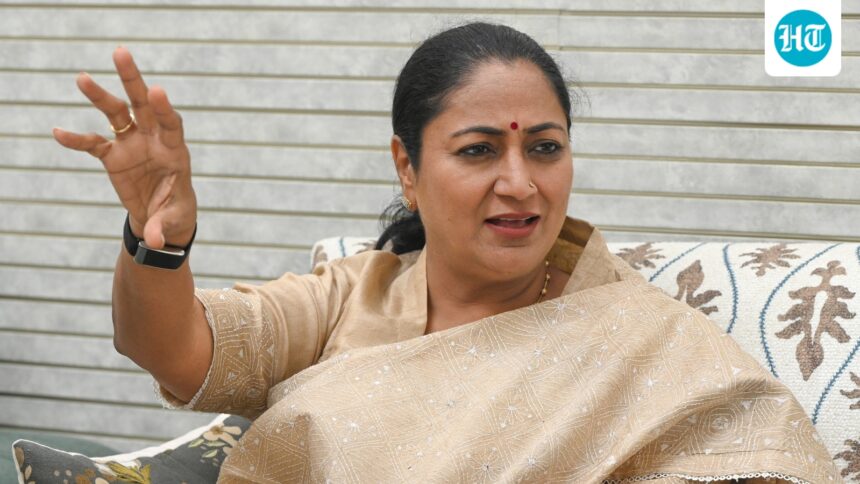
Delhi Chief Minister Rekha Gupta on Saturday described the Delhi Electric Vehicle Policy 2026 as a “human-centric” initiative designed to benefit families who typically own one car for long periods, while urging residents to embrace electric mobility.

Speaking to HT during an interview at her official residence, Gupta said: “There is still a large segment where families buy one car and keep it for years, and these families will see the benefit of this policy.”
Her remarks come days after the Delhi government unveiled the Electric Vehicle Policy 2026 to accelerate the adoption of electric vehicles and expand charging infrastructure across the capital. “If city residents care about Delhi, they will reap the benefits of this common people-centred policy,” Gupta said, linking the shift to improving air quality in the city.
The policy comes in the backdrop of the existing end-of-life vehicle rules, introduced in the National Capital Region (NCR) to control air pollution, under which petrol vehicles are de-registered after 15 years and diesel vehicles after 10 years.
Addressing infrastructure concerns, Gupta said the government plans to share the responsibility of building the network with private players and residential bodies instead of relying solely on public agencies. “We have shared the burden of increasing charging points with manufacturers, dealers, RWAs and institutions, who will all set up charging points at vehicle dealerships, within residential complexes and commercial spaces where a large number of vehicles are parked. Therefore, the government, OEMs and the private sector will develop charging points.”
Gupta also explained the government’s approach towards unauthorized colonies and jhuggi groups, stressing that the focus will remain on legal recognition and regulation ahead of redevelopment. “There are more than 700 goji groups that have evolved over time. We cannot make hundreds of thousands of people homeless without providing an alternative,” she said.
The government is working on officially licensing these settlements so that residents can register properties and obtain institutional funding. “Once they start registering, they will be able to get loans to buy their properties and then they will be able to properly rebuild safer structures,” Gupta added.