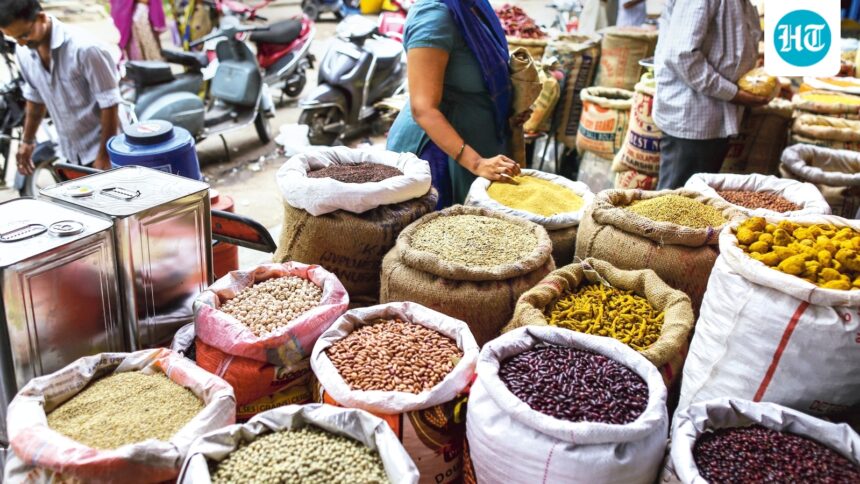
New Delhi: Urad production is likely to come under further pressure in the current kharif season, for the fifth year in a row, due to a delayed monsoon and competition from alternative crops that discourage farmers from expanding cultivated areas, according to industry experts. They also expected that the decline in urad production would increase import dependence to a historic level.

The latest government data shows that the area planted with urea fell by almost 40% year-on-year as of June 19. “The multi-year decline in acreage stems from a combination of climate vulnerabilities and unfavorable economic risks to farmers,” said Ajay Kedia, head of research at Kedia Consultancy.
“Urad is highly vulnerable to moisture stress. Over the past few years, erratic monsoon patterns – either long dry spells during the vegetative phase or unseasonal heavy rains close to harvest time – have devastated crops and caused severe crop damage,” he added.
The decrease in cultivated area has led to a decrease in production. Domestic orad production shrank from 2.8 million tons in the 2021-22 crop season to 2.2 million tons in 2025-26.
Kedia said farmers in major producing states like Madhya Pradesh, Maharashtra and Rajasthan, which account for 50% of total urad production, have increasingly turned towards alternative crops. “Crops such as maize, soy or millet are often seen as offering better climate resilience or more stable market returns,” he said.
Competition from soybeans is expected to remain a major factor this season. “Madhya Pradesh, Maharashtra and Rajasthan are also growing soybean which will be a competitor to Urad,” said GK Sood, chairman of agricultural firm KN Agri Resources Ltd.
“With continued high prices and guaranteed procurement under the Bhavantar scheme in Madhya Pradesh and a similar alternative in Maharashtra, farmers are likely to shift to growing soybean from Urad. Both require almost the same amount of irrigation,” Sood said.
The country’s agricultural sector remains highly dependent on the monsoon, with about 52% of the cultivated area dependent on rainfall and nearly a quarter lacking irrigation facilities altogether. The weather forecast remains a major risk for the ongoing fall season. India witnessed a rainfall deficiency of 42% as of June 26, raising concerns over the progress of sowing in several states.
The decline in production has been increasingly offset by imports. Imports of imports rose by about 72% in four years. Imports rose from 611 thousand tons in the fiscal year 2022-23 to 1.05 million tons in 2025-26. “Imports are expected to remain at historically high levels – at or above 1.1 to 1.2 million tonnes for FY 2026-27,” said Rahul Chauhan, founder, IGrain India, Center for Agricultural Commodity Research.