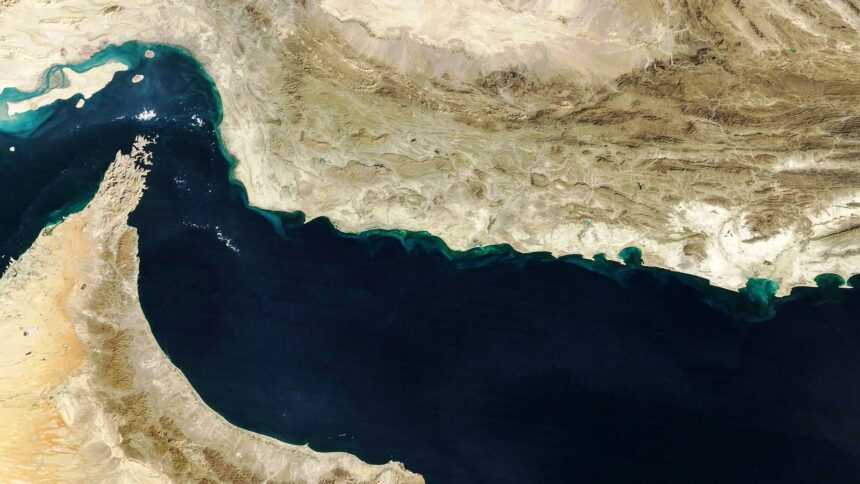
The Foreign Ministry on Saturday summoned the Iranian ambassador to India to lodge a formal protest after Iranian forces fired on an Indian-flagged tanker near the Strait of Hormuz, people familiar with the matter said.

The Ministry of Foreign Affairs summoned the Iranian Ambassador, Dr. Mohammad Fatehli, to a meeting at 6:30 pm.
A large Indian oil tanker carrying about 2 million barrels of Iraqi oil came under fire on Saturday by the Iranian navy north of Oman, shortly after reports emerged that two Indian ships were forced to turn back from the Strait of Hormuz, people familiar with the matter said.
Two ships, Jag Arnav and Sanmar Herald, participated in the incident.
They added that the Indian Navy is trying to confirm the details of the incident, as there is no Indian Navy ship in the Strait of Hormuz. India has two destroyers, a frigate and a tanker in the Gulf of Oman.
The conflict over the Strait of Hormuz intensifies
The British Navy reported on Saturday that Iranian gunboats fired on some ships that were trying to cross the Strait of Hormuz. Reuters reported, citing shipping sources, that some commercial ships received wireless messages from the Iranian Navy stating that the strait was closed again and that no ships were allowed to pass.
Ship tracking data showed that five ships loaded with liquefied natural gas from Ras Laffan in Qatar were approaching the strait on Saturday morning.
Hundreds of ships have been stuck in the Persian Gulf since the conflict between the United States, Israel and Iran began on February 28, and Tehran has closed the strait, forcing oil and gas producers in the Gulf to sharply reduce their production.
Iran announced the temporary reopening of the Strait of Hormuz on Friday, following a separate 10-day US-brokered ceasefire agreement on Thursday between Israel and Lebanon.
Maritime trackers even showed a convoy of eight oil tankers crossing the strait in the first major ship movement since the start of the US-Israeli war on Iran seven weeks ago.
US President Donald Trump on Friday referred to “some good news” regarding Iran, refusing to go into details. But he also said fighting could resume without a peace deal by Wednesday, when a two-week ceasefire expires. Trump said that the American blockade of Iranian ports will continue until an agreement is reached with Tehran.
Hours later, the Iranian Armed Forces Command said on Saturday that transit through the Strait had returned to a state of strict Iranian military control, citing what it described as repeated violations of the no-fly zone and acts of “piracy” under the guise of a blockade.
Some ships reported that the Iranian Navy was broadcasting a very high frequency message saying that the Strait of Hormuz was closed again.
The radio message read: “Attention all ships, in connection with the failure of the US government to fulfill its obligations in the negotiations, Iran announces the complete closure of the Strait of Hormuz once again. No vessel of any type or nationality is permitted to pass through the Strait of Hormuz.”
The military spokesman said Iran had earlier agreed, “in good faith,” to the orderly passage of a limited number of oil tankers and commercial ships after negotiations, but said continued US measures had forced Tehran to restore stricter controls on shipping through the strategic strait.