Image source: Annie
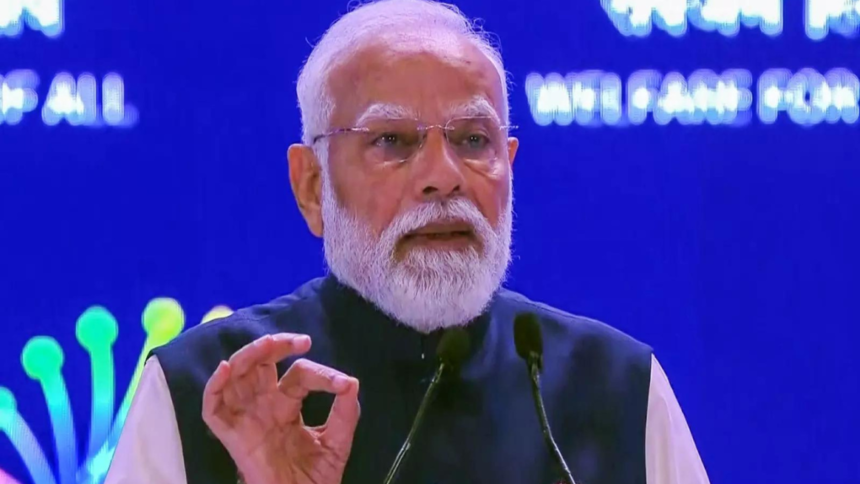
Prime Minister Narendra Modi on Saturday stressed the importance of self-reliance in India’s technological future, noting, “A developed India will be built only when India is self-reliant.”
That’s why a made-in-India chip is so important.Addressing the virtual foundation stone laying ceremony of India Chip Pvt Ltd – a joint venture between HCL Group and Foxconn – Prime Minister Modi noted that the global shortage of semiconductor chips during the Covid-19 pandemic has disrupted economies and halted production at factories across the world.
Beyond Oil: How India and the US are working to secure the future of AI chips
“Whatever India does in technology in this decade will become the foundation of our capabilities in the 21st century,” the Prime Minister added.Prime Minister Narendra Modi highlighted India’s growing semiconductor ambitions, noting that “India has so far approved 10 semiconductor manufacturing and packaging projects under Mission Semiconductor,” adding that “four of these units are scheduled to start production very soon.”The Prime Minister also welcomed the entry of major companies into the chip manufacturing sector in India, stressing the need for self-reliance.
He called for ‘Atmanirbharta’ in this process, stressing the goal of strengthening India’s leadership in the global market.“Today, the arrival of major companies like Foxconn in India and their cooperation in chip manufacturing also sends a global message. A democratic country like India is a reliable partner for the world. Therefore, recognition of India as a global manufacturer is a win-win situation for both India and other countries,” Prime Minister Modi said.The new Offshore Semiconductor Assembly and Testing (OSAT) facility will be located in the Yamuna Expressway Industrial Development Authority (YEIDA) area in Jewar, Greater Noida. The 60:40 joint venture between HCL Group and Foxconn represents an investment of Rs 3,700 crore and is expected to begin operations by 2028. The plant will manufacture display driver chips, supporting India’s growing domestic demand for semiconductor components.According to PTI, the project is expected to generate more than 3,500 direct and indirect jobs, strengthen local supply chains, and attract partners across the semiconductor ecosystem. The facility is designed to process up to 20,000 wafers per month, strengthening India’s flexible and self-reliant chip supply chain.“In the last 11 years, the Prime Minister has helped make India an electronics manufacturing powerhouse.
India now ranks third among electronics exporting countries. In one month, Rs 3.6 lakh crore will be produced from this plant. The brain of the digital displays you see will now be manufactured in Jewar,” said Ashwini Vaishnao, Union Minister of Electronics and IT.UP Chief Minister Yogi Adityanath described Jewar as a “jewel not only for UP but also for the country”, adding that the development of the state would be in line with the Prime Minister’s vision for chip manufacturing.“Today we are a leader in the Indian chip space. We want to create a reliable semiconductor assembly and testing facility in India. We look forward to growing together and contributing to India’s growth in the global technology landscape,” news agency PTI quoted Bob Chen, president of Foxconn’s semiconductor business group, as saying.HCL Group President Roshini Nadar stressed that the facility will serve domestic and international markets, positioning India as an important player in the global semiconductor sector.