The true character of any society is revealed not through the speeches of its leaders, the claims of its economic success, or the greatness of its cultural heritage, but through the instinctive response of ordinary people to another human being in distress. By this measure, contemporary India has every reason to engage in a kind of deeply uncomfortable self-reflection.
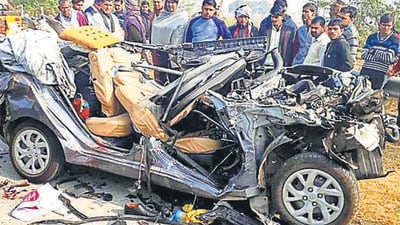
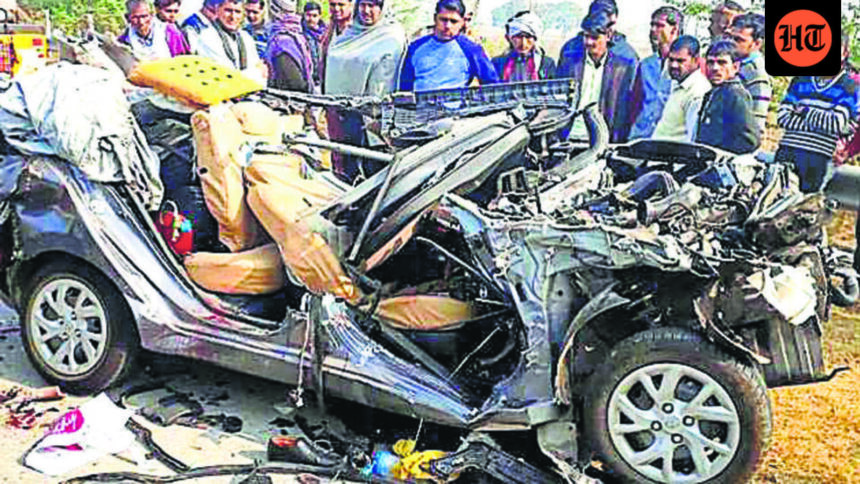
Almost every day, newspapers and television channels report incidents that should shock our collective conscience. A man lies bleeding on a busy road after a crash, while passersby gather around him, not to help, but to record videos on their mobile phones. A woman assaulted in broad daylight screams for help as curious onlookers watch from a distance. Victims of road accidents die because precious minutes are wasted while crowds do nothing at all. Ambulances carrying critically ill patients remain trapped in endless traffic because motorists refuse to yield. By the time the police or emergency services arrive, life has often taken a turn for the worse.
In 2016, a young software engineer, Soumya Mathew, was seriously injured after a road accident in Bengaluru due to lack of timely medical care. In 2021, in Madhya Pradesh, a man injured in a crash remained unattended as bystanders photographed him instead of taking him to hospital. Similar incidents have occurred repeatedly in Delhi, Mumbai, Hyderabad, Chennai and countless smaller cities. Videos routinely circulate on social media showing accident victims surrounded by dozens of onlookers, but with no one coming forward to provide immediate assistance.
One category of cases of particular concern concerns victims of mob violence or assault. The scene has become strangely familiar: a crowd of people gathered, cell phones raised, videos uploaded, but interference is conspicuous by its absence. Documentation has replaced compassion. Recording suffering has become easier than alleviating it. The smartphone has become both a witness and a partner. The tragedy is instantly transformed into digital content.
Road safety statistics confirm the enormity of the problem. India witnesses one of the largest numbers of deaths resulting from road accidents in the world, with more than 170,000 people dying annually. Medical experts repeatedly emphasize the importance of the “golden hour” — the first 60 minutes after severe trauma — during which prompt medical attention can make the difference between life and death. Yet too many victims miss out on this opportunity because ordinary citizens fail to act.
What explains this disturbing indifference? One explanation frequently given is fear of the police and the legal system. Citizens believe that anyone who helps an accident victim may be dragged into endless police investigations, court appearances and bureaucratic harassment. Recognizing this fact, the Supreme Court issued important guidelines in 2016 to protect Good Samaritans, and these were later strengthened through statutory provisions in the Motor Vehicles (Amendment) Act. These protections make clear that those who help accident victims usually cannot be forced to reveal their identity or undergo unnecessary legal proceedings. However, awareness of these guarantees remains woefully weak. More importantly, public confidence in its implementation remains limited.
Unfortunately, a deeper psychological shift has also emerged within our society. Urban India, in particular, has become increasingly fragmented. The relentless pursuit of economic advancement, professional competition, and personal ambition have narrowed the boundaries of interest. We inhabit crowded cities but live in increasingly isolated emotional worlds. We coexist physically while remaining psychologically indifferent.
Psychologists describe this as the “bystander effect”: the more witnesses there are, the less likely any individual is to intervene because responsibility becomes distributed. There is another uncomfortable truth. We have become remarkably tolerant of human suffering, and I have discussed this at length in my book The Great Indian Middle Class. Whether it was the sight of sidewalk dwellers sleeping under bridges, exhausted migrant workers walking hundreds of kilometers, or accident victims waiting for help, repeated exposure generated not empathy but familiarity. Misery has become normal. We no longer react because suffering has become part of the daily landscape.
What can be done to change this situation? First, the law must continue to protect Good Samaritans and aggressively publicize these protections. Police should be trained to treat helpers with gratitude rather than suspicion. Emergency medical systems require significant strengthening, especially in small towns and rural areas in India. Road users who obstruct ambulances should face prompt and meaningful penalties.
Equally important is education. Schools should teach first aid and civic responsibility as seriously as mathematics or science. Public campaigns should celebrate ordinary citizens who save lives rather than glorify tragic videos that go viral. The media must also shift its focus from simply reporting on civic failure to highlighting examples of exemplary public courage.
But ultimately, no law can legislate mercy. Empathy arises from moral imagination that enables us to see ourselves in the suffering of others. It requires that we realize that the stranger bleeding on the side of the road could easily be our father, daughter, husband, or friend. The test of civilization is not how loudly we celebrate our achievements, but how instinctively we respond to the weaknesses of others. The ancient Indian proverb of Vasudhaiva Kutumbakkam – the world as one family – needs to become a living practice.
(Pavan K Varma is an author, diplomat and former Member of Parliament (Rajya Sabha). Views expressed are personal)