Jharkhand is set to present its vision for artificial intelligence, digital governance and technology-led growth at the National Stakeholder Consultation 2026 scheduled to be held in New Delhi on July 8-9. Organized by the Department of Information Technology and E-Governance, Government of Jharkhand, the event will bring together policymakers, technology companies, industry leaders and domain experts to deliberate on the future of AI-driven governance and digital transformation in India.

CM Soren to present the vision of the technology state in New Delhi
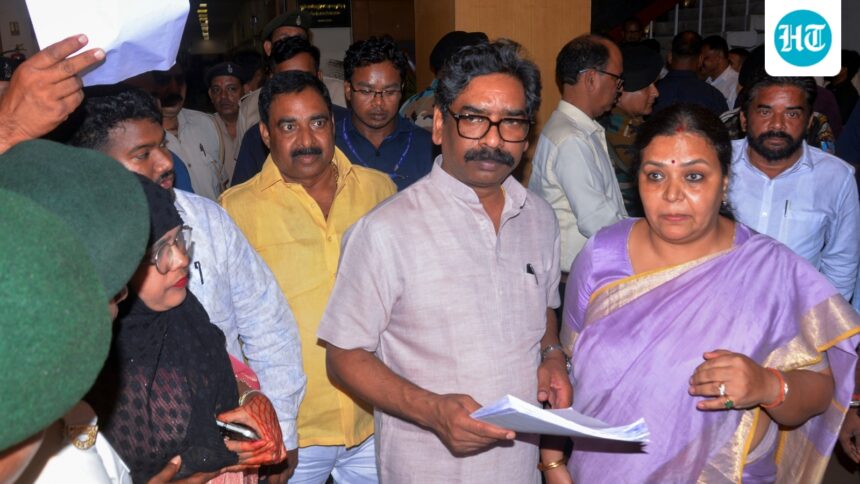
Chief Minister Hemant Soren will address the inaugural session and present the state’s roadmap for building a digitally enabled, citizen-centric and technology-based governance model. The consultation is expected to position Jharkhand as an emerging player in the field of artificial intelligence and digital public infrastructure.
The state government plans to showcase AI not just as a technological innovation but as a governance tool capable of improving public service delivery, transparency and administrative efficiency. Nearly 100 leading technology and IT companies from India and abroad are expected to participate in the discussions along with senior government officials.
According to officials, Jharkhand aims to strengthen its position as a future-ready digital economy by forging partnerships with technology companies, investors and academic institutions. This consultation is also expected to help the country attract investments in the IT sector and IT-enabled services.
Senior officials, including the Chief Secretary, Development Commissioner and Minister of Information Technology and e-Governance, will participate in the inaugural session alongside representatives of major technology companies.
Ranchi IT Park and the draft AI policy will take center stage
One of the key points of the consultation is to introduce Ranchi IT Park as a strategic investment destination. The proposed IT park is spread over approximately 100.97 acres of litigation-free government land in the core capital area of Ranchi and is expected to be a major hub for future IT investments and IT services in eastern India.
The government will highlight the project’s strategic location near IIM Ranchi Airport and Birsa Munda Airport along with the growing talent base in Jharkhand. More than 20,000 IT graduates enter the state’s job market every year, providing a strong human resources advantage for technology companies, officials said.
The state will also offer incentives available under the Jharkhand IT Policy 2023, including 50 per cent capital investment reimbursement, 100 per cent stamp duty waiver and 100 per cent electricity duty waiver.
Another key focus area during the consultation will be the draft AI Policy 2026, which will be presented to stakeholders for discussions and suggestions. The proposed policy framework for 2026-2031 seeks to create a comprehensive ecosystem for responsible and scalable adoption of AI across government departments.
The draft policy proposes setting up a government AI mission under the Prime Minister, with JAP-IT acting as the nodal agency. It also includes plans to create a Jharkhand AI Cloud that is interoperable with the Government of India’s IndiaAI ecosystem.
The state government plans to use AI applications in sectors such as governance, agriculture, rural livelihoods, healthcare and mineral resource management. Officials said the strategy is consistent with the centre’s vision of “AI for all.”
The consultation will also showcase the Prime Minister’s proposed Data Intelligence Platform (CM-DIP), an AI-powered system that aims to integrate departmental data for real-time monitoring and evidence-based decision-making. The platform is expected to support multilingual citizen interaction through WhatsApp and Panchayat Bhavan digital kiosks, supported by an integrated command and control centre.
Through the consultation, Jharkhand hopes to establish itself as a major destination for digital innovation, AI-enabled governance and technology investments in the coming years.