Alipura village in Goripdanur taluk, Chikkaballapur district, about 70 km from Bengaluru, stopped mourning on Sunday, as its Shia-majority community mourned the killing of Iranian Supreme Leader Ayatollah Ali Khamenei in joint US-Israeli raids on his compound in Tehran on the night of February 28.

He follows: Latest updates on the conflict
The village, known for its strong religious and cultural ties with Iran, organized an informal ceremony where residents mourned a leader they consider their spiritual authority, news agencies reported.
The city has now been placed on a voluntary lockdown for three days following the confirmed death of the 86-year-old supreme leader.
Read also | What is the impact on India? Live updates
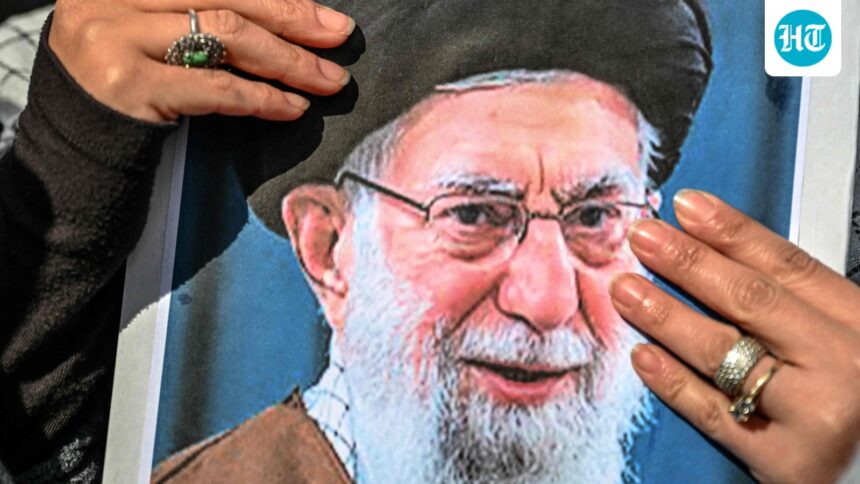
Since early morning, shops and roadside stalls have remained closed, with traders voluntarily closing their businesses and groups gathering at road intersections across the village. Some were carrying pictures of Khamenei, and many were shedding tears and chanting religious slogans, according to multiple reports and posts on social media.
The city of Alipora has long been called “mini Iran” for its majority Shiite Muslim population and its deep historical, cultural and educational ties to the Islamic Republic.
By the afternoon, a protest procession was held under the leadership of the Anjuman Jafari Committee, with almost the entire town taking to the streets, many wearing black as a symbol of grief, local media reported.
The village’s connection to Iran goes deeper than religion alone. Members of the local community said that the original name of the settlement was Bilikunti, and that during the time of the Bijapur Adilshahis, a group of Shia Muslims migrated to the area and renamed it Alipora, with most residents maintaining ties with Iran and Arab countries for trade and education, Asianet reported.
A personal relationship with Khamenei himself goes back to 1986, when he visited the village as Iran’s president to open a local hospital.
“Ayatollah Khamenei personally visited our village in 1986. His visit strengthened our spiritual ties with Iran,” resident Shafiq said. He added: “Our relationship with Iran is not only about trade or education, but rather about faith and religious guidance.”
Shafiq Abidi, a well-known Urdu poet and former journalist from Alipora, recalled the visit while speaking to The Hindu.
“Khamenei visited the village as part of awareness initiatives launched by the government of Ruhollah Khomeini after it assumed power following the 1979 Islamic Revolution,” Obaidi reportedly said.
He added: “Khamenei opened the Imam Khomeini Hospital in Alipura, which is still managed by the Anjuman Jafari Committee in the village. Today we all feel sad and mourning after Khamenei’s death.”
The news of Khamenei’s death, confirmed by Iranian state media early Sunday, had a profound emotional impact on Alipora. Residents expressed a sense of disbelief after reports emerged that he died following a major attack allegedly carried out by Israel and the United States.
“Since childhood, we have heard Alipora being called ‘Iran’s child’ because of her close ties,” human rights activist Ari Askel told Hans India. Over the years, the Anjuman Ja`fari Committee has also launched a dedicated television channel, Ali TV, to keep residents updated on developments in Iran, broadcasting mosque prayers, Holy Quran recitations and religious programmes.
Local cleric Maulana Syed Ibrahim described the Israeli and American attacks on Iran as “unjustified and strongly condemned.”
“It is unfortunate that many Muslim countries are silent spectators,” he told ETV Bharat. He also condemned the bombing that targeted a school building in Iran, which he said led to the death of about 150 people. “When children are killed in a school, it is not just an attack on a country; it is an attack on humanity. Such actions must be condemned, regardless of who is responsible,” he said.
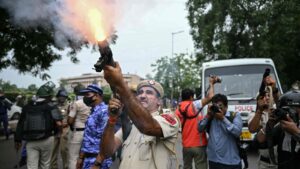
Many residents of Alipora have relatives and students who are currently in Iran pursuing religious and medical education. “We are in constant contact with our relatives there,” Askel said. “This news has caused deep sadness in our community.” Police and local authorities maintained a presence throughout the day to ensure proceedings remained peaceful. No untoward incidents were reported.