India’s new nuclear power sector reform law has opened the door for French state-run multinational EDF to engage with private Indian players to explore setting up nuclear power plants, people familiar with the matter said on Thursday ahead of Prime Minister Narendra Modi’s visit to France.

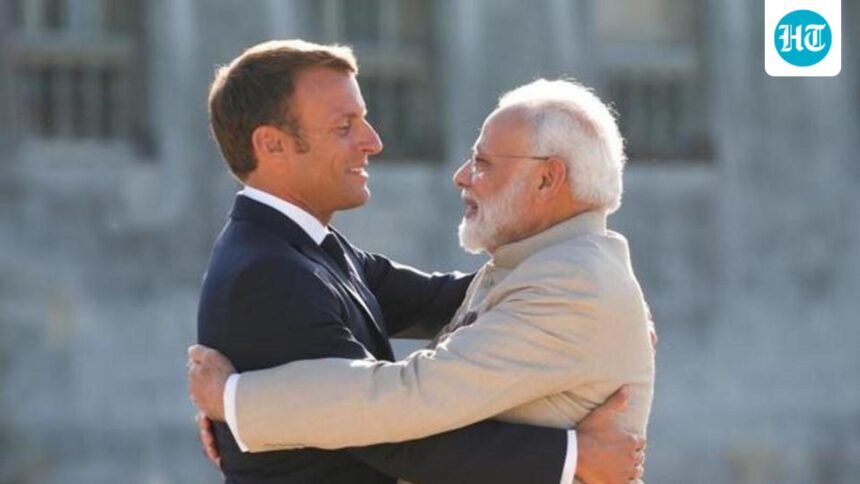
Cooperation in the areas of defence, civil nuclear energy, technology and critical materials, and dealing with the economic and geopolitical repercussions of the conflict in West Asia are scheduled to top the agenda of Modi’s visit to France, which begins on June 13, to attend awareness sessions of the G7 summit and hold bilateral talks with French President Emmanuel Macron.
While India and France have been engaged in discussions on civil nuclear energy cooperation for many years, there were many challenges such as financing and cost of electricity, but the passage of the Shanti Act (Sustainable Harnessing and Development of Nuclear Energy to Transform India) opened the doors for private sector participation in India, said the source, who requested anonymity.
EDF Group is in “active discussions with all major Indian players who want to enter this sector,” one of the people said. “We have begun a new phase of discussions and we hope to have a clear picture by the end of the year,” he said.
Civil nuclear energy is an area of strategic cooperation with France and with the passage of the Shanti Law, the two sides are discussing greater opportunities for the private sector, including in small modular reactors (SMRs) and advanced modular reactors (AMRs), Piyush Srivastava, Additional Secretary for Western Europe in the Ministry of External Affairs, said at a press conference.
India plans to increase its nuclear power generation capacity from the current level of 8.78 GW to 100 GW by 2047.
Modi is scheduled to pay a week-long visit to France and Slovakia to participate in the communication sessions of the G7 summit in the French city of Evian and to hold bilateral meetings with the French and Slovak leadership. He will also hold bilateral meetings with leaders of several G7 countries and partner countries on the sidelines of the summit in Evian. New Delhi and Washington are exploring the possibility of holding a meeting between Modi and President Donald Trump, but there has been no official news about this being confirmed.
France is also looking to move forward with discussions on India’s Multi-Role Fighter Aircraft (MRFA) project, which envisages the purchase of 114 fighter jets, under the ‘Make in India’ initiative and there will be no difficulty in integrating Indian weapon systems into the fighters, the people cited above said. They noted that France has a track record of strong support for the ‘Make in India’ initiative, and a consensus will be reached on the final agreement.
Under the MRFA project, 18 Rafale aircraft are scheduled to be provided by French aerospace major Dassault in flying condition, and another 96 aircraft will be manufactured in India with around 50 per cent indigenous content. This deal will be different from the previous two contracts to supply Rafale jets to the Indian armed forces, the people said.
The people also said that 12 new initiatives between India and France are expected to be unveiled during Modi’s visit. Modi is scheduled to first travel to the French port city of Nice for a meeting with President Emmanuel Macron on June 14.
They will inaugurate Bharat Innovates, a three-day event held as part of the Indo-France Year of Innovation to showcase Indian technology projects from centrally funded higher education institutions and polytechnics.
Modi is scheduled to travel to Slovakia on a state visit from June 14 to 16. The Prime Minister will return to France to attend the communication sessions of the G7 Summit during the period from June 16 to 17. In the final leg of the visit, Modi will visit Paris on June 18 for further bilateral engagements and to attend the VivaTech Summit, Europe’s largest technology and startup event.
Modi’s focus at the G7 summit will be to highlight the priorities and concerns of the Global South, Sibi George, Secretary (West) in the Ministry of External Affairs, said at the same press conference. “The discussions will focus on renewing international partnerships and development solidarity, promoting shared and balanced growth and effective and efficient deployment of artificial intelligence. India’s regular participation in the G7 summits reflects the growing recognition of India’s role and contributions in addressing challenges to peace, security, development and environmental sustainability,” he said.
Defense cooperation will also be a key part of Modi’s bilateral meetings in France and Slovakia, George said. Key priorities at the G7 Summit include reducing excessive macroeconomic imbalances, renewing international partnerships, strengthening the resilience of important mineral value chains, protecting minors online, resolving major geopolitical crises, combating organized crime and illicit flows, and health.
The conflict in West Asia and the Russian-Ukrainian war and their economic repercussions, including those related to energy and food security, are expected to emerge at the G7 summit and bilateral meetings that Modi will hold. The G7 brings together seven of the most advanced economies – Canada, France, Germany, Italy, Japan, the United Kingdom and the United States – and India, Brazil, Egypt, Kenya and South Korea have been invited to this year’s summit as partner countries. The European Union is also a member of the bloc.