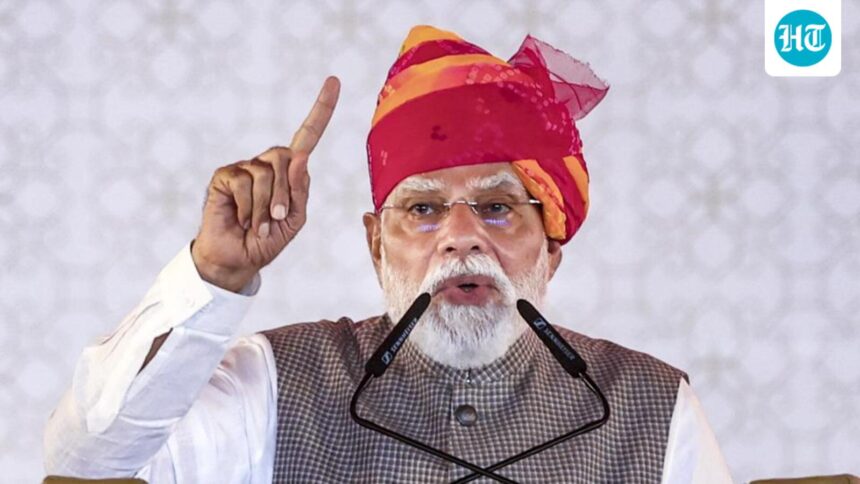
Prime Minister Narendra Modi on Saturday said India has successfully navigated the global energy crisis triggered by the conflict in West Asia by taking timely policy decisions, diplomatic outreach and expanding domestic energy capacity, preventing severe fuel shortages and sharp price hikes faced by many countries.

Delivering a speech to a gathering of the public after the opening of the Bachpadra refinery and the launch of development projects worth approximately $1.06 lakh crore In Rajasthan’s Balotra, Prime Minister Modi said India’s response to the crisis will be remembered as an “unprecedented” chapter in the country’s history.
Describing the conflict in West Asia as the biggest energy crisis of the 21st century, the Prime Minister said many countries struggled to secure fuel supplies, while India was able to protect its citizens from the worst effects of the turmoil.
“The war in West Asia has created the biggest energy crisis of the 21st century. Many powerful countries faced fuel shortages, but India overcame the challenge because it took the right decisions at the right time, correctly assessed the situation, used its resources wisely and strengthened its diplomatic engagement,” Modi said.
He claimed that while some people were spreading rumors and creating panic, the Center was continuously working at the political and diplomatic levels to ensure that power supply was not interrupted.
India is particularly vulnerable because nearly 70% of its LPG demand is met through imports, with about 90% of those traditionally routed through Gulf countries via the Strait of Hormuz, Modi said. With the conflict disrupting shipping routes, the government moved quickly to boost domestic LPG production.
He said that industrial gas production was diverted towards LPG manufacturing, resulting in the production of an additional 54,000 metric tons of LPG within a week. Refineries that were not previously producing LPG were also reconfigured to increase production.
The government has also accelerated the rollout of piped natural gas (PNG) connections to reduce households’ dependence on LPG, he said, adding that more than 11,000 households received PNG connections in a short period, which helped stabilize domestic demand.
He said that despite estimates indicating that the prices of liquefied gas cylinders may rise to approximately $2000 During the crisis, domestic consumers continued to obtain cylinders for a long time $950. He said that commercial LPG prices have also been reduced.
Referring to global crude oil markets, Modi said prices rose from around $70 per barrel to nearly $120 per barrel after the conflict escalated and supply chains were disrupted. “In many countries, petrol and diesel prices have risen by 40-50% and fuel has been rationed. India has not witnessed such a situation even for a single day,” he said, adding that rumors and political criticism failed to undermine the government’s response.
Oil marketing companies incurred losses of more than $75,000 crore during the crisis, while the Center reduced excise duty on petrol and diesel by $10 pounds per liter to protect consumers from rising prices
He also highlighted India’s efforts to diversify crude oil imports, saying the country has expanded its sourcing network from about 25 to 26 countries before the crisis to more than 40 countries.
“Our diplomacy has shown its strength. India has made it clear that the national interest and well-being of its citizens is paramount,” Modi said.
Speaking about the Pachpadra refinery, the Prime Minister said the project faced delays during the previous Congress government in Rajasthan between 2018 and 2023 despite the agreement being signed in 2017.
He alleged that non-cooperation from the previous state government slowed down the progress of the project, while the work accelerated after the BJP returned to power in Rajasthan.
Modi said: “We are not satisfied with laying the foundation stone, but we are completing the projects and dedicating them to the nation.”
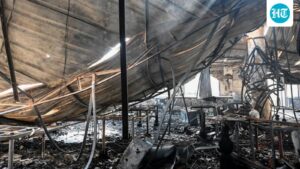
He added that the refinery was originally scheduled to open two months ago, but the event was postponed after a fire broke out at the facility a day before the scheduled opening in April. Modi praised the officials and workers for completing the remaining work and preparing the refinery for operation.
The Prime Minister also said that India has significantly expanded its refining capacity over the past decade, in contrast to advanced economies.
“The United States has not built a new refinery in the past 50 years, while refining capacity in Europe has continued to decline. India is now the fourth largest refining country in the world, and this capacity will continue to grow,” he said.
Modi also pointed to the disruptions in global fertilizer supplies in the wake of the conflict in Ukraine, saying India has successfully managed these challenges as well.
He thanked citizens for maintaining confidence during the crisis, and said that attempts to create fear and uncertainty had failed.
“Because of your trust, India has continued to move forward. Those who expected India to fail and expect India to collapse must be disappointed today,” he said.
On Rajasthan’s development, Modi said the state has emerged as a major hub for renewable energy due to its natural advantages.
He also criticized the Congress for allegedly neglecting the interests of Rajasthan and failing to address water scarcity in the state.
Highlighting the recent agreement between Rajasthan and Haryana, Modi said Yamuna water will be supplied to Shekhawati district, which will benefit the people of Sikar, Churu, Jhunjhunu and adjoining areas. He said that the project will include an investment worth approx $34,000 Crores.
The event was attended by Rajasthan Governor Haribhau Bagade, Chief Minister Bhajan Lal Sharma, Petroleum and Natural Gas Minister Hardeep Singh Puri, Deputy Chief Ministers Diya Kumari and Prem Chand Berwa, besides ministers, public representatives, senior officials and a large crowd of people.