The Indian Institute of Technology (IIT) Gandhinagar on Friday discontinued its association with guest professor Michel Danino, two days after the Supreme Court ordered governments and public institutions to part ways with him and two others involved in drafting the now-withdrawn National Council of Educational Research and Training (NCERT) textbook for class VIII which had a section on ‘Corruption in the Judiciary’.

The institute will also take “corrective measures” to avoid “misinformation” on its official website, which still carries a profile of Danino showcasing his work and achievements. His profile on IIT Gandhinagar’s website describes him as an “Indian citizen” and an “independent student of Indian civilisation”.
“Dhanino is no longer associated with IIT Gandhinagar,” said institute director Professor Rajat Munna, responding to HT’s queries on the decision passed after the Supreme Court’s March 11 order.
Born in France in 1956, Danino studied physics and engineering before moving to India in 1977, and was painted by Indian philosopher and yogi Sri Aurobindo. In India, he has since been engaged in researching and writing about Indian civilization. Since 2011, he has been with the Indian Institute of Technology Gandhinagar, where he is currently a guest professor in the Department of Earth Sciences. He was instrumental in establishing the Center for Archaeological Sciences there, and has taught or coordinated several courses related to Indian Knowledge Systems (IKS), including “Perspectives on Indian Civilization” in the MA programme.
Danino was awarded the Padma Shri in 2017 for his contribution to literature and education. His books include The Lost River: On the Trail of Sarasvati (2010), Indian Culture and India’s Future (2011), and Sri Aurobindo and the Rise of India (2018). In his writings and lectures, Danino opposed the theory of Aryan invasion and wrote about the cultural and archaeological dimensions of early Indian history. He was a resident scholar at IIT Kanpur primarily between 2010 and 2014, where he delivered a lecture series on Indian civilization and technology.
Munna said that the syllabus of the courses at IIT Gandhinagar does not follow any textbook written by Professor Danino. “Dhanino was associated with the Center for Archaeological Sciences at IIT Gandhinagar. We will take corrective action so that no misrepresentation is done on our website,” Munna said.
Danino declined to comment on the developments.
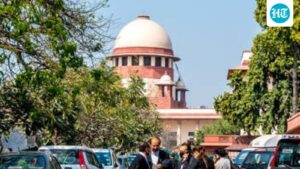
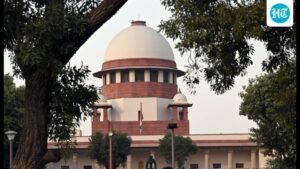
The Supreme Court on Wednesday directed the Centre, states, union territories (UTs), NCERT and universities to exclude Danino, teacher Subarna Diwakar and legal scholar and trained lawyer Alok Prasanna Kumar from any role in preparing academic syllabi. A bench comprising Chief Justice of India Surya Kant and Justices Joymalia Bagchi and Vipul M Pancholi said the three should not be associated “in any way” with preparing or finalizing textbooks meant for students.
The second part of the Class 8 Social Science textbook was released on February 23 and was withdrawn on February 24 after selling 38 out of 82,440 print copies and later recalled after the Supreme Court order on February 27.
HT first reported on February 27 that the controversial chapter on judiciary in the textbook was written by a committee of members, including a lawyer, but had not been reviewed by anyone from the legal fraternity. Corruption appears in both the new seventh-grade and eighth-grade textbooks—both of which have two parts each. The seventh grade book mentions corruption in the legislature and during the electoral process – but not in the judiciary. The first part of the eighth-grade social sciences book (controversy revolves around the second part) also discussed political corruption. Politicians and officials were depicted violating the Model Code of Conduct during elections with one cartoon showing bundles of $500/- notes were found in the candidate’s car during the search.