NEW DELHI: When Rohit Nitwal first arrived at Eklavya Model Residential School (EMRS) Kalsi in Uttarakhand in 2014 as a sixth-grade student, he had never spent a single day away from his family. For months, he was homesick. Today, he is gearing up to join Barclays UK’s Decision Intelligence team in London as a data scientist after graduating in Data Science and Artificial Intelligence from IIT Roorkee.

His journey, from a remote tribal region to one of the world’s financial capitals, embodies the larger story of India’s EMRS network—a program that is increasingly emerging as a bridge between tribal communities and opportunities that once seemed out of reach.
As the Narendra Modi government completes 12 years in power, EMRS is emerging as one of the most ambitious efforts to expand quality residential education among Scheduled Tribe communities. Beyond school enrollment numbers and infrastructure expansion, its impact is perhaps best understood through the lives it has transformed.
“The real foundation of where I am today was built at EMRS,” Nitwal recalls. “We spent our most important years there, growing from toddlers to our late teens. It gave us all the raw materials to build the foundations of our lives.”
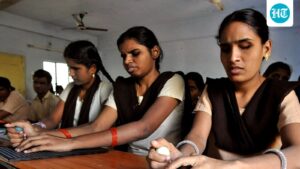
He remembers the campus surrounded by eucalyptus groves, fruit trees and views of the Yamuna River. The tightly structured school routine – morning physical training, classes, sports, therapy sessions and self-study – instilled discipline and self-reliance. Activities such as scouting, art, music and community service were equally important.
“It’s where we first learned how to dream,” he said.
His curiosity for technology, which was first nurtured in the school’s humble computer lab, eventually led him to IIT Roorkee and a career in artificial intelligence.
However, the story of EMRS is not limited to technology.
In Nandurbar district of Maharashtra, Vishal Dharmraj Thakare excelled academically in EMRS and went on to clear the National Eligibility for Entrance Test (NEET). Today, he is in the final year of MBBS at Topiwala National Medical College, Mumbai and BYL Nair Charitable Hospital.
In Odisha, Tulsa Pujari’s educational journey took her from EMRS Hirli in Kalahandi to a Master’s degree from IIT Gandhinagar and an MBA from IIT Kharagpur. She now works with the Planning and Policy Research Center in Bhubaneswar, where she contributes to social development initiatives.
Their stories challenge the persistent assumption that geography determines destiny. For generations, many tribal students have faced barriers that extend beyond poverty – inadequate schools, limited exposure, poor infrastructure, and lack of mentorship. EMRS is designed to address all of these issues simultaneously through a residential model.
The effect is equally evident in sports. West Sikkim’s Nima Duma Bhutia has become the first basketball player from northeast India to represent the Indian women’s senior team, including the pre-Olympic qualifiers in Malaysia.
“EMRS is not just a school for me, it is my second home and a place that changed my life,” Bhutia said. “It gave me opportunities I never imagined and helped me discover my strengths and dreams.”
She attributes her success not only to the sports facilities, but also to the teachers who taught resilience and self-confidence. Bhutia particularly praised her coach and manager, Siddhartha Yonzon, whose guidance encouraged her to “dream bigger and work harder.”
“EMRS not only gave me an education, but also values, confidence and a sense of purpose,” she said.
Another example comes from the Himalayas. Simran Mehta, an alumnus of EMRS Nichar in Himachal Pradesh’s Kinnaur district, recalls a school nestled between pine forests and mountain air. Coming from a remote tribal area, she says the EMRS service became the foundation on which she built her future.
“The housing environment taught me discipline, independence, flexibility, and the importance of dreaming beyond geographical boundaries,” she said.
Participation in academic competitions and leadership activities broadened her horizons. Inspired by her family’s belief in education and supported by teachers who served as mentors, she later successfully completed the selection process for the Military Nursing Service. Today she works as a captain in the Armed Forces Medical Services.
“When I look back, I realize that education was the turning point that changed my life,” Mehta said. “EMRS has helped me move from a small tribal village to a situation where I can contribute to the society and serve the country.”
Stories like these reflect the larger goal of EMRS, program officials say.
Ranjana Chopra, Secretary, Ministry of Tribal Affairs, said the aim of the schools is not just to improve access to education, but to create ecosystems where tribal students can realize their full potential.
“The vision of EMRS is to ensure that talented children from tribal communities have access to opportunities similar to the best educational institutions in the country. These schools help foster confidence, leadership and ambition among students who often come from geographically isolated areas,” she said.
Pratima S. said: Verma, commissioner of the National Education Society for Tribal Students (NESTS), said the success of the program lies in the combination of academic learning and all-round development.
“We see students excel in fields ranging from science, medicine, public service and sports,” Verma said. “The goal is not just academic achievement, but to create well-rounded individuals who can become role models within their communities.”
In policy circles, ERM is often measured in numbers – sanctioned schools, school enrollment growth, and infrastructure expansion. However, its deeper significance lies elsewhere. It can be seen in the coding algorithms of a tribal student in London, a future doctor treating patients in Mumbai, a social development specialist formulating public policy, an international athlete representing India, or an army officer serving the nation.
“For every success story that has already emerged, there are thousands more still unfolding inside classrooms spread across India’s tribal regions. Their journeys point to a simple but powerful truth: when quality education is combined with opportunity, talent can flourish anywhere. Geography may shape beginnings, but it need not determine outcomes,” Chopra added.