Government spending on tribal social welfare has more than tripled over the past 12 years, while access to education, healthcare and basic infrastructure has expanded significantly across tribal areas under the Narendra Modi-led government, the Union Ministry of Tribal Affairs said on Sunday.

In a statement marking the 12th anniversary of the NDA government at the Centre, Union Minister of State for Tribal Affairs Durga Das Oike said tribal communities have witnessed a “historic transformation” since 2014, with policy initiatives focusing on education, livelihood, cultural recognition and political representation.
“One of the most important interventions has been the expansion of Eklavya Model Residential Schools (EMRS), with around 500 schools now providing education to over 1.5 lakh tribal students across the country. It also noted provisions under the National Education Policy 2020 aimed at promoting mother tongue-based learning among tribal children. The government has significantly increased financial allocations for tribal welfare programmes, enabling increased investment in education, healthcare, skill development and infrastructure in tribal-dominated areas,” she said. He said.
Improved access to health care in tribal areas
He also highlighted the PM-JANMAN scheme, launched for Particularly Vulnerable Tribal Groups (PVTGs), as a major initiative to bridge development gaps in remote habitations, and said the program seeks to provide roads, electricity, drinking water, housing, healthcare, education and mobile connectivity in some of the most isolated tribal settlements in the country.
“Access to healthcare in tribal areas has also improved through the Ayushman Bharat scheme, health centres, mobile medical units, vaccination drives and healthcare awareness during the Covid-19 pandemic which has ensured that services reach remote communities,” he said.
On livelihood generation, Oike said more than 2,800 Van Dhan Vikas Kendras have been established to promote forest-based enterprises and improve income of tribal households. “Also, initiatives like minimum support price procurement for small forest produce have helped tribal gatherers secure better returns on produce including lac, bamboo, honey and mahua,” he said.
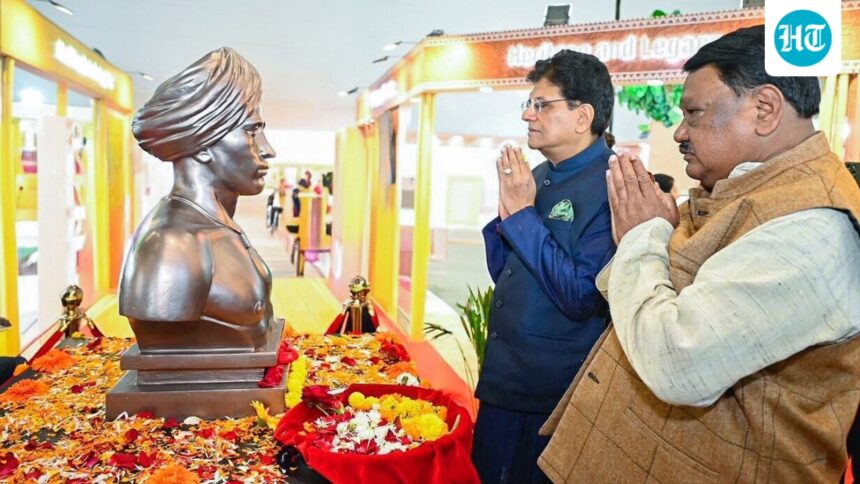
The Minister also emphasized efforts to integrate tribal history and culture into the national mainstream. She referred to the government’s decision to establish museums dedicated to tribal freedom fighters and to declare Birsa Munda’s birth anniversary as Gangatiya Gaurav Diwas in 2021.
Describing the election of Chief Draupadi Murmu as a milestone in empowering tribals, Oyeki said the development reflects the increasing participation of tribal communities in national leadership.
“Tribal communities will play a crucial role in India’s journey towards becoming a developed nation, especially in areas such as environmental conservation, biodiversity protection and sustainable development,” he added.