As tensions persist in West Asia, a recent phone call between Donald Trump and Narendra Modi drew attention to India’s evolving position in the crisis.

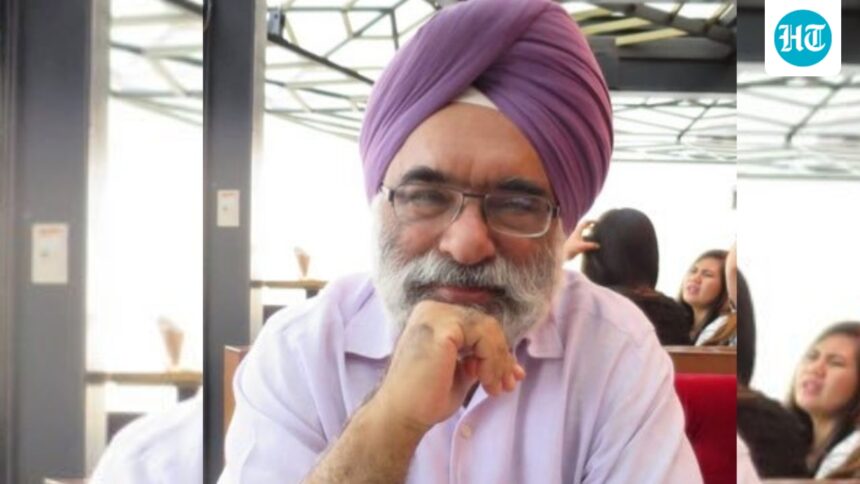
Former diplomat Gurjit Singh believes the phone call from Washington was not accidental. According to him, the call reflects a clear intention by the US to keep India closely involved in the ongoing developments.
“He (US President Trump) has called Prime Minister Narendra Modi, which shows that they want to keep India informed and they want to consult with India, and so the Indian role in it, staying in touch with all parties, seems to have an impact, including the fact that India as the largest economy was badly affected by the war and did not take sides… As I said, this was the first call from President Trump, and I think this was very important, as he showed positive trends, which will help India if it succeeds,” Singh told news agency ANI.
Read also | Iran calls for sovereignty over the Strait of Hormuz in its new list of demands and rejects Trump’s proposal, describing it as “excessive.”
The conflict has put India in a delicate but important position. As one of the largest economies in the world, the country is directly affected by the unrest.
Singh noted that India’s participation in all fields has begun to impact the broader diplomatic landscape.
Confusion over communications between the United States and Iran
At the same time, conflicting signals from Washington and Tehran added another layer of uncertainty.
Read also | India is among the “friendly countries” listed by Iran for the Greater Strait of Hormuz reprieve
Former Indian diplomat Suresh Goel pointed out contradictions in the statements issued by both sides, questioning the clarity of any ongoing dialogue.
“US President Trump has said he is talking to the top leadership in Iran, and the top leadership in Iran says we are not talking to Trump. On the other hand, Trump says there is no top leadership in Iran, so who is he talking to? I was expecting a more serious statement from him. There was a statement from Iran in the morning that they will not talk to anyone from the United States except J.D. “Fragile.”
Beyond diplomatic exchanges, developments around the Strait of Hormuz still carry strategic importance.
Reports that Iran had returned a ship bound for Pakistan were seen by some as an indication of changing dynamics in the region. Former diplomat Veena Sikri highlighted India’s engagement with Iran in this context.
“I think this is a clear indication that India has a very close relationship with Iran. Our Prime Minister has spoken at least twice with Iranian President Masoud Pezeshkian. India was almost the first ship, after China, to be escorted through the Strait of Hormuz and allowed to pass. Iran has stopped many ships. The fact that they stopped the Pakistani ship shows that Pakistan has not talked to them about it. Obviously, you have to build your own relationship… So, we have to focus more on ourselves.” interests,” she said.
Iran indicates selective corridor for “friendly countries”
Amid these developments, Iran indicated that it allows the passage of certain countries.
Abbas Araqchi said that ships of friendly countries, including India, were allowed to pass through the strait.
Iran’s Consulate General in Mumbai echoed this in a statement, “Iranian Foreign Minister Abbas Araqchi: We have allowed passage through the Strait of Hormuz to friendly countries including China, Russia, India, Iraq and Pakistan.”
With diplomatic signals, conflicting narratives, and strategic maritime developments emerging simultaneously, India’s role – carefully calibrated and closely monitored – appears to be gaining weight in a rapidly shifting geopolitical environment.