The Center on Wednesday introduced a bill in the Lok Sabha to amend the Foreign Funding Act, proposing to create an ‘ad hoc authority’ empowered to seize, manage, transfer or sell assets created from foreign funds when an organisation’s registration is cancelled, surrendered or not renewed.

The 2026 Foreign Contribution Regulation Amendment Bill also proposes to reduce the maximum prison term for violations of foreign financing laws from five years to one year, and set timelines for the use of foreign funds included under the prior authorization category.
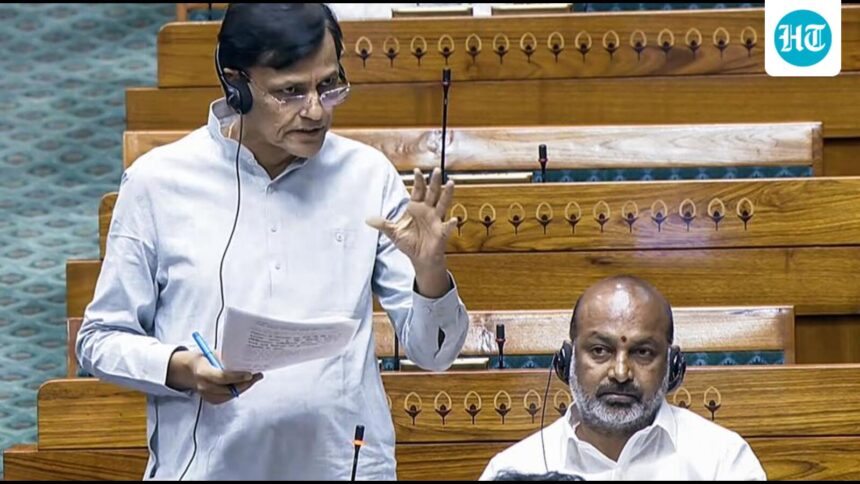
Introducing the bill, Union Minister of State for Home Nityanand Rai asserted, “The Modi government will not tolerate any misuse of foreign funding and will take strong action against such elements.”
The current Foreign Contributions Regulation Act (FCRA) 2010 regulates the acceptance and use of foreign contributions and foreign hospitality to ensure that such flows do not adversely affect the national interest, public order or national security. The law entered into force on May 1, 2011, and was amended in 2016, 2018, and 2020. According to data from the Ministry of Home Affairs (MHA), there are around 16,000 associations currently registered under the FCRA, collectively receiving approximately $22,000 crores annually.
According to the Statement of Objectives and Reasons, the proposed legislation seeks to create “a comprehensive legal framework for granting, supervising, managing and disposing of foreign contributions and assets through designated authority, including temporary and permanent entitlement; providing timelines for receipt and use under prior authorization; providing for suspension of certification; regulating the handling of assets during suspension; rationalizing penalties; and requiring prior approval from the central government to initiate an investigation.”
Opposing the bill, Congress leader Manish Tiwari said, “The bill will give broad power to the executive without any constitutional guarantees.” “The new bill is dangerous and cruel because the central government will have absolute power and ensure centralization of power,” Trinamool Congress’ Pratima Mondal said.
In response to the criticism, Al-Rahi said: “It is really dangerous but for those who indulge in forced religious conversion and those who misuse foreign funding for personal gain.”
Under the proposed law, the Ministry of Home Affairs has introduced a new Chapter IIIA to create the Designated Authority, which will have powers to temporarily or permanently control assets created from foreign trusts in cases where FCRA certificates have been cancelled, waived or suspended.
The authority will be responsible for “supervising, managing, protecting, preserving and maintaining these assets.” It will also be empowered to use the acquired assets permanently for public purposes, including the ability to “transfer the assets to any ministry, department, authority or agency of the Central or State Government or any local authority”, or “dispose of such assets by sale”, with the proceeds – along with any unused foreign funds – deposited in the Consolidated Fund of India.
Under the draft law, individuals or organizations can only challenge the decisions of the designated authority in court.
The proposed amendments also seek to reduce punishment for violations. Under Article 35 of the new draft law, any person who accepts, uses, or assists any person, political party, or organization to accept or use foreign contributions or securities in violation of the law “shall be punished with imprisonment for a period which may extend to one year, or with a fine, or with both.” Previously, such violations required imprisonment for up to five years.
The draft law also aims to set timelines for the receipt and use of foreign funds under the prior authorization category.