What started as a visit to a luxury hotel salon in April 2018 turned into an eight-year court battle that finally ended in 2026. Supreme Court ₹2 crore compensation>reduced ₹2 crore compensation Model given to Ashna Roy ₹25 lakh, citing lack of reliable evidence to support his claim of professional damages.
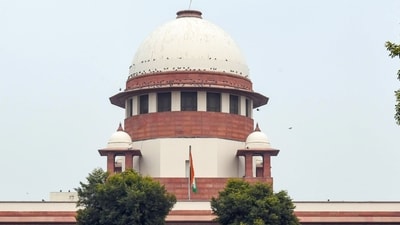
SC reduced the ₹2 crore compensation paid to model Ashna Roy to ₹25 lakh. (ANI)A bench comprising Justices Rajesh Bindal and Manmohan, in a judgment delivered on February 6, said that when a “deficiency in service” is established, compensation in consumer disputes must be based on “material evidence” and not “mere enquiry” or “fancy and fancy” of the complainant, news agency PTI reported.
Also read SC stops relief for ‘bad haircut’ in 5-star hotel; ₹2 crore becomes ₹25L
Timeline of the case2018: Roy visited ITC Maurya Salon in Delhi on April 12, 2018. Dissatisfied with the haircut, he approached the National Consumer Disputes Redressal Commission (NCDRC) alleging lack of service and negligence. She claimed that the haircut damaged her appearance, confidence and modeling career, HT Report before
2021: In September 2021, the NCDRC found the hotel guilty and rewarded it for service deficiencies. ₹2 crore as compensation. The hotel challenged that order in the Supreme Court.
More Read

2023: In February 2023, the Supreme Court upheld the finding of deficiency but sent the matter back to the NCDRC to reassess the quantum of compensation.
At the end of the remand, Roy increased the demand to him ₹5.2 crores. She has submitted photocopies of emails, certificates and other documents to show her loss of modeling jobs and future prospects. Again NCDRC awarded ₹2 crore with 9 percent annual interest. As a result, the hotel once again approached the Supreme Court.
2026: A bench of Justices Rajesh Bindal and Manmohan found serious flaws in the evidence presented. The judges observed that most of the documents were photocopies and their authors were not checked. No proper steps were taken to establish their authenticity.
More Read

“Compensation cannot be awarded for mere conjectures or twists and turns of the complainant,” the top court said, adding that claims involving crores of rupees require “reliable and reliable evidence”.
The court rejected NCDRC’s view that reliance on photocopies was acceptable as the complainant could not preserve the original document due to injury. The bench said, “The general discussion on conviction cannot support such a large compensation.”
There is no direct link between haircuts and career lossesIn its judgment dated February 7, 2026, the apex court noted that several documents relied upon were either before or after the haircut and did not establish a direct link between the deficiency in services and the alleged professional loss.
The bench made it clear that while strict rules of civil procedure may not apply to consumers, basic principles of evidence cannot be ignored when large compensation is sought. It was found that the complainant had ample opportunity to summon witnesses or formally prove documents, but failed to do so.
“The claim for compensation was for crores of rupees, which required establishing that the respondent had suffered some loss due to deficiency in service. This cannot be established simply by producing photocopies of documents. Even the discrepancy between the photocopies produced on record by the respondent, as pointed out by the appellant, was not noticed even after the remand of the case above, and was not even able to respond to the suit. Such a huge compensation award,” the bench said.
The Supreme Court reduced the compensation by maintaining that there was deficiency in service ₹25 lakhs – the amount already released to Roy under the earlier order.