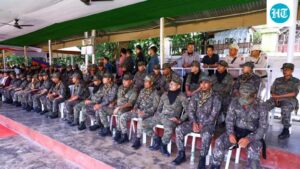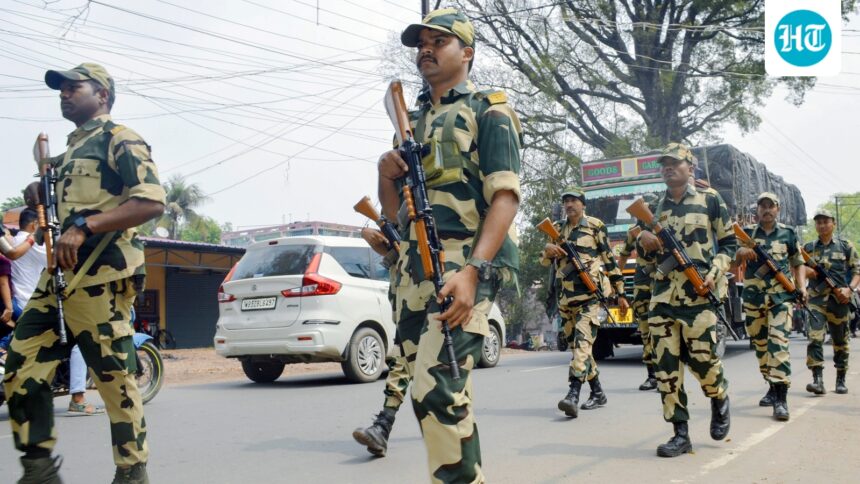
The Election Commission of India (ECI) has removed seven Central Armed Police Force (CAPF) personnel from electoral duty in West Bengal for allegedly attending an iftar party in Murshidabad district in violation of dissemination guidelines during polling, officials from the Election Commission of India and the state poll panel said on Wednesday.

The alleged incident took place about a week ago in Samserganj, a constituency that has been tagged as sensitive ahead of the two-phase Assembly elections next month. The CAPF was deployed in the state on March 1 and 10.
Two of the individuals were taken under the care of central forces, while the remaining five were transferred out of the state, officials said.
Read also | Center for deployment of 2400 CAPF companies in poll-bound West Bengal: MHA
“Forces deployed on electoral duty are required to maintain strict operational neutrality. Any form of participation – including accepting invitations or hospitality – creates real and perceived bias, which is unacceptable in an active electoral environment,” a senior IEC official said, adding that clear instructions had been issued to all units before deployment.
The iftar party was reportedly hosted by a local panchayat, who is the husband of a local panchayat, and pictures of the gathering went viral on social media, drawing the attention of the poll panel.
However, the elements concerned denied the allegations and claimed that the iftar was organized inside a Border Security Forces camp and that local representatives were invited there, news agency PTI reported.
Read also | TMC issues manifesto for West Bengal elections, promises to expand social sector plans
The above-mentioned senior official said the action was taken based on an administrative investigation report launched after the poll committee was notified of the incident.
Samserganj is among the constituencies identified by the poll panel for strengthening security deployment and tightening surveillance. “Even informal participation in local or religious gatherings is treated as a violation if it involves interaction with local stakeholders during deployment,” a senior official of the state Poll Committee said.