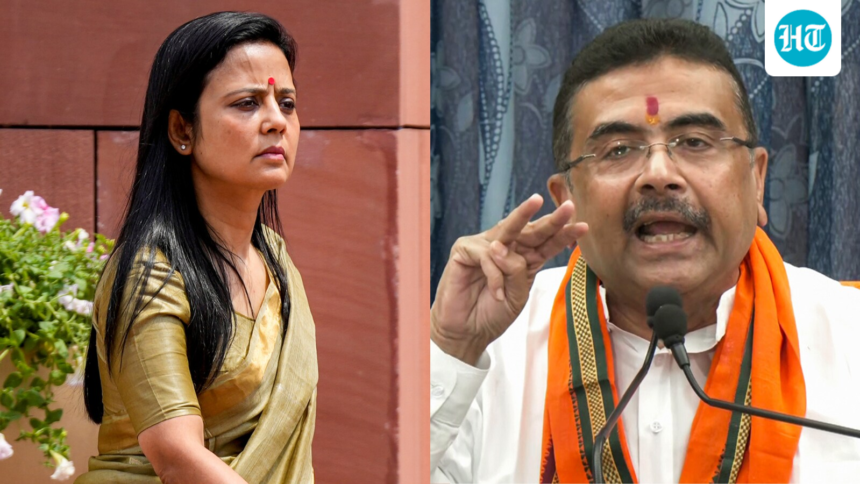
TMC Lok Sabha MP Mahua Moitra on Friday criticized the BJP-led government in West Bengal over the decision to drop eggs from mid-day meals in school and replace them with eggs. Rajma (beans) as part of a new pilot project in which the ISKCON association will prepare the food. She said children in the state “don’t like soy” and argued that rajma is not commonly eaten in the state compared to north India.

A political battle has broken out over the vegetarian-only menu the organization is offering to schools under the Kolkata Municipal Corporation (KMC), with the TMC accusing the BJP of seeking to impose a vegetarian cultural model on Bengal.
While presenting the BJP’s first budget in the state, Finance Minister Swapan Dasgupta announced that ISKCON will provide cooked meals in selected KMC schools as part of a pilot project. Since the organization serves only vegetarian food, eggs, one of the most popular items in Bengal’s school meal system, will not be included in the list of schools covered by the project.
Instead, students will get protein-rich vegetarian options, including paneer, rajma, soy products, legumes and milk-based foods.
TMC attacks BJP over ‘vegetarian’ midday meals
Mahua Moitra, one of the few remaining loyalists of former Bengal Chief Minister Mamata Banerjee, has stepped up her attacks on the BJP-led state government over various issues, including the mid-day vegetarian meal menu introduced in the KMC area.
She said that eggs are a first-class protein, and pointed out that soybeans are the only first-class non-animal protein, but she claimed that children do not like them.
“Our children don’t like soy. When we feed it in schools, they don’t like soy. So, here you are, replacing eggs. So what is the reason? If the reason is not cultural and the reason is not promoting vegetarianism, give me one good reason,” she told reporters.
Mahua also suggested that the government should instead ask ISKCON to run an MLA canteen in the West Bengal Assembly and “eat rajma chawal”. She added that rajma, which is now on the state’s school meal menu, is not commonly eaten in Bengal, where eggs are a regular part of the diet.
“Why don’t you eat rajma chawal? And what is rajma? Do Bengalis know what rajma is? I didn’t know what rajma was until I went to Delhi,” she was quoted as saying in a video published by news agency ANI.
“40% of our school-going children go to school because that is the only nutritious hot meal of the day…so this is absolute nonsense. I would advise these MLAs and all the 65 traitors who have gone, I want them to go back to their constituencies and explain to their people how they are with this bunch of jokers,” she added.
Bengal Lob criticizes BJP
Opposition leader and rebel TMC leader Ritabrata Banerjee claimed that the decision was an attempt to change food habits that have been in existence in Bengal for generations.
“For generations, Bengali children have grown up consuming animal protein as part of their regular diet. Nutrition plans should reflect the local food culture and not stray from it,” he said.
BJP, ISKCON defend the move
The BJP government rejected the criticism. Chief Minister Suvendu Adhikari defended the decision in the assembly, saying the aim was to provide students with clean and good quality food.
“No one imposes their religious beliefs on anyone else. The focus is on providing good food to the students,” he said.
School Education Minister Deepak Burman said that following a vegetarian diet can provide all the nutrition children need. He added: “Millions of people around the world live on plant-based food. Nutrition should be judged according to scientific standards, not by whether a meal contains eggs.”
ISKCON rejected the criticism, saying the controversy was based on misconceptions. Radharman Das, Vice President, ISKCON Kolkata, said the organization is already providing meals to nearly 12,000 students in several states and is following the nutrition standards set by the state governments.
“There is a misconception that nutrition is based solely on eggs. Children can get the required protein and nutrients through pulses, soy products, dairy products and vegetables. The focus should be on nutritional outcomes,” news agency PTI quoted him as saying.
“We are following the Gaudiya Vaishnava tradition that originated in Bengal. It is incorrect to suggest that vegetarian food is alien to Bengali culture,” he added.
Teachers: Attendance improves on egg days
Some of the strongest feedback has come from teachers, who say student attendance typically spikes on egg days.
The principal of a school in Kolkata said students eagerly await the weekly meal of eggs more than any other item on the menu. “We welcome increased spending and any effort to improve food quality. But eggs have a special appeal among students. It remains to be seen whether alternatives generate the same enthusiasm,” he told PTI.
Another teacher said it was still uncertain whether children, who are accustomed to non-vegetarian foods, would easily accept things like rajma and soya chunks. “If students don’t enjoy the food, the goal of the program may be compromised,” he said.
The decision revived memories of the election campaign, when fish became a political issue and the TMC accused the BJP of trying to impose a vegetarian food culture on Bengal.
With input from agencies