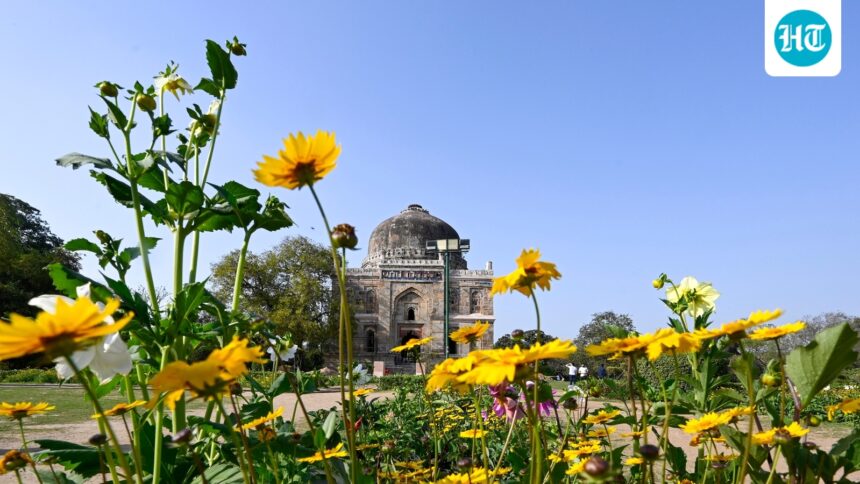
New Delhi: It was the warmest and most polluted February for Delhi in three years, with the absence of active western disturbances keeping conditions unusually warm. The average maximum temperature for the month so far is 27°C, which is 2.8 degrees higher than the long period average (LPA) of 24.2°C for February. This is the highest average maximum since February 2023, when it reached 28.2°C.

Air quality has also deteriorated. The average air quality index (AQI) for the month so far is 232 — the highest since it was 237 in 2023. In comparison, February’s average AQI was 214 in 2025, 218 in 2024, 225 in 2022, 288 in 2021, and 241 in 2020.
Read also | Delhi recorded hottest February in three years; The mercury reaches 31.9°C on the warmest day of the month
Experts attribute the rise in temperatures and pollution to the severe lack of rainfall. Delhi recorded just 0.5 mm of rain this month, much lower than the normal of 21.3 mm, according to India Meteorological Department (IMD) data. The western disturbance affecting the Himalayan region was weak and did not result in significant amounts of snowfall in the mountains nor rainfall in the plains.
“We saw intermittent and isolated drizzle in Delhi for only two days. Although the maximum decreased briefly due to overcast skies, it did not lead to any significant cooling,” said Mahesh Palawat, Vice President, Skymet. He added that the lack of rainfall also contributed to the high levels of pollution. “If there is a suitable period of rain, the pollutants settle out due to the wash-off effect. We did not see this in February.”
A similar pattern was observed in February 2025, when the average maximum temperature was 26.7°C and precipitation was limited to 1.4 mm. In contrast, February 2024 saw 32.5 mm of rainfall, which kept the average maximum lower at 24.4°C and helped maintain relatively better air quality. In 2023, Delhi recorded zero rainfall and an average maximum of 28.2 degrees Celsius – the highest in 15 years.
Of the 27 days so far this month, maximum temperatures have remained above normal for 25 days, falling below normal only on February 2 and 18 due to brief rain showers and cloud cover.
The maximum temperature on Friday was 31.9 degrees Celsius, six degrees higher than normal. The forecast is for further rise, likely reaching 33°C by March 3, 34°C on Holi (March 4) and possibly 35°C by March 5.
The last active western disturbance occurred on January 23, followed by a moderate disturbance on January 28, said RK Jinamani, a senior scientist at IMD. “Since then, the western disturbances have been fairly weak, with no significant rain in the plains and limited snowfall in the mountains,” he said, adding that clear skies led to a steady rise in temperatures.
The minimum temperature on Friday was 13.1°C, one notch above normal, and night temperatures are expected to rise to 15-17°C by Holi.
Meanwhile, Delhi’s air quality remained in the ‘moderate’ category for the second day in a row, with the 24-hour average AQI standing at 200 at 4 pm on Friday.
Forecasts from the Union government’s Air Quality Early Warning System indicate that Al-Qaeda in Iraq may briefly touch the ‘poor’ category on Saturday before returning to ‘moderate’ levels on Sunday and Monday.