The Delhi High Court on Wednesday rejected a plea seeking to read the preliminary Air Accident Investigation Bureau (AAIB) report prepared into the Air India Flight 171 crash, which claimed 260 lives in June last year, on the grounds that the report itself failed to provide a complete sequence of events including the exact time of ignition of each engine and the timing of the switches going from ‘RUN’ to ‘CUT OFF’.

The petitioner, Suresh Chand Shrivastava, a mechanical engineer from IIT Delhi, asserted that he was entitled to full disclosure of relevant details, asserting that there was a high probability that both the engines had failed due to SURGE. This, he says, can only be verified by examining the exact timings. It therefore sought to read the preliminary report issued by the AIIB dated July 12, 2025 and its directions to the AIIB to amend it by including details.
A bench of Chief Justice D K Upadhyaya and Justice Tejas Karia observed that the reliefs sought by Shrivastava were “deeply wrong”, stating that the doctrine of low reading is only applied to interpret statutory provisions. The court held that the request to read an expert’s report was not legally permissible.
The bench further observed that the report in question had been prepared by specialists and even if it contained any deficiencies, the court could not grant the relief sought on that basis.
Read also: “There are no final conclusions in the investigation into the crash of plane AI 171”: the African International Bank refutes the Italian media report
“We are afraid, such a prayer is very wrong for two reasons. The principle of reading is applied by the High Courts while interpreting the provisions of laws and hence the court is asked to read a preliminary report prepared by experts in our view, which is a prayer which is not legally permissible to be granted by the court,” the court said in its order.
The bench added: “Secondly, it is a well-established principle of law that the field in which experts work should ordinarily be left to the experts for the simple reason that the courts are not experts in the fields. The report sought to be read was prepared by the experts and, therefore, even if the report mentioned in the assessment of the petitioner contains some loopholes, relief cannot be provided by making an order to read such a report.”
In his petition, Shrivastava also sought to direct the AAIB Managing Director to publicly disclose the exact timing of fuel cutoff and flameout of each engine. However, the court refused to grant this relief, stating that the appropriate remedy for obtaining such information was to file a request under the provisions of the Right to Information Act.
“The information sought, relates to the preliminary investigation report and for the said purpose, the petitioner could have approached the concerned authority by making appropriate recourse to the provisions of the Right to Information Act and if such information was worthy of being furnished, it could have been provided to the petitioner or placed in the public domain. The remedy of writ petition cannot, therefore, be allowed to be placed in the service of this prayer,” the court said in the order.
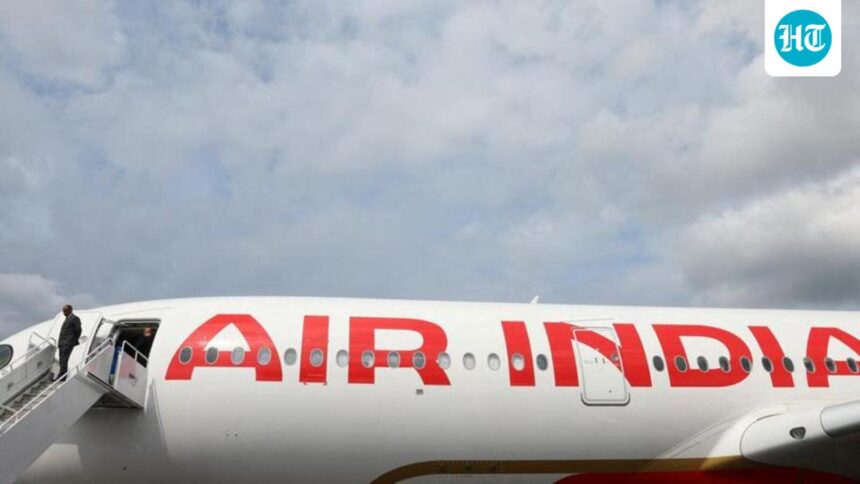
On June 12, Air India flight AI-171 carrying 230 passengers and 12 crew members crashed shortly after take-off from Ahmedabad airport, killing 229 passengers, all crew members and 19 people on the ground.
The investigation into the tragedy was led by the AAIB, with involvement from the US National Transportation Safety Board, the UK Air Accident Investigation Branch, and Boeing representatives.
On July 12, the initial report revealed that both engine fuel control switches went from RUN to CUTOFF seconds after liftoff, resulting in a loss of thrust.
The cockpit voice recorder captured one pilot questioning the fuel cut while the other denied responsibility. The Ram Air Turbine System, a backup power system, deployed automatically, and although one of the engines began to recover after the switches were returned to RUN, the aircraft was unable to regain altitude.
Even as the Supreme Court dismissed the petition, the apex court earlier this month asked the Union government and the DGCA to record the “procedural protocol” being followed in the ongoing investigation being conducted by the bank. A bench of Chief Justice of India Surya Kant and Justice Joymalia Bagchi described the tragedy as “extremely unfortunate” and said that the court wished to examine the procedure followed and the nature of the investigation undertaken to determine the cause of the accident.