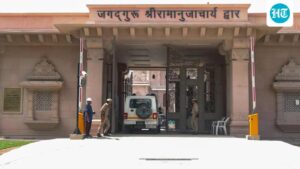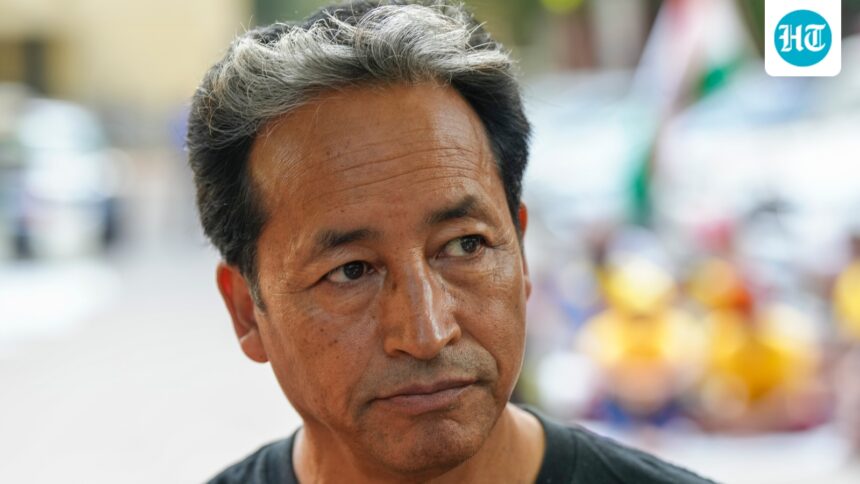
Climate activist Sonam Wangchuk was released from the central prison in Rajasthan’s Jodhpur on Saturday, six months after he was arrested under the National Security Act (NSA) on charges of inciting violence in Ladakh.

An official said Wangchuk’s wife, Gitanjali J. Angmo, received him as he walked free hours after the Union Home Ministry canceled his detention. After the paperwork, Wangchuk left with Angmo in a private car around 1 p.m.
Wangchuk, 59, was accused of misleading people by making provocative references to Arab Spring-style protests. The Federal Home Ministry canceled his detention “with immediate effect”, citing the need to facilitate “constructive and meaningful dialogue with all stakeholders”.
The activist’s release came days before the Supreme Court’s scheduled hearing on March 17 to hear Angmo’s habeas corpus petition regarding the activist’s imprisonment under a 1980 law, which allows detention for up to 12 months without trial.
Wangchuk was arrested on September 26, two days after protests over demands for Ladakh statehood turned violent, killing four people and wounding 45 others. The Central Bureau of Investigation (CBI) has also launched a preliminary investigation against the institute founded by Wangchuk.
On February 25, activists held a demonstration in Jodhpur to demand Wangchuk’s release, prompting police to set up barricades on the road leading to the central prison.
Former Rajasthan Chief Minister Ashok Gehlot welcomed Wangchuk’s release but said the incident raised serious questions about the work of the Narendra Modi-led government. In a post on X, Gehlot said it was ironic that Wangchuk, who once supported Modi’s policies, was sent to Jodhpur jail under the strict NSA when he raised his voice for Ladakh’s rights and environment protection.
Gehlot wondered how someone who was described as a threat to national security a few months ago could suddenly be released now. He wondered if this meant there was no evidence against him.
Guillot asked who would hold accountable the 170 days Wangchuk spent in detention and why he was arrested in the first place. He wondered whether the political interests of the ruling party determine the definition of national security.
Gehlot said such “convenient use of laws with an authoritarian mentality” is condemnable and constitutes a serious blow to the credibility of democratic institutions. He added that people were seeing these double standards.